
Phone:
(+971) 56 921 3754
Physical address:
Office #201, Al Quoz Industrial Area
Dubai, United Arab Emirates.
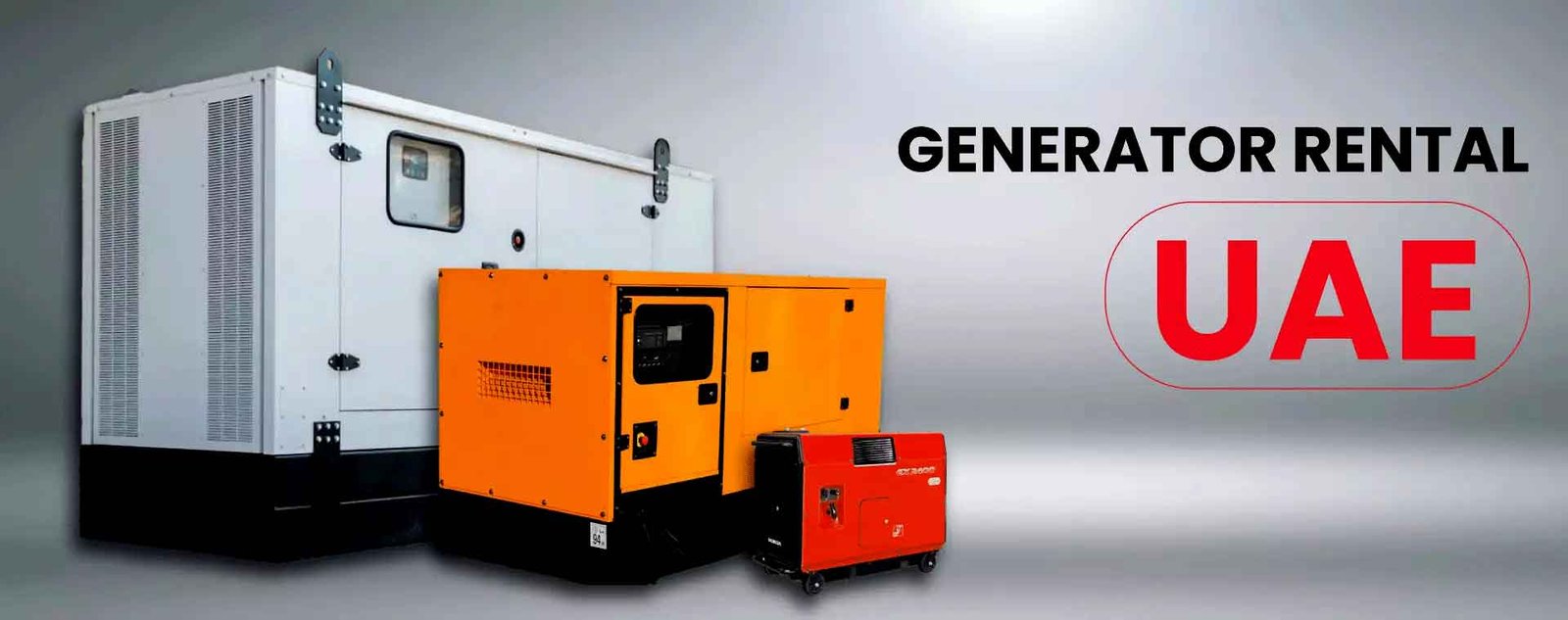
Reliable electricity is essential for almost every business operating in the UAE. Construction companies need continuous power for tools, lighting and site facilities. Event organizers depend on electricity for sound systems, lighting, cooling and other equipment. Industrial facilities may require backup power during maintenance, shutdowns or unexpected interruptions. For businesses with temporary, seasonal or changing power requirements, purchasing a generator is not always the most practical solution.
This is why generator rental in UAE has become an important temporary power option for construction, industrial, commercial, event and emergency applications. Rental allows businesses to access the required generating capacity without making a large upfront investment in equipment that may not be needed permanently.
Official Dubai guidance also highlights the importance of reliable backup power. DEWA has required backup generators for major projects and buildings in Dubai, with capacity intended to support critical systems such as lighting, elevators, surveillance, alarms and fire and safety equipment.
What Is Generator Rental?
Generator rental is the temporary hire of an electric generator for a defined period. Depending on the project, a business may rent a generator for a few hours, several days, a construction phase, a planned shutdown or a much longer period.
Rental companies generally provide generators in different capacities so customers can select equipment according to their expected electrical load. Some UAE suppliers offer smaller units for limited applications, while larger fleets can provide hundreds or thousands of kVA for demanding commercial and industrial requirements.
A professional rental arrangement can also include delivery, installation, cabling, commissioning, fuel management, maintenance and technical support. This makes rental different from simply purchasing a generator and managing every aspect of its operation internally.
Why Businesses Prefer Generator Rental in the UAE
Lower Initial Investment
Buying a commercial or industrial generator requires substantial capital. The purchase price is only one part of the overall cost because businesses also have to consider installation, fuel systems, maintenance, spare parts, storage and eventual depreciation.
Generator rental changes this cost structure. Instead of purchasing an asset for occasional or temporary use, a company pays for the power capacity it needs for the required rental period. This can be particularly useful for businesses working on short-term projects or operating under controlled project budgets.
The financial advantage becomes more significant when the generator is required only for a construction phase, temporary event, emergency situation or planned maintenance period.
Flexible Rental Periods
Business power requirements do not always remain constant. A construction company may need temporary electricity throughout a project’s development, while an event organizer may need power only for a few days.
Rental provides flexibility because the equipment can be hired according to the duration of the requirement. UAE rental providers commonly offer short-term and longer-term arrangements, allowing businesses to avoid owning equipment that may remain unused after a project is completed.
This flexibility can also help businesses respond to unexpected changes. If a project is extended or additional power is required, the rental arrangement can potentially be adjusted rather than forcing the company to purchase another generator.
Access to Different Power Capacities
Electrical demand varies considerably between businesses. A small maintenance operation may require a relatively modest generator, whereas a large construction site, industrial facility or event may require substantially more generating capacity.
Rental fleets give businesses access to different generator sizes without requiring them to own an entire range of equipment. For example, suppliers in the UAE advertise generator fleets ranging from small units to large industrial generators capable of supporting major temporary power requirements.
Selecting the correct capacity is important. An oversized generator can operate inefficiently under light loads, while an undersized generator may struggle with the connected demand. Businesses should therefore assess their electrical load, starting current requirements and future expansion before choosing a rental unit.
Useful for Construction Projects
Construction is one of the most common applications for temporary generators. A developing site may need electricity before permanent electrical infrastructure is fully available. Generators can provide power for site offices, lighting, tools, pumps, welding equipment and other temporary facilities.
Dubai Municipality currently provides a service for obtaining temporary electricity supply for construction sites, intended to support buildings before completion, including electro-mechanical systems, elevators and safety, security and fire-protection systems.
Where temporary generation is required, a properly planned rental generator can help bridge the gap between project commencement and permanent electrical availability.
Construction companies also need to pay close attention to electrical safety. Dubai’s 2025 construction safety decree requires contractors and engineering consultants to comply with the applicable construction safety rules and standards across the emirate.
Supports Events and Temporary Venues
Events often have electrical requirements that are very different from permanent buildings. Outdoor concerts, exhibitions, weddings, festivals, corporate events and temporary venues may need electricity for lighting, audio equipment, catering, cooling, displays and safety systems.
A permanent generator may not make economic sense for an event that lasts only a few days. Renting allows organizers to obtain the required capacity for the event and return the equipment afterward.
Specialized rental providers also offer solutions that combine generators with battery energy storage, load management and other technologies where appropriate. Atlas Copco, for example, describes temporary event power solutions that can incorporate generators, energy storage, grid integration, fuel services and remote monitoring.
Provides Backup During Maintenance and Emergencies
Businesses do not always rent generators because their normal electricity supply is unavailable. Sometimes rental power is used as a precaution.
During planned electrical maintenance, facility upgrades or equipment replacement, temporary generation can help maintain essential operations. It can also provide an additional layer of preparedness when a business cannot afford an interruption to critical systems.
This is particularly relevant for facilities where loss of electricity can affect security, communications, refrigeration, production processes, IT equipment or other essential services. DEWA’s guidance on major projects specifically identifies critical loads such as lighting, elevators, surveillance, alarms and fire and safety equipment when discussing backup generator capacity.
Maintenance Can Be Handled by the Rental Provider
Owning a generator means the business becomes responsible for preventive maintenance, inspections, repairs, batteries, filters, lubricants and other operational requirements.
With a professional rental arrangement, maintenance and technical support may be included as part of the service. Some UAE rental providers advertise preventive maintenance, emergency repair, installation and technical assistance alongside their generator fleets.
This can reduce the operational burden on companies that do not have dedicated generator technicians.
However, businesses should confirm exactly what is included in the rental agreement. Maintenance support, fuel supply, transportation, installation, cabling and emergency replacement are not necessarily included in every rental package.
Generator Rental Can Help Control Project Risk
Power failure can create costs beyond the immediate loss of electricity. On a construction site, an interruption can stop equipment and delay workers. At an event, it can affect lighting, sound, cooling and guest experience. In an industrial environment, an interruption may affect production or critical processes.
For this reason, businesses often view temporary generation as part of their operational risk management rather than simply an equipment rental.
The objective is not necessarily to keep every piece of equipment operating during an outage. Instead, the generator can be sized around the loads that are most important to business continuity.
Fuel Efficiency Matters
Fuel is an important operating cost for diesel generators, particularly when equipment operates for extended periods.
Businesses should therefore look beyond the rental price when comparing generators. Engine efficiency, expected load, operating hours, fuel consumption, maintenance condition and fuel-management arrangements can all influence the total cost of temporary power.
For variable loads, modern power solutions may also incorporate load management or energy storage. Such approaches can help match power production more closely with actual demand and may reduce unnecessary generator operation.
Noise and Site Conditions Should Be Considered
The physical environment of the project also affects generator selection. Construction sites, industrial yards and remote locations may have different requirements from hotels, residential developments or public events.
Businesses should consider generator enclosure, noise levels, ventilation, exhaust arrangements, weather exposure, access for refuelling and the available space for installation.
For temporary installations, cable routing and distribution also require careful planning. Dubai’s electrical installation requirements for construction sites address temporary power installations and safety considerations, including appropriate distribution equipment and protection.
A rental company should therefore assess the site rather than simply delivering a generator based on its kVA rating.
How Businesses Should Choose a Generator Rental Company
Choosing the cheapest generator is not necessarily the best approach. A reliable rental provider should be able to understand the project’s electrical requirements and recommend an appropriate generator rather than supplying equipment without a proper load assessment.
Businesses should consider the provider’s generator fleet, equipment condition, delivery capability, installation support, maintenance arrangements, fuel services and emergency response.
It is also important to ask whether the quoted rental price includes transportation, installation, cables, distribution equipment, fuel, technician support and removal. Comparing the complete service package provides a more realistic picture of the total rental cost.
For projects requiring continuous power, businesses should also ask about backup equipment and replacement procedures in case the primary generator develops a fault.
Is Generator Rental Better Than Buying?
Neither option is automatically better for every business. The right choice depends on how frequently the generator will be used, the required capacity, project duration and the company’s ability to manage generator ownership.
Buying may make sense when a company has a predictable long-term requirement and expects to use the equipment regularly. Rental can be more practical when the requirement is temporary, seasonal, project-based or uncertain.
For example, a construction contractor working on several temporary sites may benefit from rental because its power requirements can change from project to project. An event company may also prefer rental because generator demand varies according to the size and location of each event.
The decision should therefore be based on the total cost of ownership versus the total cost of renting over the expected period of use.
What to Check Before Renting a Generator in UAE
Before signing a rental agreement, businesses should first determine their actual electrical requirements. The assessment should consider the running load, starting or surge loads, voltage, phase requirements and the equipment that must remain operational.
The company should then discuss the site conditions with the rental provider and confirm where the generator will be installed, how it will be connected and how fuel and maintenance will be managed.
Safety and compliance should also be treated as essential parts of the project. Temporary electrical systems must be installed and operated appropriately for the site and applicable authority requirements. Dubai’s regulations and municipal services demonstrate that temporary electrical installations are subject to specific requirements rather than being treated as ordinary plug-and-play equipment.
The Growing Role of Temporary Power in UAE Business Operations
The UAE’s business environment includes major construction projects, industrial facilities, exhibitions, outdoor events, commercial developments and infrastructure work. Many of these activities have power requirements that are temporary or change as projects progress.
Generator rental gives businesses a way to respond to these requirements without permanently investing in equipment for every possible situation. The combination of flexible rental periods, different capacity options, technical support and temporary deployment makes rental power particularly useful for projects where electricity requirements can change.
For businesses, the key is to treat generator rental as a complete power solution rather than simply hiring a machine. Proper load assessment, equipment selection, installation, fuel planning, maintenance and emergency support all contribute to a reliable temporary power system.
Conclusion
Businesses choose generator rental in UAE because it provides flexibility, access to suitable power capacity and a practical alternative to purchasing equipment for temporary or changing requirements. Construction projects can use generators while permanent electricity is being developed, event organizers can obtain power for short-term venues, and commercial or industrial businesses can use rental units for backup, maintenance and emergency situations.
The most effective rental solution is not necessarily the largest or cheapest generator. It is the one that matches the project’s electrical load, operating environment, duration and continuity requirements while being supported by proper installation, maintenance and technical assistance.
As a result, generator rental has become a practical part of temporary power planning for businesses across the UAE, particularly where reliable electricity is essential but permanent generator ownership is not justified.