
Phone:
(+971) 56 921 3754
Physical address:
Office #201, Al Quoz Industrial Area
Dubai, United Arab Emirates.
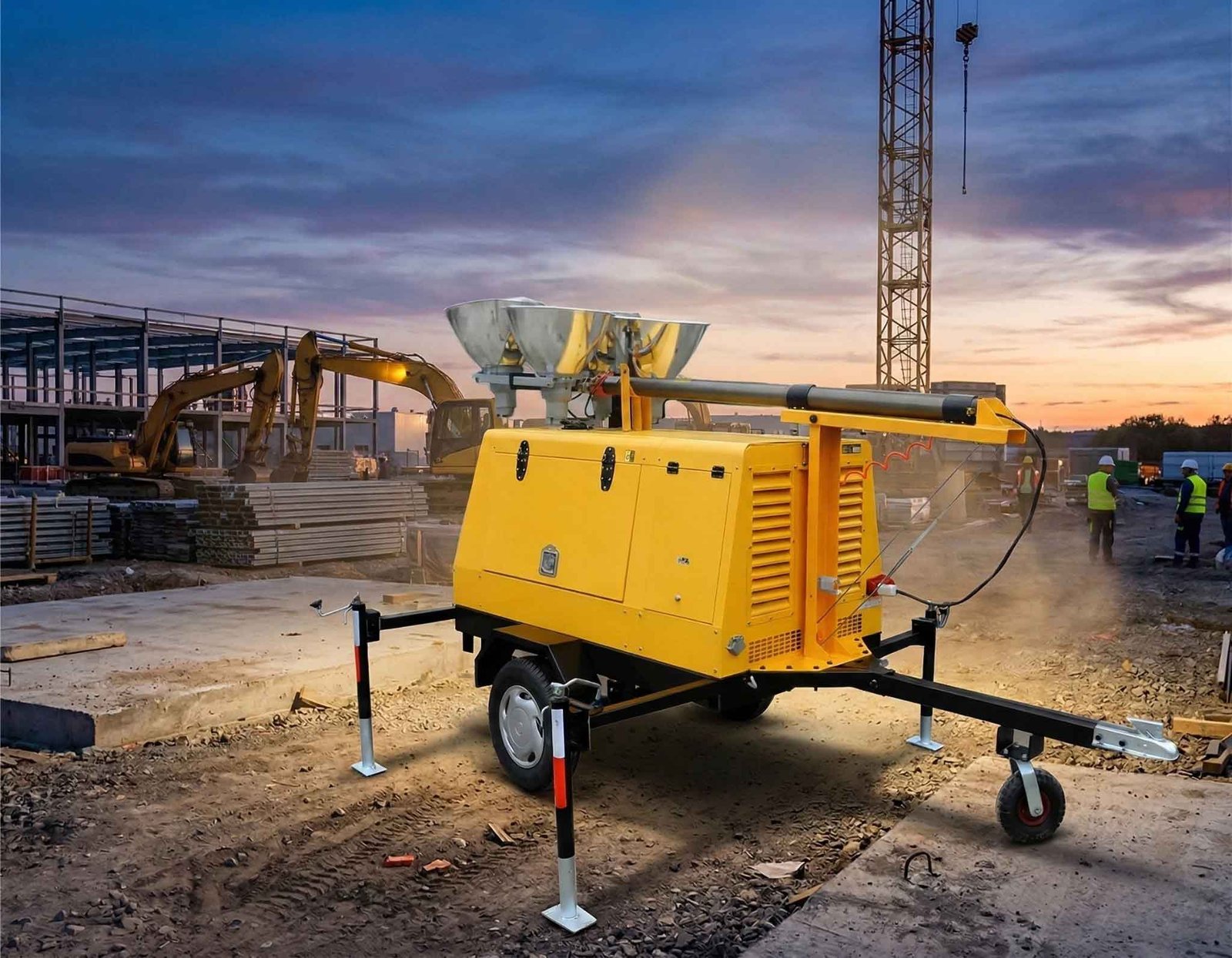
Reliable electricity is essential for modern commercial buildings in the UAE. Offices, shopping centres, hotels, retail outlets, business parks, warehouses, clinics, restaurants, and mixed-use properties all depend on electrical systems for lighting, air conditioning, lifts, security systems, IT equipment, pumps, fire and life-safety equipment, and daily business operations.
For major projects in Dubai, DEWA has specifically required backup generators at major commercial, tourist, and cultural buildings, with capacity sufficient for essential systems such as lighting, elevators, surveillance cameras, alarms, and fire and safety equipment.
Generator rental provides commercial property owners, facility managers, contractors, and businesses with temporary power without requiring them to purchase a generator for every short-term requirement. It can be particularly useful during power interruptions, planned electrical works, building fit-outs, renovations, events, and periods when permanent standby equipment is unavailable.
Why Commercial Buildings Rent Generators
The reason for renting a generator varies from one property to another. Some businesses need emergency backup power, while others require temporary electricity during construction or refurbishment.
Common situations include:
Emergency power during an electrical failure
Planned maintenance of electrical infrastructure
Building renovations and fit-outs
Temporary power during construction
Additional capacity for peak demand
Backup during major events
Replacement of a failed standby generator
Temporary power while permanent equipment is being installed
The main advantage is flexibility. A business can obtain the required capacity for the period it actually needs it rather than making a permanent capital investment in equipment that may have limited use.
Emergency Generator Rental for Commercial Properties
An unexpected power interruption can affect far more than office lighting.
Commercial buildings may have critical systems that need electricity even when normal utility supply is interrupted. These can include emergency lighting, lifts, security systems, access-control equipment, IT infrastructure, pumps, ventilation, and fire-protection systems.
DEWA’s guidance for major projects specifically identifies backup power requirements for essential systems including lighting, elevators, escalators, automatic doors, surveillance cameras, alarms, and fire and safety equipment.
A rental generator can therefore serve as a temporary solution while the building’s permanent electrical system is being repaired.
The generator should not simply be selected based on the building’s total connected load. The required loads, starting currents, operating sequence, power factor, and priority of critical equipment need to be assessed.
Generator Rental During Building Renovation
Renovation and fit-out projects frequently create temporary electrical requirements.
A commercial building may have sections without their normal electrical supply while contractors modify distribution boards, cabling, lighting, HVAC systems, or other infrastructure.
A rental generator can provide temporary power for:
Construction tools
Lighting
HVAC equipment
Temporary offices
Pumps
Welding equipment
Security systems
IT and communication equipment
Temporary site facilities
The required generator capacity can change as different stages of the project are completed. This is one reason rental equipment can be more practical than purchasing a permanent generator for a temporary construction requirement.
DEWA’s current procedures also distinguish temporary electricity supplies and provide specific processes for temporary supply requests and additional loads.
Standby Power for Offices and Business Centres
Office buildings depend heavily on uninterrupted electricity for computers, networking equipment, access control, elevators, air conditioning, lighting, and other systems.
For a small office, a relatively modest generator may be sufficient for selected critical circuits. A large office tower or business centre can require substantially more capacity.
Rather than attempting to power every circuit automatically, facility managers should establish a priority load list.
For example:
Priority loads may include:
Emergency lighting
Fire and life-safety systems
Security and access control
Critical IT systems
Essential pumps
Selected elevators
Emergency ventilation
Critical refrigeration
Non-essential loads may include:
Decorative lighting
Non-critical air conditioning
General-purpose equipment
Non-essential kitchen equipment
Other discretionary electrical loads
This approach helps the generator operate according to the building’s actual emergency requirements.
Generator Rental for Shopping Centres and Retail Properties
Shopping centres have diverse electrical loads, including lighting, escalators, elevators, HVAC systems, security equipment, refrigeration, automatic doors, pumps, and tenant services.
A temporary generator may be required when electrical infrastructure is undergoing maintenance or when additional power is needed for a particular project or event.
Large commercial properties also have to consider how temporary generation interacts with their existing electrical distribution system. Generator connection should therefore be planned by qualified electrical professionals rather than treated as a simple plug-and-play installation.
Hotels and Hospitality Properties
Hotels cannot afford prolonged disruption to essential services.
Electricity can be required for:
Guest-room systems
Emergency lighting
Elevators
Security
Kitchen equipment
Refrigeration
Water pumps
HVAC
IT systems
Fire and life-safety systems
Dubai’s backup-generator programme has included key hospitality and tourist facilities, with DEWA noting that its field work covered hotels and tourist facilities as well as shopping malls, hospitals, airports, and major buildings.
For a hotel, the generator requirement should therefore be developed around the property’s emergency plan and critical loads.
Generator Rental for Warehouses and Commercial Storage
Warehouses may appear simpler than office buildings, but their electrical requirements can still be significant.
Depending on the operation, electricity may be required for:
Refrigeration
Cold-storage systems
Lighting
Security
Fire pumps
Conveyor systems
Loading equipment
IT and warehouse-management systems
Ventilation
Access-control systems
Cold-storage facilities are particularly sensitive to power interruptions because temperature can rise when refrigeration equipment stops operating.
In these applications, generator selection should account for the starting requirements of compressors and other motor-driven equipment.
Choosing the Correct Generator Size
One of the most important decisions in generator rental is selecting the correct capacity.
Generators are commonly specified in kVA, while many electrical loads are described in kW. The relationship between the two depends on power factor.
For a three-phase system, electrical engineers may also calculate load from voltage, current, and power factor.
The rental provider should therefore assess:
Total connected load
Maximum demand
Starting current
Motor loads
Power factor
Single-phase and three-phase loads
Required voltage
Frequency
Critical and non-critical circuits
Future load requirements
Choosing a generator that is too small can result in overloads, voltage problems, nuisance shutdowns, or inability to start large motors.
Choosing one that is significantly larger than necessary can also be inefficient and increase rental and fuel costs.
What Is Load Banking?
Load-bank testing can be useful when a standby generator needs to be tested without placing the building’s actual electrical systems under unnecessary stress.
A load bank provides a controlled electrical load to test generator performance. This can help verify whether the generator can operate at the required load and whether voltage and frequency remain within acceptable limits.
For commercial buildings that depend on standby generation, testing and maintenance are important parts of ensuring that equipment is available when required.
DEWA’s backup-generator guidance states that generators for major projects should be properly maintained so that they operate effectively when needed.
Fuel Planning for Rental Generators
Generator rental is not only about the generator itself. Fuel management can become an important part of a longer rental period.
Before starting a project, establish:
Generator fuel consumption
Expected operating hours
Fuel tank capacity
Refuelling arrangements
Fuel storage location
Emergency fuel requirements
Responsibility for fuel supply
For high-rise and major commercial facilities, fuel storage and generator-room arrangements are also subject to fire-safety considerations. Dubai Civil Defence guidance, for example, specifies requirements concerning generator rooms, fuel tank rooms, fire-rated separation, and fire suppression in applicable high-rise facilities.
The exact requirements depend on the building, generator installation, fuel arrangement, and applicable authority approvals.
Installation Location Matters
A generator needs an appropriate installation location with sufficient access and ventilation.
The site assessment should consider:
Physical space
Generator dimensions and weight
Delivery access
Exhaust arrangement
Ventilation
Noise
Fuel access
Cable routes
Distance from the electrical connection point
Fire-safety requirements
Protection from unauthorised access
For a commercial property in a dense urban environment, noise and exhaust management can be particularly important.
Automatic Transfer Switches and Changeover
A generator cannot simply be connected to a building’s electrical system without suitable switching and protection.
An Automatic Transfer Switch (ATS) can detect loss of normal utility power and transfer selected loads to the generator, subject to the design of the electrical system.
When utility power returns, the system can transfer the load back according to the configured operating sequence.
The exact arrangement depends on the building’s electrical distribution system and the generator installation. Electrical engineers should verify compatibility, protection settings, earthing, synchronization requirements where multiple generators are used, and other technical considerations.
Single Generator or Multiple Generators?
A large commercial building may require more than one generator.
Multiple generator sets can be used to provide greater capacity, operational flexibility, or redundancy depending on the project’s requirements.
For example, a facility might use several generators operating in parallel rather than one very large unit.
The appropriate configuration depends on:
Required total capacity
Critical-load requirements
Redundancy objectives
Available installation space
Fuel infrastructure
Electrical distribution
Synchronization requirements
Rental providers can often supply multiple units for larger temporary power requirements.
Why Professional Installation Matters
Commercial-building generator rental is not simply a matter of delivering a machine to the property.
A proper installation may involve:
- Site assessment
- Load calculation
- Generator selection
- Positioning
- Cable installation
- Changeover or ATS connection
- Earthing
- Fuel planning
- Testing
- Commissioning
- Monitoring and maintenance
For larger projects, the electrical design and connection arrangements should be reviewed by qualified professionals and coordinated with the relevant authorities where required.
Dubai’s current DEWA procedures for electrical projects include technical documentation, load schedules, setting-out information, inspections, and other requirements depending on the project and connection type.
Safety and Regulatory Considerations
Commercial buildings have more complex safety requirements than many temporary construction sites.
Generator installations should account for:
Fire safety
Fuel storage
Exhaust gases
Ventilation
Electrical protection
Earthing
Cable protection
Noise
Access control
Emergency shutdown
Maintenance access
Dubai Civil Defence documentation identifies generator rooms and fuel tank rooms among areas requiring specific fire-safety treatment in applicable buildings.
The Dubai Building Code also establishes minimum requirements relating to health, safety, welfare, environmental impact, and sustainable building design.
Because requirements vary according to building type and installation, businesses should confirm the applicable requirements with their electrical consultant, facility-management team, landlord, and relevant authorities before installation.
What to Ask a Generator Rental Company
Before signing a rental agreement, commercial property managers should ask:
What generator capacity is recommended?
Has the site’s actual load been assessed?
Is the quoted capacity in kVA or kW?
What fuel consumption should be expected?
Is fuel included?
Is installation included?
Are cables and changeover equipment included?
Is an ATS required?
Is 24/7 technical support available?
What maintenance is included?
How quickly can replacement equipment be supplied?
Are delivery and removal included?
What testing will be carried out before commissioning?
Are the generator and accessories suitable for the site’s environmental conditions?
A detailed quotation makes it easier to compare rental providers because two apparently similar generator prices may include very different services.
Rental vs. Buying a Generator
Buying can make sense when a commercial building requires permanent standby power and the equipment will be used for many years.
Rental can be more practical when the requirement is temporary.
For example, a business may rent a generator when:
Its permanent generator has failed.
Electrical infrastructure is being upgraded.
A building is undergoing renovation.
A temporary event requires additional capacity.
A new generator is on order.
A construction or fit-out project needs temporary electricity.
Seasonal or temporary power requirements have increased.
The decision should consider the expected duration, utilisation, maintenance responsibilities, capital budget, and long-term power requirements.
Final Thoughts
Generator rental can give commercial buildings in the UAE a flexible way to maintain essential electrical services during emergencies, maintenance, renovations, fit-outs, and other temporary situations.
The most important step is not choosing the biggest generator available. It is understanding exactly which loads need to operate, calculating the required capacity, and designing a safe connection to the building’s electrical system.
For major commercial properties in Dubai, backup generation also has a wider safety role. DEWA’s guidance specifically links standby generators with essential systems such as emergency lighting, elevators, surveillance, alarms, and fire and safety equipment.
A properly planned rental solution-with the correct generator capacity, suitable distribution equipment, professional installation, fuel planning, testing, and ongoing support-can provide dependable temporary power while the building’s normal electrical supply or permanent backup system is unavailable.