
Phone:
(+971) 56 921 3754
Physical address:
Office #201, Al Quoz Industrial Area
Dubai, United Arab Emirates.
When temperatures in the UAE exceed 45°C during summer, temporary cooling moves from a convenience to an operational necessity. Whether securing supplemental cooling for a commercial building, process cooling for concrete batching, emergency backup for a data center, or refrigerated transport, renting a chiller offers a flexible, capital-efficient approach.
Rental parameters depend heavily on required cooling capacity-measured in Tons of Refrigeration (TR) for HVAC equipment or payload tonnage for transport units.
Selecting Equipment by Capacity and Application
Systems are selected based on heat load specifications, space availability, and power configurations rather than fixed rate Tiers.
| Chiller Category | Size / Capacity | Primary Applications |
| Small Commercial / Water Chillers | 10 – 50 TR | Residential domestic water cooling, small commercial spaces, light process tasks. |
| Medium Industrial Air-Cooled | 100 – 200 TR | Office buildings, event halls, factory maintenance, low-rise structures. |
| Large Industrial / Modular | 300 TR + | Large-scale concrete batching plants, district cooling support, high-rise buildings. |
| Refrigerated Transport | 1 – 3 Ton Payload | Cold-chain logistics, food delivery, pharmaceutical distribution. |
Commercial Factors Impacting Equipment Selection
1. Cooling Capacity & Technical Specs
Air-cooled chillers are widely used across temporary setups due to fast deployment, whereas water-cooled units offer higher energy efficiency when a dedicated water source is present on-site.
2. Rental Duration
Short-term rentals for emergency coverage involve logistics, mobilization, and off-loading provisions. Long-term seasonal or multi-month contracts offer customized deployment structures tailored to operational timelines.
3. Site Logistics & Ancillary Equipment
Complete cooling packages require additional technical support items:
Rigging & Crane Services: Heavy industrial units require dedicated crane positioning on-site.
Power Supply: Supplemental power options such as synchronized diesel generators are required if the local grid cannot meet starting currents.
Hydronic Accessories: High-pressure pumps, flexible chilled-water hoses, buffer tanks, and heavy-duty power cabling.
4. Operation & Maintenance Agreements
Reputable UAE suppliers include emergency support and preventive maintenance (such as condenser coil flushing to handle sand and dust) directly within standard service agreements.
Understanding Generator Rental Options in the UAE
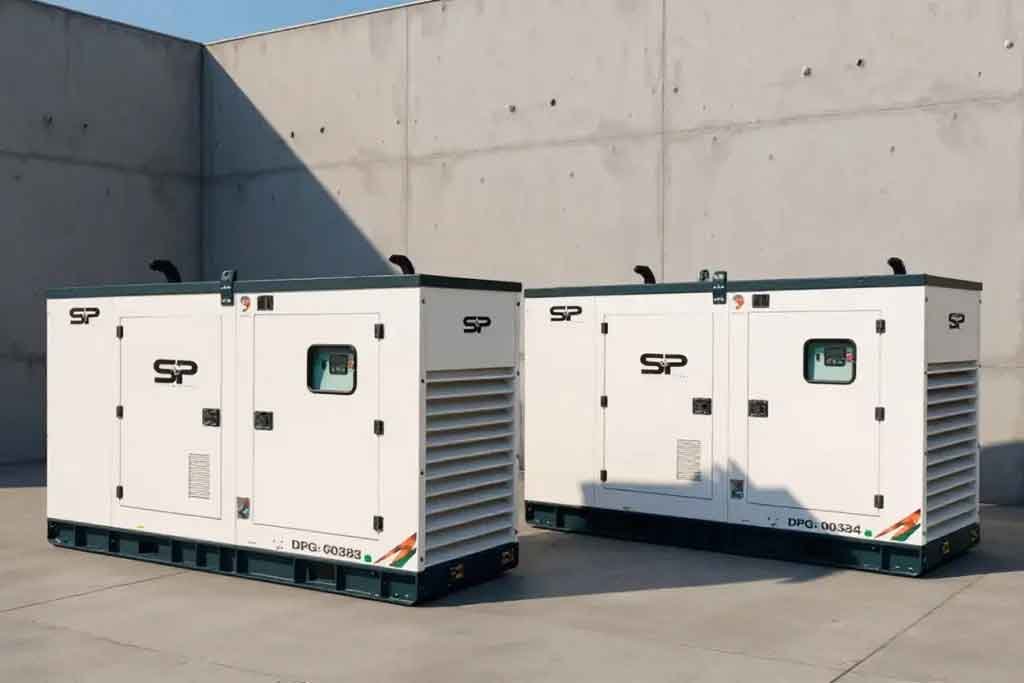
Whether managing a construction project in Abu Dhabi, running an outdoor event in Dubai, or establishing standby contingency power, generator rentals eliminate major upfront capital expenditure.
Because UAE climate conditions demand stable operation under high ambient temperatures, temporary power deployments rely on heavy-duty, sound-attenuated diesel generators.
Generator Specifications & Application Overview
Generator units are categorized by their prime power ratings (measured in kVA or kW).
| Generator Capacity | Common Applications |
| 5 kVA – 15 kVA | Small site tools, temporary lighting, small event booths. |
| 20 kVA – 50 kVA | Mobile site offices, small machinery, intermediate event support. |
| 100 kVA – 150 kVA | Mid-sized construction equipment, commercial building backup. |
| 250 kVA – 350 kVA | Heavy industrial plants, concrete pumps, major outdoor stages. |
| 500 kVA – 1000 kVA+ | Grid support, data center operations, high-capacity chiller fleets. |
Technical Considerations for Power Deployment
1. Load Profile & Capacity Sizing
Renting an oversized unit increases fuel burn, whereas under-sizing causes trips during motor startup surges. A professional load calculation ensures the generator operates efficiently under normal running loads.
2. Fuel Logistics
Fuel consumption scales based on electrical demand. Turning to turnkey fuel management services ensures continuous on-site delivery and routine tank refilling.
3. Cabling & Electrical Accessories
Operational setups typically include supplementary electrical infrastructure:
Power Cabling & Distribution: Main feeder cables and distribution boxes to safely distribute power across the site.
External Fuel Tanks: Double-walled bulk storage tanks for extended operations without frequent refueling stops.
Automatic Transfer Switches (ATS): Required for critical backup installations to automatically transfer load during grid outages.
4. Site Setup & Servicing
Deployment requires flatbed transportation, crane handling, certified electrical connection, and routine service schedules (oil, filter changes, and cooling system maintenance).
Rent vs. Buy Criteria
Choose Rental: For project-based workloads, temporary utility delays, seasonal peak demand, or avoiding depreciation risks.
Choose Purchase: For long-term facilities requiring permanent, continuous site infrastructure over multiple years.
Consult a certified HVAC or power engineering specialist to execute an accurate load assessment before selecting equipment capacities.
Comprehensive Guide to Temporary Cooling & Power Rentals in the UAE
When managing industrial processes, construction sites, or commercial infrastructure in the UAE, high summer temperatures exceeding 45°C turn temp-cooling and off-grid power from operational preferences into non-negotiable requirements. Selecting the correct machinery and accessory infrastructure is vital to avoiding structural thermal shutdowns or electrical overloads.
Part 1: Industrial Chiller Rentals
Temporary chilling setups fall into two mechanical categories: Air-Cooled Chillers (ideal for rapid outdoor positioning) and Water-Cooled Chillers (more energy-efficient for long-term integration with access to cooling towers or continuous water feeds).
Equipment Specifications & Technical Capabilities
Small Commercial & Water Chillers (10 – 50 TR): High-mobility units designed for domestic water cooling loops, small process applications (such as plastic molding), and spot-cooling enclosed commercial bays.
Medium Industrial Air-Cooled Chillers (100 – 200 TR): Self-contained units equipped with internal scroll or screw compressors, integrated expansion tanks, and built-in hydronic modules. Used widely for commercial office emergency coverage, low-rise building backup, and event venues.
Large Industrial & Modular Chillers (300 TR+): Heavy-duty, twin-screw compressor units deployed in parallel configurations for high-demand applications like concrete batching cooling (keeping pour temperatures below regulatory thresholds), district cooling plant augmentation, and high-rise developments.
Refrigerated Transport (Chiller Vans / Reefers): Mobile thermo-controlled payloads (1 to 3 tons) running on dual-mode (engine-driven and electric standby) compressor systems, tailored for cold-chain food distribution, medical supplies, and pharmaceutical logistics.
Essential System Accessories & Infrastructure
A temporary chiller cannot operate standalone; a full installation requires specific ancillary equipment:
Flexible Water Hoses: Heavy-duty, rubber/flexible PVC hoses fitted with quick-connect Bauer or Camlock couplings designed to withstand high operational head pressure.
External Pump Skids & Buffer Tanks: Supplementary inline pumps to maintain fluid flow across high static-head heights, along with thermal buffer tanks to prevent compressor short-cycling under fluctuating heat loads.
Air Handling Units (AHUs) & Fan Coil Units (FCUs): For temporary space cooling, chillers circulate fluid through external skid-mounted AHUs paired with flexible air ducting to distribute conditioned air inside temporary structures or halls.
Part 2: Diesel Generator Rentals
Temporary power systems deliver prime, continuous power or standby emergency power to heavy equipment, civil engineering sites, and off-grid facilities across the Middle East. Units are rated in kVA (apparent power) or kW (actual power output).
Equipment Specifications & Technical Capabilities
Compact / Portable Sets (5 kVA – 15 kVA): Single-phase or three-phase small diesel units used for temporary site lighting towers, hand-held power tools, and outdoor vendor stalls.
Mid-Range Utility Sets (20 kVA – 50 kVA): Mobile sound-attenuated units powering remote construction offices, small dewatering pumps, and intermediate site facilities.
Commercial Power Units (100 kVA – 150 kVA): Heavy-duty 400V/50Hz diesel gensets designed for continuous load management, capable of starting induction motors for tower cranes, concrete mixers, and medium cooling loads.
Heavy Industrial Sets (250 kVA – 350 kVA): Large, enclosed units capable of running heavy industrial plant machinery, large-scale events, and concrete pumps under peak ambient heat.
High-Capacity Power Plants (500 kVA – 1000 kVA+): Containerized, synchronized generator sets. These can be paralleled into multi-megawatt configurations for utility grid support, data center backup, and large industrial plant operations.
Essential Power Accessories & Logistics
To safely distribute electricity from the engine set to site equipment, rentals include:
Automatic Transfer Switches (ATS): Essential for critical facility backup; the ATS detects grid power failures and signal-starts the generator, transferring the load automatically within seconds.
Auxiliary Bulk Fuel Tanks: Double-walled, bundled fuel tanks (ranging from 1,000 to 5,000 liters) with automatic fuel transfer pumps to maintain continuous run-time without frequent tanker visits.
Sound Attenuation (Silent Enclosures): Sound-proof canopies engineered to reduce operating noise levels below 70 dB(A) at 7 meters, mandatory for residential zones, hospitals, and outdoor public events.
Technical Selection Checklist
-
Calculate Peak vs. Running Load: Ensure motor starting surges (kVA inrush current) or thermal heat-spike peaks are factored into equipment sizing to prevent breaker trips.
-
Environmental Conditions: Confirm that cooling radiators and condenser coils are rated for high ambient temperatures (up to 50°C) with anti-corrosion protective coatings.
-
Site Access & Logistics: Plan flatbed transport route clearances, ground load-bearing limits, and crane positioning for heavy mechanical deployments.
-
Maintenance Schedules: Verify vendor maintenance service response times, including scheduled oil/filter changes for generators and condenser coil flushing for chillers.