Phone:
(701)814-6992
Physical address:
6296 Donnelly Plaza
Ratkeville, Bahamas.

Phone:
(701)814-6992
Physical address:
6296 Donnelly Plaza
Ratkeville, Bahamas.
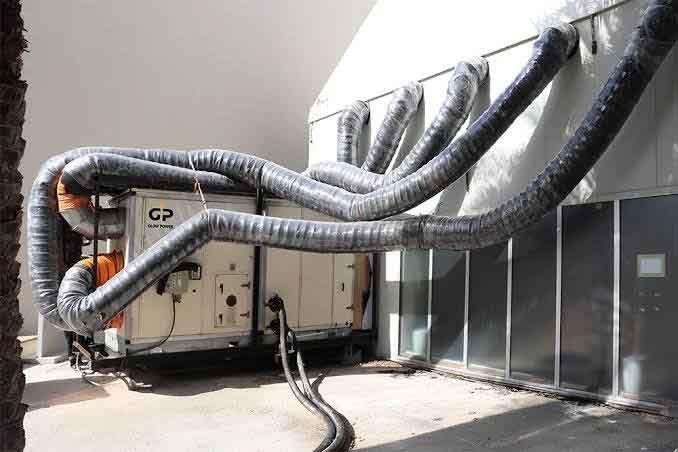
Reliable electricity is essential for construction sites, outdoor events, commercial activities, industrial operations, temporary rentalgenerate facilities, and emergency situations across the UAE. However, not every project can depend on a permanent electricity connection from the beginning. Construction may start before permanent power is available, an event may take place in an open location without suitable electrical infrastructure, or an existing facility may temporarily need additional capacity.
This is where temporary power solutions in the UAE become important.
Temporary power is not simply a matter of placing a diesel generator rental at a site and connecting equipment. A proper temporary power system can involve generators, distribution boards, cables, fuel systems, temporary lighting, transformers, changeover equipment, load management, earthing, protection and technical support. The exact arrangement depends on the project, electrical load, location, duration and applicable requirements.
UAE suppliers and specialist contractors currently provide temporary power for construction projects, events, exhibitions, industrial operations, infrastructure projects, emergency situations and remote locations. Solutions can range from a single mobile generator to a complete temporary electrical distribution system covering an entire project site.
Temporary power solutions are electrical systems designed to provide electricity to a location for a limited period rather than as a permanent power installation.
The temporary system can be used until permanent electricity becomes available, during a planned shutdown, when the existing supply cannot provide enough capacity, or when electricity is needed at a location that does not have a suitable fixed connection.
A temporary power arrangement may include a diesel generator, generator synchronisation equipment, distribution boards, power cables, temporary lighting, transformers, fuel tanks and other electrical equipment required to safely distribute electricity to the loads.
For example, a construction project may need electricity before its permanent building electrical system is commissioned. The contractor could use a temporary generator and distribution system to operate site offices, lighting, pumps, tools and other equipment during construction.
Likewise, an outdoor event may require temporary electricity for lighting, sound systems, catering equipment, displays, temporary cooling and other event infrastructure.
The important point is that temporary power is a complete power supply arrangement, not necessarily just a generator. Modern temporary power providers can plan generation, distribution, cabling, connections, commissioning, fuel coordination and technical support according to the requirements of the site.
The need for temporary electricity can arise for many different reasons.
Construction projects are one of the most common examples. Electrical requirements can begin during the early stages of a project, while the permanent electrical infrastructure may not yet be operational. Temporary power allows work to continue during this period.
The same principle applies to events. Concerts, exhibitions, festivals, sporting events and temporary venues can require substantial electrical capacity even though they are located in places that do not have a permanent power system designed for the event.
Temporary power can also be required when an existing electrical supply is unavailable or insufficient. Planned maintenance, electrical upgrades, equipment replacement and unexpected failures can create situations where an alternative power source is needed.
Specialist UAE providers describe applications including construction, infrastructure, industrial projects, emergency response, commissioning and events.
Construction is one of the clearest applications for temporary power solutions.
A project can require electricity long before the permanent building supply is ready. During construction, electricity may be needed for site offices, lighting, power tools, pumps, welding equipment, compressors, security systems, temporary accommodation and other equipment.
The required capacity can also change as construction progresses.
During initial site setup, the electrical demand may be relatively modest. Later, additional equipment and larger machinery can significantly increase the load. A temporary power system therefore needs to be planned around the actual project requirements rather than simply selecting a generator based on a rough kVA figure.
Current UAE temporary-power providers specifically highlight construction-site applications ranging from site offices and lighting to heavy equipment and complete site-wide distribution.
Site offices and welfare facilities can require electricity for lighting, computers, air conditioning and other basic services.
Construction lighting can be important when work continues after daylight hours.
Power tools and equipment can include drills, saws, grinders and other electrical machinery.
Water pumps may be required for dewatering and site operations.
Temporary cooling and ventilation can be particularly important in UAE working environments.
Security systems, access systems and communications equipment can also depend on continuous electricity.
Large construction projects may require several generators working together when the total load is beyond the capacity of a single unit.
Events present a different temporary power challenge.
A concert, exhibition, conference, festival or outdoor corporate event may operate for only a few hours or several days, but its electricity requirements can be significant.
Lighting, audio systems, LED displays, catering equipment, refrigeration, temporary cooling, vendor stands, production equipment and site facilities can all contribute to the electrical load.
A power interruption during an event can cause operational disruption and potentially affect equipment and attendees. For this reason, event power planning normally needs to consider not only the total load but also critical equipment, redundancy and distribution.
UAE temporary-power providers specifically identify festivals, concerts, exhibitions, conferences and sporting events as applications for temporary power systems.
For an event, the temporary electrical system may include generators, distribution boards, power cables, cable ramps, temporary lighting and other distribution equipment.
The system should be planned before equipment arrives at the venue. The location of generators, cable routes, distribution points and electrical loads all affect the final setup.
Temporary power can also become necessary when normal electricity is interrupted.
Businesses may experience electrical failures, equipment problems, planned maintenance or other circumstances in which normal supply cannot be relied upon.
In such cases, a mobile generator can provide an alternative source of electricity while the main problem is being addressed.
This is particularly useful when certain business operations cannot simply stop. Temporary power can support selected essential loads rather than necessarily powering an entire facility.
For example, a business might prioritize refrigeration, security systems, pumps, communications equipment, critical lighting or selected production equipment.
Dubai Electricity and Water Authority has also published requirements concerning backup generators for major projects, including provisions for access to mobile generators where appropriate.
Industrial facilities can have considerably larger and more complex electrical requirements than small commercial sites.
Manufacturing facilities, warehouses, processing operations, infrastructure projects and industrial shutdowns may require temporary electricity when equipment is being installed, maintained, upgraded or commissioned.
A temporary system can also provide additional generation capacity when existing infrastructure cannot meet a temporary increase in demand.
For larger projects, temporary power may involve multiple generators operating together, synchronisation systems and substantial electrical distribution infrastructure.
The objective is not simply to generate electricity but to provide an appropriately designed supply to the required loads.
Another important application is commissioning power.
A new facility may need electricity to test equipment before its permanent electrical system is fully operational. Temporary generation can provide the electricity required to energise systems during testing and commissioning.
This application is particularly relevant to large construction and infrastructure projects.
Temporary power specialists in the UAE identify commissioning and testing as a distinct application where equipment needs to be energised before permanent supply is available.
The temporary system should be planned around the equipment being tested, the required voltage and phase configuration, starting characteristics and the sequence in which systems will be energized.
Some projects take place away from established electrical infrastructure.
Remote construction sites, infrastructure works, temporary facilities and certain energy-sector operations may need independent electricity because connecting to a permanent utility supply is impractical or unavailable.
In these circumstances, generators can provide an independent source of electricity.
The UAE’s energy and construction sectors have also used temporary power solutions for remote oil and gas locations and other demanding applications.
Depending on the project, the temporary system can include generators, fuel management, distribution equipment and technical support.
The equipment required depends on the project.
Diesel generators remain one of the most widely used sources of temporary electricity for construction, industrial and event applications.
Generator capacity can range from relatively small units to large systems, and multiple generators can be combined for higher power requirements.
Some UAE rental providers currently offer generator systems from tens of kVA to more than 1,000 kVA, although the appropriate capacity depends on the actual load rather than the maximum available equipment.
Generating electricity is only one part of the system. The electricity needs to be distributed safely to the equipment that requires it.
Temporary distribution boards can divide the supply into separate circuits and provide appropriate protection and isolation.
Cables connect the generator or other source to distribution equipment and ultimately to electrical loads.
Cable selection and routing are important because construction sites and event locations can expose cables to mechanical damage, vehicles, pedestrians and environmental conditions.
DEWA’s electrical installation regulations specifically address cable protection on construction sites and require appropriate arrangements where cables cross roads or walkways.
Construction sites may need lighting for night work, access routes, security and general site operations.
Events can also require temporary lighting systems.
Tower lights and other portable lighting systems can form part of a wider temporary power arrangement.
Some projects require voltage transformation to match the requirements of particular equipment.
Transformers can therefore be incorporated into larger temporary power systems when required.
Diesel generators require fuel, so longer projects may require fuel storage and refuelling arrangements.
Fuel planning becomes increasingly important when generators are expected to operate for extended periods or continuously.
Choosing a temporary power system should begin with the electrical load rather than the generator itself.
A proper assessment should consider what equipment needs to operate, when it operates, whether different loads start simultaneously and whether some equipment has high starting demand.
Temporary-power planning guidance for UAE projects recommends providing information about the equipment, operating conditions, simultaneous loads, supply quality, installation location and other site requirements before selecting equipment.
Prepare a list of all equipment that will be connected.
This can include:
However, simply adding every nameplate rating may not provide an accurate picture of the actual requirement.
Some equipment operates intermittently, while other equipment can have a significant starting current.
Motors, pumps, compressors and certain other equipment can require substantially more power during startup than during normal operation.
A generator that appears large enough based only on running load may therefore struggle when large motors start.
This is one reason professional temporary-power planning considers both running and starting requirements.
A project operating for eight hours per day has different fuel and operational requirements from one requiring continuous operation.
The expected operating schedule should therefore be considered when planning generator capacity, fuel supply and maintenance.
Construction sites often change as projects progress.
A temporary power system should not be planned only around today’s equipment if additional loads will be introduced later.
This may mean selecting a scalable solution or allowing for additional generation capacity.
Available space, access for delivery vehicles, cable routes, ventilation, noise considerations and fuel arrangements all affect the installation.
Generators should not simply be placed wherever there is empty space.
Their location needs to be evaluated as part of the overall temporary electrical system.
Choosing a generator that is too small can create operational problems.
The generator may be overloaded when several pieces of equipment operate together. Starting large motors may also cause voltage or frequency issues if the generator does not have adequate capacity.
However, selecting a generator that is much larger than necessary is not automatically better.
An oversized generator can operate inefficiently when consistently subjected to very light loads.
The better approach is to assess the actual electrical requirements and design the system around those requirements.
For larger installations, multiple generators can sometimes provide a more flexible solution than relying on a single very large unit.
The main difference is the intended duration and purpose.
Permanent power is designed as the long-term electrical infrastructure for a building, facility or development.
Temporary power is designed to provide electricity for a defined period or particular purpose.
A construction project, for example, may initially rely on temporary power before transitioning to permanent utility electricity.
Importantly, temporary power does not necessarily mean low-capacity power. A large construction project or major event can require a substantial temporary electrical system.
The distinction is therefore primarily about purpose and duration, not simply the amount of electricity supplied.
In the UAE, temporary electricity does not always mean generator power.
In Dubai, DEWA provides temporary electricity supply for construction purposes, with applications made under its construction-supply process. DEWA’s current guidance says contractors should submit applications for construction and permanent supply and provides specific requirements for construction supply.
DEWA’s electrical regulations also contain a dedicated section for construction-site installations, including requirements covering distribution assemblies, cables, isolation, separation of supplies and weatherproof outdoor equipment.
A generator-based temporary power system may instead be appropriate where utility temporary supply is unavailable, insufficient, impractical or where independent mobile power is required.
The right option depends on the project and the applicable utility and authority requirements.
Safety should be treated as part of temporary power planning rather than as an afterthought.
Temporary electrical systems can involve generators, high-current distribution equipment, cables, connections and multiple loads operating in changing site conditions.
For Dubai construction sites, DEWA’s regulations require construction-site electrical distribution assemblies to comply with BS 4363 and BS EN 61439. The regulations also address cable protection, earthing, switching and isolation, and separation of safety and standby supplies.
Abu Dhabi’s Electricity Wiring Regulations also contain specific requirements concerning standby generators. For example, generator changeover arrangements must prevent unintended paralleling between the generator and incoming mains supply unless specifically assessed, interlocked and approved.
The Abu Dhabi occupational safety code also requires appropriate inspection, maintenance and testing arrangements for electrical systems, with documented programs based on factors such as risk, equipment criticality, manufacturer recommendations and regulatory requirements.
These requirements show why temporary power should be designed and installed by competent electrical professionals rather than treated as a simple plug-and-play arrangement.
Earthing is an important part of a temporary power installation.
A generator and its connected distribution system need an appropriate earthing arrangement based on the design and applicable requirements.
Protection devices also need to be correctly selected and coordinated.
The exact arrangement can differ depending on the generator, distribution system, site and local authority requirements, so businesses should have the system assessed by a competent electrical professional.
This is especially important when a temporary generator is being connected to an existing building electrical system.
One of the critical considerations when using a generator alongside utility power is preventing unintended connection between the two supplies.
Abu Dhabi’s Electricity Wiring Regulations state that changeover arrangements must prevent the possibility of paralleling the generator and incoming mains supply unless the arrangement is specifically designed, interlocked and approved.
This is an area where professional installation is particularly important.
A temporary generator should not be connected to an existing electrical system using improvised arrangements.
Temporary power equipment operating in the UAE may be exposed to high temperatures, dust, humidity and other environmental conditions.
These conditions should be considered when selecting, positioning and maintaining equipment.
Generators require appropriate airflow and ventilation. Exhaust gases must also be safely directed away from occupied areas and air intakes.
The installation environment can influence equipment performance, maintenance requirements and reliability.
For outdoor construction sites, protection of cables and electrical equipment from physical damage is also important.
Noise can be an important factor when temporary generators are used near residential areas, offices, hotels, hospitals or event venues.
Sound-attenuated or “silent” generator packages are available for applications where reducing generator noise is important. UAE rental providers specifically market silent generator solutions for noise-sensitive environments.
However, the acceptable noise level depends on the project location and applicable requirements.
Businesses should therefore consider the surrounding environment when choosing equipment.
Fuel planning is another important part of temporary power management.
A generator can only provide continuous electricity if there is sufficient fuel available.
For short events, the fuel requirement may be relatively straightforward. Longer construction and industrial projects require more structured fuel planning.
The project team should consider expected operating hours, generator capacity, anticipated load and refuelling arrangements.
For longer projects, fuel management can be incorporated into the overall temporary power service.
Yes.
“Temporary” describes the intended nature of the installation rather than necessarily meaning that it will operate for only a few days.
Construction projects can last months or years, and temporary power may be required throughout significant portions of the project.
The system should therefore be designed and maintained appropriately for the expected duration.
For long-term temporary power requirements, businesses should pay particular attention to preventative maintenance, fuel logistics, load changes, spare capacity and technical support.
Temporary power can be appropriate in several situations.
Construction and development projects may need electricity before the permanent supply is commissioned.
Businesses may require an alternative source while electrical equipment or infrastructure is being serviced.
A mobile generator can provide temporary electricity while the normal supply is being restored.
A facility may occasionally need more electricity than its existing infrastructure can provide.
Events, exhibitions, festivals and outdoor activities may require electricity at locations without permanent infrastructure.
Sites located away from suitable utility infrastructure may need independent generation.
New equipment and facilities may require electricity for testing before permanent power is available.
For projects with a short or uncertain duration, renting can be an attractive option.
Buying a generator involves the initial equipment cost as well as maintenance, storage, transportation and eventual resale considerations.
Rental can allow a business to use the required capacity for the period it actually needs it.
It can also provide access to different generator sizes as project requirements change.
Current UAE rental providers offer short-term and longer-term generator solutions for construction, events, emergency requirements and industrial applications.
For a project that needs temporary electricity for only a defined period, generator rental in the UAE can therefore be considered alongside purchase as part of the project planning process.
A provider can recommend a much more suitable solution when the initial project information is accurate.
Before requesting a temporary power solution, prepare:
Project location: The city, site access and installation environment.
Project duration: How long the power system will be required.
Equipment list: The machinery, appliances and systems that need electricity.
Electrical ratings: Voltage, phase, kW or kVA information where available.
Starting loads: Particularly for motors, pumps and compressors.
Operating schedule: Whether equipment operates continuously, intermittently or according to shifts.
Future requirements: Any equipment expected to be added later.
Site information: Available space, cable routes and access for generator delivery.
Power quality requirements: Whether particular equipment requires a specific supply configuration or quality.
Temporary-power planning guidance for UAE projects recommends beginning with the load and operating plan rather than simply providing an estimated kVA number.
One common mistake is choosing a generator based only on the largest piece of equipment.
The total operating load and starting characteristics of all connected equipment should be evaluated.
Another mistake is ignoring future load growth. Construction sites rarely remain electrically identical throughout their entire lifecycle.
Poor cable routing is another concern. Cables can be damaged by vehicles, construction equipment or pedestrian traffic if they are not adequately protected.
Insufficient fuel planning can also result in unnecessary interruptions.
Businesses should also avoid treating generator installation as a simple connection exercise. Generator changeover, earthing, protection and distribution need to be properly designed.
Finally, temporary systems should not be ignored after installation. Inspection, maintenance and testing remain important throughout the operating period.
A professional temporary power project generally starts with understanding the site’s electrical requirements.
The next step is determining the required generation capacity and distribution arrangement.
The provider can then identify suitable equipment, including generators, distribution boards, cables and supporting equipment.
The site layout is considered to determine where equipment should be positioned and how cables will reach the required loads.
After installation, the system should be inspected, tested and commissioned according to the applicable requirements.
During operation, fuel, maintenance and technical support need to be managed.
At the end of the project or temporary requirement, the equipment can be safely disconnected and removed.
This approach is much more reliable than simply delivering a generator and expecting site personnel to determine the rest of the installation themselves.
Yes, provided the system is appropriately planned for the event.
The temporary power requirement can vary significantly between a small corporate gathering and a large outdoor festival.
An event with lighting, audio, LED screens, catering, cooling and vendor areas can require a considerably more complex distribution system than a small temporary installation.
Event planners should therefore provide the equipment schedule and venue layout early enough for the temporary power system to be designed around the event.
UAE providers currently offer temporary power services specifically for exhibitions, concerts, festivals, sporting events and other temporary venues.
Temporary power requirements are not limited to Dubai.
Projects throughout Abu Dhabi, Sharjah, Ajman, Ras Al Khaimah, Fujairah and Umm Al Quwain can require temporary electricity for construction, events, industry, infrastructure and emergency applications.
The exact authority requirements can differ depending on the emirate and project.
For example, Dubai has DEWA requirements for construction electricity supply and construction-site electrical installations, while Abu Dhabi’s electricity installations are subject to the Department of Energy’s regulations.
For this reason, businesses should confirm the applicable requirements for the specific project location rather than assuming that one temporary electrical arrangement applies identically throughout the UAE.
A temporary power system is often supporting activities that cannot afford unnecessary interruptions.
A construction contractor may be working against a project deadline. An event organizer may have hundreds or thousands of people depending on lighting, cooling and audio-visual systems. An industrial facility may need electricity to complete a shutdown or commissioning activity.
The objective is therefore not simply to provide electricity.
The objective is to provide the right amount of electricity, to the right loads, in a safe and reliable way, for the required period.
That requires proper load assessment, equipment selection, distribution planning, installation, protection, maintenance and monitoring.
A temporary power solution is an electrical system designed to supply electricity to a location for a limited period or specific purpose. It can include generators, distribution boards, cables, temporary lighting, transformers, fuel systems and related equipment.
They are commonly used for construction sites, events, exhibitions, industrial projects, commissioning, emergency situations, remote sites and locations where permanent electrical infrastructure is unavailable or insufficient.
Yes. Diesel generators are widely used for temporary construction, industrial, event and emergency power applications. The required generator size depends on the project’s electrical load and operating conditions.
Start by calculating the actual electrical load. Consider running loads, starting loads, operating schedules, future equipment, voltage requirements and the site’s physical conditions. A qualified electrical professional or temporary-power provider can then recommend the appropriate configuration.
Yes. Temporary electricity is commonly used during construction before permanent electrical infrastructure is available. DEWA has specific requirements for construction electricity supply and construction-site installations in Dubai.
Yes. Events such as concerts, exhibitions, festivals and sporting activities can use temporary generators and electrical distribution systems where permanent electricity is unavailable or inadequate.
It depends on the duration and requirements. For short-term or variable projects, rental can avoid the upfront cost and long-term ownership responsibilities associated with purchasing equipment. For recurring or permanent requirements, purchasing may make more sense after a proper cost comparison.
Yes. Temporary electrical installations still require appropriate protection, distribution, isolation, earthing, inspection and maintenance. Dubai and Abu Dhabi both have published requirements relevant to temporary and generator-based electrical systems.
Sometimes, but not always. The answer depends on the site’s total load, starting requirements and operating pattern. Larger projects may require multiple synchronized generators or a more extensive temporary distribution system.
There is no single duration that applies to every temporary power project. Some systems operate for a few hours or days, while construction and industrial projects can require temporary generation for much longer periods. The equipment and maintenance plan should be appropriate for the expected operating period.
Temporary power solutions in the UAE provide a practical way to maintain electricity when permanent power is unavailable, additional capacity is required or electricity is needed at a temporary location.
Construction sites can use temporary generation during early project stages. Events can use it to power lighting, sound, cooling and temporary facilities. Industrial projects can use temporary systems during shutdowns, commissioning and upgrades, while businesses can use mobile generation during certain power emergencies.
The important consideration is that temporary power should be treated as a complete electrical solution rather than simply a generator. Load assessment, generator selection, distribution, cabling, earthing, protection, fuel planning, maintenance and site conditions all contribute to a reliable installation.
Dubai’s DEWA regulations and Abu Dhabi’s Electricity Wiring Regulations demonstrate that temporary and generator-based electrical systems also need to be planned with applicable technical and safety requirements in mind.
For UAE businesses and project managers, the best temporary power solution is therefore the one designed around the actual project: what needs to run, where it needs to run, how long it needs to run, and what electrical and safety requirements apply.