Phone:
(701)814-6992
Physical address:
6296 Donnelly Plaza
Ratkeville, Bahamas.

Phone:
(701)814-6992
Physical address:
6296 Donnelly Plaza
Ratkeville, Bahamas.
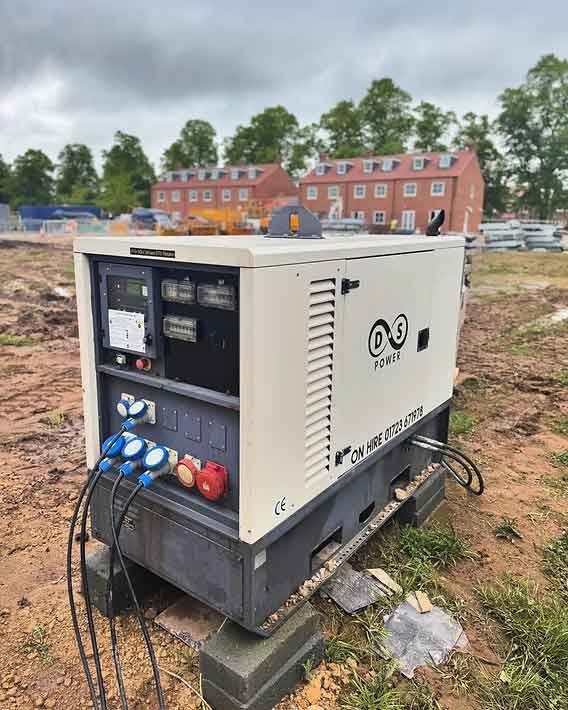
When businesses need temporary or backup electricity in the UAE, renting a generator can be more practical than purchasing a machine outright. Construction sites, events, commercial facilities, industrial operations, hotels and emergency-response projects can all require additional power for a limited period.
However, the generator rental cost in UAE is not determined by the generator alone. The final quotation can depend on the generator’s kVA capacity, rental duration, fuel consumption, delivery distance, installation requirements, operating hours, maintenance support and site conditions.
UAE rental companies offer generators across a wide range of capacities. For example, current UAE rental providers advertise diesel generators from around 20 kVA through 1,500 kVA, with pricing structured around daily, weekly and monthly rental periods.
This guide explains the main factors that determine generator rental costs and what businesses should check before accepting a quotation.
A generator rental quotation usually consists of more than a simple equipment rental charge.
The main cost factors are:
Generator capacity in kVA
Rental duration
Fuel consumption
Fuel supply arrangement
Delivery and collection
Installation and commissioning
Cables and distribution equipment
Load-bank testing, where required
Operator requirements
Preventive maintenance
Emergency support
Site accessibility
Location and distance
Rental period and usage pattern
A supplier may include some of these services in the rental rate while charging separately for others. Therefore, two quotations with apparently similar generator prices may have significantly different total costs.
Generator capacity is one of the biggest factors influencing rental cost.
A 100 kVA generator and a 500 kVA generator are not equivalent rental products. The larger generator has a higher power output and generally involves greater equipment, transportation, fuel and handling requirements.
UAE legislation classifies generating sets into capacity bands, including units up to 75 kVA, above 75 to 375 kVA, above 375 to 750 kVA and above 750 kVA.
For rental purposes, suppliers may commonly offer equipment across categories such as:
| Generator Size | Typical Applications |
|---|---|
| Small kVA units | Small offices, security facilities and light temporary loads |
| Medium kVA units | Construction sites, events and commercial facilities |
| Larger kVA units | Industrial operations, large events and major projects |
| High-capacity units | Large facilities, infrastructure and critical-power applications |
These categories are illustrative rather than fixed market pricing bands. The appropriate generator should be selected according to the actual electrical load rather than simply choosing the largest available unit.
It can be tempting to select an oversized generator for additional “safety margin.” Some reserve capacity is useful, but excessive oversizing can make the rental unnecessarily expensive and may reduce operating efficiency.
A better approach is to establish the expected load and identify equipment with starting-current requirements.
For example, motors, pumps, compressors and air-conditioning equipment can behave differently during startup than during normal operation. The generator therefore needs to be evaluated against both running and starting loads.
Before requesting a quotation, prepare a load list containing:
Equipment name
Running power
Starting requirements
Quantity
Operating hours
Whether the equipment runs simultaneously
A qualified generator supplier can then recommend an appropriate capacity.
Rental duration is another major pricing factor.
A generator may be rented for:
A single day
Several days
One or more weeks
A month
Several months
A longer project period
UAE rental companies commonly provide daily, weekly and monthly rental arrangements, with longer rental periods potentially receiving different rates.
For a short event, paying a daily rate may make sense. For a construction project lasting several months, a monthly arrangement may provide better overall economics.
When comparing rental periods, calculate the total project cost, not simply the advertised daily rate.
For example:
Total rental cost = equipment rental + fuel + delivery + installation + additional services + applicable taxes/fees
The exact components will depend on the supplier’s quotation.
For diesel generators, fuel can become one of the largest ongoing expenses during a long rental.
The fuel cost depends on:
Generator size
Electrical load
Number of operating hours
Fuel consumption characteristics
Load profile
Diesel price
Whether fuel is supplied by the rental company or customer
A generator operating continuously at a high load will generally consume considerably more fuel than one operating for a few hours a day at a lighter load.
This means that comparing generator rental prices without considering fuel can produce a misleading result.
Rental companies may structure agreements differently.
Fuel-inclusive rental:
The supplier provides fuel as part of the agreed arrangement, subject to the contract terms.
Fuel-exclusive rental:
The customer rents the generator but purchases and manages the diesel separately.
Fuel-exclusive arrangements can provide more control over consumption, while fuel-inclusive packages may simplify project management.
Before signing the agreement, ask:
Is fuel included?
Is there a fuel allowance?
Who monitors fuel consumption?
Who arranges refuelling?
Is emergency refuelling available?
Are fuel tanks included?
What happens if operating hours increase?
Delivery is another cost that should be included when calculating the real rental price.
A generator may need to be transported from the supplier’s yard to:
A construction site
Hotel
Factory
Warehouse
Event venue
Commercial building
Remote project location
Industrial facility
The delivery cost can depend on the generator’s size, transportation requirements, distance and site accessibility.
UAE rental providers promote delivery services to locations across Dubai and other areas, with some offering fast delivery and site support.
Additional transportation or handling requirements can arise when:
The site is far from the supplier
The generator is particularly large
A special transport vehicle is required
Crane lifting is necessary
Access roads are restricted
The generator must be positioned in a difficult location
Multiple generators need to be delivered
Always ask whether delivery and collection are included in the quoted rental rate.
Getting the generator to the site is only part of the process.
Depending on the application, the installation may require:
Power cables
Distribution boards
Changeover equipment
Earthing
Fuel connections
Exhaust arrangements
Protection systems
Cable ramps or protection
Synchronisation equipment
Testing and commissioning
For a simple temporary application, installation may be relatively straightforward. A large industrial project may require a much more detailed electrical setup.
This is why it is important to provide the supplier with site information before receiving a final quotation.
The generator itself does not automatically solve the entire temporary-power requirement.
Electricity may need to travel from the generator to the equipment or temporary distribution system.
The project may therefore require:
Power cables
Distribution panels
Temporary electrical boards
Connectors
Changeover switches
Cable protection
Earthing equipment
The required equipment depends on the generator capacity, distance between the generator and load, voltage, installation arrangement and site conditions.
If these accessories are not included in the base rental price, they can add to the total project cost.
A generator running for an extended period needs appropriate maintenance.
Rental companies may offer services such as:
Preventive maintenance
Routine inspections
Emergency breakdown support
Oil and filter servicing
24/7 technical assistance
Refuelling support
Replacement equipment
Current UAE rental providers advertise maintenance and installation support alongside generator rental, while some offer 24/7 service.
For critical applications, support can be just as important as the rental price.
A slightly cheaper generator without adequate technical support may expose a project to greater operational risk.
Emergency rentals often require rapid deployment.
For example, a business experiencing an unexpected power failure may need a generator immediately rather than waiting for normal delivery scheduling.
Emergency requirements can involve:
Urgent transportation
Immediate installation
After-hours technical support
Temporary cabling
Fuel delivery
Replacement or backup equipment
The final cost will depend on the circumstances and supplier agreement.
For critical facilities, speed and reliability should therefore be evaluated alongside price.
Construction sites are among the common applications for temporary generators.
Power may be needed for:
Site offices
Lighting
PowePumps
Welding equipment
Temporary facilities
Air-conditioning
Material-handling equipment
Construction demand can change as the project progresses. A generator requirement during excavation may not be the same as the requirement during finishing work.
Instead of selecting equipment based on the first stage of the project alone, consider whether the electrical load will increase or decrease later.
A flexible rental agreement can make it easier to change generator capacity when project requirements change.
Events have a different power profile from construction sites.
Temporary electricity may be needed for:
Stage equipment
Audio systems
Lighting
Catering
Refrigeration
Air-conditioning
Displays
Temporary structures
Reliability is especially important because an electrical interruption during an event can immediately affect guests, equipment and operations.
For large events, it may also be appropriate to discuss standby or backup capacity with the rental provider.
Hotels, commercial buildings and other occupied facilities can require generators for emergency or temporary power.
In Dubai, DEWA has previously highlighted the importance of backup generators at major buildings and projects, with capacity intended to support systems such as lighting, elevators, surveillance, alarms and fire-and-safety equipment. The authority also emphasized proper maintenance to ensure generators operate effectively when required.
The exact requirements for a particular facility depend on its design, systems, authority requirements and intended use.
Generator operation also has environmental considerations.
Federal environmental legislation states that emissions of smoke, vapours and fumes resulting from fuel combustion for activities including power generation and construction must remain within permissible limits, with precautions required to reduce pollutants.
For this reason, generator selection should consider more than kVA and rental price.
Depending on the project, buyers should discuss:
Exhaust arrangements
Generator placement
Noise
Fuel storage
Emissions
Ventilation
Applicable site restrictions
A professional rental company should be able to advise on the practical requirements for the intended installation.
When comparing suppliers, request a fully itemised quotation.
A useful comparison should include:
| Cost Component | What to Check |
|---|---|
| Generator rental | kVA rating and rental period |
| Fuel | Included or charged separately |
| Delivery | Delivery and collection charges |
| Installation | Setup and commissioning |
| Cables | Length, size and included quantity |
| Distribution | Panels and accessories |
| Maintenance | Routine and emergency support |
| Operator | Whether an operator is included |
| Refuelling | Responsibility and charges |
| Standby unit | Whether backup equipment is required |
| Taxes/fees | Applicable additional charges |
This makes it easier to identify the actual cost rather than comparing headline rental rates.
Suppose a construction project needs a generator for one month.
Instead of looking only at the monthly equipment rental, calculate:
Monthly generator rental
fuel consumption
delivery and collection
installation
cables and distribution equipment
maintenance/support
other applicable charges
= Estimated project cost
The actual amount will vary depending on the generator capacity, load profile, rental company, location and contract.
This approach is more useful than publishing a single “UAE generator rental price” because there is no universal rate that applies to every project.
Businesses can reduce unnecessary costs by planning the rental properly.
Avoid paying for substantially more capacity than the project requires.
A detailed load list helps the supplier recommend appropriate equipment.
Look at rental, fuel, transportation and installation together.
If the project lasts several months, ask whether a longer-term agreement provides better commercial terms.
Determine whether delivery, installation, cables, maintenance and fuel are included.
Urgent transportation can create additional logistical requirements.
For long-term rentals, fuel management can have a major effect on operating expenditure.
Before confirming your rental, ask:
What generator size do I need?
Provide your equipment list and maximum expected load so the supplier can assess the requirement.
Is the quoted price for the generator only?
Ask specifically about delivery, installation, fuel, cables and maintenance.
Is diesel included?
Confirm whether the quotation is fuel-inclusive or fuel-exclusive.
How much does delivery cost?
Provide the exact project location and site-access information.
Is installation included?
Check whether setup, commissioning and electrical connections are included.
What happens if the generator fails?
Ask about emergency replacement and technical support.
Can I change the generator size later?
This can be important for projects where electrical demand changes.
Is a backup generator available?
For critical applications, discuss standby arrangements.
The generator rental cost in UAE should be evaluated as a complete project expense rather than a simple daily or monthly equipment rate.
The generator’s kVA capacity determines the power available and is a major factor in the rental price. Fuel consumption affects ongoing operating costs, while delivery, installation, cabling, distribution equipment and maintenance can influence the final quotation.
The most reliable way to control costs is to define the required load, rental duration, operating hours and site conditions before requesting quotations. Then compare suppliers on a like-for-like basis, including all additional charges.
For businesses renting generators in the UAE, the best deal is not necessarily the lowest advertised rate. It is the quotation that provides the right capacity, transparent costs, dependable support and suitable equipment for the project’s actual power requirements.