Phone:
(701)814-6992
Physical address:
6296 Donnelly Plaza
Ratkeville, Bahamas.

Phone:
(701)814-6992
Physical address:
6296 Donnelly Plaza
Ratkeville, Bahamas.
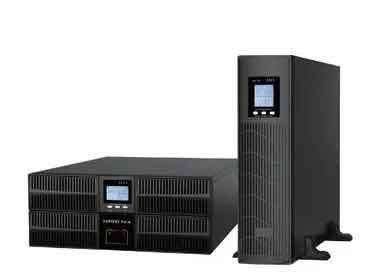
Reliable electricity is essential for almost every modern business in the UAE. Offices depend on computers and communication systems, retail businesses rely on point-of-sale equipment, hotels need continuous operation of essential services, construction sites require dependable temporary electricity, and industrial facilities may have equipment that cannot simply stop when utility power is interrupted.
This is where Reliable Power Backup Solutions UAE become important. A power backup system provides an alternative source of electricity when the main supply becomes unavailable or unstable. Depending on the application, this can include an uninterruptible power supply (UPS), diesel generator, battery energy storage system, inverter, or a combination of several technologies.
The purpose is not necessarily to keep every electrical load operating indefinitely. Instead, a properly designed backup system supplies the critical loads for the required period, protects sensitive equipment from electrical disturbances, and gives the business enough time to continue operations, transfer to another power source, or shut down equipment safely.
In the UAE, backup power planning is particularly important for commercial buildings, generator rental industrial facilities, data centres, healthcare environments, construction projects, hospitality properties, and other applications where an unexpected interruption can affect safety, productivity, equipment, or business continuity.
Reliable power backup solutions are systems designed to provide electricity when the normal utility supply is interrupted, unavailable, or unsuitable for connected equipment.
A backup arrangement can be as simple as a small UPS protecting a computer or network device, or as complex as an integrated system containing multiple generators, UPS units, batteries, automatic transfer equipment, distribution equipment, and monitoring systems.
UAE suppliers commonly provide combinations of UPS systems, diesel generators, battery backup systems, and other power-management equipment according to the customer’s load requirements. Safe Line, for example, describes power backup systems around UPS, generators, and battery solutions, while Samco focuses on UPS-based business and IT continuity applications.
The right solution therefore depends on several factors, including:
A reliable solution is not simply the largest generator or UPS available. It is a system correctly matched to the site’s electrical requirements and operating conditions.
A power interruption can create consequences that go far beyond lights switching off.
For an office, an outage can interrupt computers, network equipment, communications, access-control systems, and business applications. In a retail environment, it can interrupt payment systems and refrigeration. In an industrial facility, an uncontrolled shutdown can interrupt production and potentially create equipment or process problems.
Critical facilities have even greater requirements. Hospitals, data centres, emergency services, telecommunications infrastructure, and other essential facilities may need power continuity for safety and operational reasons.
Dubai Electricity and Water Authority has specifically addressed backup generation for major projects in Dubai. Its guidance states that backup generators for major buildings and landmarks should have sufficient capacity for essential requirements including lighting, elevators, escalators, automatic doors, surveillance cameras, alarm systems, and fire and safety equipment. DEWA also stresses proper maintenance so the generators operate effectively when required.
This illustrates an important principle: backup power should be designed around essential loads rather than simply attempting to power everything without assessment.
The basic operating principle is straightforward.
Under normal conditions, the facility receives electricity from the utility network. The backup equipment remains ready to respond if the normal supply fails or falls outside acceptable operating conditions.
When a power problem is detected, the appropriate backup technology takes over.
The exact sequence depends on the system.
A UPS normally uses stored energy in batteries to provide power immediately or with extremely short transfer time. Schneider Electric explains that a UPS can protect equipment from outages, voltage variations, frequency variations, surges, and other power-quality problems. In an online double-conversion UPS, incoming AC power is converted to DC and then converted back to AC through an inverter, providing regulated output to the load.
A standby generator works differently. It normally remains ready while the utility supply powers the facility. When the utility source fails, an automatic transfer arrangement can transfer designated loads to the generator after the generator has started and reached suitable operating conditions.
For longer-duration interruptions, businesses may therefore use a UPS and generator together. The UPS can maintain critical electronic loads during the short period required for the generator to start and become available. The generator can then provide longer-duration backup.
This combination is especially useful when a business cannot tolerate even a short interruption.
There is no single backup technology that is ideal for every UAE business. The main categories have different strengths and applications.
An Uninterruptible Power Supply is designed to protect electrical and electronic equipment from power interruptions and power-quality problems.
UPS systems are widely used for computers, servers, networking equipment, telecommunications systems, security systems, industrial controls, and other sensitive loads.
One of the main advantages of a UPS is its ability to respond extremely quickly when the utility supply fails. Schneider Electric notes that UPS systems can continue supplying critical equipment during an outage until another backup source is ready or until equipment can be safely shut down.
UPS technology can include standby, line-interactive, and online double-conversion configurations. The appropriate type depends on the sensitivity of the load and the required level of power conditioning.
Diesel generators are commonly used where businesses need substantial backup capacity and longer operating periods.
A generator uses an engine to drive an electrical generator and produce electricity. A properly configured standby generator can automatically start when the normal power supply fails and provide electricity to selected loads.
Generators are particularly useful for commercial buildings, industrial sites, construction projects, warehouses, hotels, and other facilities with higher power requirements.
For major projects in Dubai, DEWA’s published requirements specifically address backup generators and their capacity for essential building services.
Battery-based systems store electrical energy and release it when required.
They can be used independently or integrated with UPS and other power systems. Battery technologies and configurations vary according to the required capacity, discharge characteristics, space, operating conditions, and project requirements.
Battery energy storage can be particularly useful where rapid response is important or where a facility wants to combine backup power with broader energy-management strategies.
An inverter converts DC electricity from a battery or other DC source into AC electricity that can be used by electrical equipment.
Inverter-based backup systems can support smaller loads and, depending on their configuration, larger applications. Their suitability depends on the equipment being powered and the required runtime and capacity.
A hybrid system combines more than one technology.
The UPS provides immediate protection, batteries provide stored energy, and the generator supplies longer-duration power.
For critical applications, combining technologies can provide greater resilience than relying on a single backup source.
UPS systems and generators perform related but different functions.
A UPS is generally designed to provide immediate power protection, while a generator is normally better suited to longer-duration power generation.
A UPS can respond almost immediately to a utility interruption, depending on its configuration. Its available runtime, however, is determined by battery capacity and load.
A generator can operate for much longer as long as it has sufficient fuel and remains properly maintained, but it normally requires time to start and reach operating conditions.
This is why many critical facilities do not treat UPS and generators as competing technologies. Instead, they can work together.
For example, when utility power fails:
Utility failure → UPS takes the critical load → generator starts → transfer system moves appropriate loads to generator → UPS continues protecting sensitive equipment
This approach can provide both immediate continuity and extended backup capability.
Selecting a backup system should start with the electrical load rather than with a particular equipment brand.
The first step is to determine which equipment genuinely needs backup power. This is known as identifying the critical load.
A business may not need to operate every air-conditioning unit, lighting circuit, or non-essential appliance during an interruption. Critical systems could instead include servers, networking equipment, security systems, emergency lighting, essential machinery, communications equipment, or specific production systems.
Once the critical load has been identified, engineers can assess the required capacity.
The backup system must be capable of handling the connected electrical demand.
For generators, engineers also need to consider starting requirements because motors and other equipment can have higher starting demands than their normal running load.
For UPS systems, the load’s power characteristics, power factor, growth expectations, and required autonomy are important.
A small office may only need enough battery runtime to save work and shut down equipment safely.
A data centre, industrial facility, hotel, or other critical operation may require longer continuity and therefore a generator or larger energy-storage system.
The required runtime should be established before choosing the equipment.
Ask how quickly the backup source needs to become available.
If even a brief interruption could cause a problem, a UPS may be required.
If the load can tolerate the time needed for a generator to start and transfer, a standby generator may be sufficient for those circuits.
Where both requirements exist, combining a UPS and generator can provide a more appropriate solution.
Businesses often increase their electrical demand as they add equipment, employees, servers, production lines, cooling equipment, or other systems.
Choosing a backup system with no allowance for future requirements can create another infrastructure problem later.
A properly planned system should therefore consider expected growth and whether additional generator, UPS, battery, or distribution capacity may eventually be required.
Reliability depends on more than the equipment itself.
A high-quality generator or UPS can still perform poorly if it is incorrectly sized, badly installed, improperly maintained, or connected to unsuitable electrical infrastructure.
Several factors contribute to reliable operation.
Oversizing and undersizing can both create problems. The system should be matched to the actual electrical requirements and operating conditions.
Electrical connections, transfer equipment, ventilation, fuel systems, battery arrangements, protection devices, and distribution equipment must be appropriately designed and installed.
Backup equipment cannot be treated as something that only matters during an emergency.
DEWA’s published backup-generator requirements specifically highlight periodic maintenance to ensure that generators operate effectively when needed.
Maintenance programs can include inspections, testing, battery checks, generator servicing, fuel-system checks, electrical inspections, and other procedures appropriate to the equipment.
A backup system should be tested under controlled conditions rather than assuming it will work simply because it has never been required.
Testing can reveal starting problems, weak batteries, control issues, transfer problems, fuel-system issues, or other faults before a real emergency occurs.
Modern UPS and power systems can provide information about load levels, battery condition, alarms, runtime, and other operating parameters.
Monitoring can help maintenance teams identify developing issues before they become failures. Modern UAE power-backup providers increasingly emphasize monitoring and intelligent management as part of business continuity systems.
The UAE’s hot and dusty environment makes proper equipment selection, installation, and maintenance especially important.
High ambient temperatures can affect electrical and mechanical equipment, while dust can accumulate on equipment and ventilation surfaces if suitable maintenance is not performed.
For generators, the surrounding environment can influence cooling and air intake requirements. For battery and UPS systems, temperature management is also important because battery performance and service life can be affected by operating conditions.
This does not mean that standard backup equipment cannot operate in the UAE. It means the system should be appropriately specified for the installation environment and maintained according to the manufacturer’s requirements.
For outdoor or industrial applications, the enclosure, ventilation, environmental protection, access arrangements, and installation location should all be considered during system design.
Reliable power backup systems can be used across many sectors.
Offices may use UPS systems to protect computers, servers, networking equipment, access control, and communications systems. Larger buildings can also require generator backup for designated essential services.
Data centres require highly reliable power infrastructure because servers and networking equipment can be extremely sensitive to interruptions.
UPS systems, batteries, generators, distribution equipment, monitoring, and redundancy can all form part of a data-centre power architecture.
Healthcare facilities can contain equipment and services that require continuous electrical availability. Backup arrangements are therefore designed around critical loads and applicable safety requirements.
Industrial businesses may use generators, UPS systems, or hybrid backup arrangements to support production equipment, control systems, instrumentation, security, and essential services.
Construction projects often operate before permanent electrical infrastructure is available or require temporary electricity for equipment and site operations.
Temporary generators and other temporary power solutions can provide electricity during these project stages.
Hotels depend on lighting, communications, security, access systems, refrigeration, elevators, and other services. Backup arrangements can help maintain essential operations during an interruption.
The biggest benefit is business continuity.
A backup system can reduce the operational impact of an unexpected power interruption by keeping essential equipment running.
It can also help protect sensitive equipment from certain electrical disturbances. UPS systems, for example, can protect against conditions such as voltage sags, overvoltage, frequency variation, harmonics, and transients, depending on the UPS configuration.
Other potential benefits include reduced downtime, improved operational resilience, protection of critical data and equipment, safer shutdown procedures, and greater confidence in emergency preparedness.
For large projects in Dubai, backup generation also forms part of the broader safety and continuity requirements addressed by DEWA.
Yes. In many critical applications, using a UPS and generator together can be more effective than depending on either system alone.
The UPS handles the immediate interruption and protects sensitive loads while the generator starts.
Once the generator is ready, the electrical system can transfer appropriate loads to generator power. The UPS can continue protecting sensitive equipment from electrical disturbances and can recharge its batteries as normal utility or generator power becomes available, depending on system design.
This layered approach is particularly useful where the business requires both fast power continuity and extended backup duration.
Not every business requires the same type or capacity of backup power.
The requirement depends on the building, application, electrical load, critical services, applicable authority requirements, and business continuity objectives.
Dubai has specific published requirements and guidance concerning backup generators for major projects and essential services. DEWA also maintains technical publications and circulars covering electrical infrastructure and backup arrangements.
Therefore, businesses should not assume that a generic backup generator is automatically suitable. The system should be evaluated against the project’s technical requirements and applicable local authority requirements.
There is no single price for power backup systems because the cost depends heavily on the technology, capacity, installation requirements, runtime, and project complexity.
For a UPS, factors can include UPS capacity, battery capacity, topology, redundancy, monitoring, installation, and commissioning.
For a generator, costs can vary according to generator capacity, engine and alternator specification, enclosure, fuel system, automatic transfer equipment, installation, cabling, controls, testing, and maintenance requirements.
A larger commercial or industrial project may also require additional distribution infrastructure and engineering work.
For this reason, businesses should compare complete system requirements rather than comparing equipment prices alone.
Maintenance requirements depend on the technology and manufacturer, but reliable operation requires a planned maintenance approach.
Generator systems require attention to the engine, fuel system, cooling system, batteries, electrical connections, controls, and other components.
UPS systems require battery monitoring, electrical inspections, alarm checks, cooling and ventilation checks, and manufacturer-recommended servicing.
Battery systems also require appropriate inspection and monitoring.
Most importantly, the backup source should be tested regularly under controlled conditions. Waiting for a real outage to discover a fault defeats the purpose of having backup power.
Choosing the equipment is only part of the decision. The provider’s engineering and support capabilities can have a significant effect on long-term reliability.
Look for a company that can assess the site’s electrical requirements, recommend an appropriate system, provide professional installation, perform testing and commissioning, and support the equipment after installation.
For larger projects, it is also useful to consider whether the provider can support preventive maintenance, emergency response, replacement parts, system upgrades, and future capacity requirements.
A reliable power backup partner should be able to explain why a particular solution is appropriate for the site’s load and operating requirements, rather than simply recommending the biggest available generator or UPS.
A dependable backup power strategy is about much more than installing a generator in a building.
The most effective solution starts by identifying critical loads, determining how quickly backup power is required, calculating the required capacity and runtime, selecting suitable technologies, and integrating those technologies correctly with the site’s electrical infrastructure.
For some UAE businesses, a UPS may provide the necessary protection. For others, a standby diesel generator may be more appropriate. Critical facilities may benefit from a combination of UPS, batteries, generators, transfer systems, and monitoring.
The UAE’s electrical infrastructure is designed for high reliability, but businesses with critical operations still need to plan for unexpected interruptions and ensure their own essential systems can remain operational. The UAE Government describes the Emirates National Grid as an interconnected system intended to strengthen the ability of the country’s electricity infrastructure to withstand major or sudden disturbances.
That makes Reliable Power Backup Solutions UAE an important part of business continuity planning rather than simply an emergency purchase.
Whether the requirement is for an office, hotel, data centre, industrial facility, construction project, retail operation, or critical infrastructure site, the right backup system should be selected according to the actual application, required uptime, electrical load, environmental conditions, and applicable technical requirements.
Reliable power backup solutions are systems that provide alternative electricity when the normal utility supply is interrupted or becomes unsuitable. They can include UPS systems, diesel generators, batteries, inverters, or combinations of these technologies.
Neither is universally better. A UPS is generally better suited to immediate power protection and sensitive electronic loads, while a generator is generally better for longer-duration backup and larger loads. Critical applications may use both.
A generator can continue operating for an extended period when correctly configured and supplied with sufficient fuel, provided it remains within its operating requirements and receives appropriate maintenance. Actual runtime depends on generator capacity, load, fuel-tank capacity, fuel consumption, and operating conditions.
Yes. UPS systems and diesel generators can be integrated in an appropriately designed backup architecture. The UPS can provide immediate continuity while the generator starts and becomes available for longer-duration backup.
DEWA has published requirements concerning backup generators for major projects and major buildings and landmarks in Dubai. The published guidance addresses essential loads and states that generators should be properly maintained. Specific project requirements should always be checked with the relevant authority and project consultant.
Start by identifying the equipment that must remain operational during an outage. Calculate its electrical demand, consider starting requirements where applicable, determine the required backup duration, and account for future expansion. A qualified electrical or power-system professional can then determine the appropriate system capacity.
A backup system may remain unused for long periods, so faults can go unnoticed. Preventive maintenance and regular testing help identify problems before an actual power interruption occurs. DEWA’s backup-generator guidance specifically emphasizes proper maintenance for effective operation during emergencies.
Yes. Construction projects can require temporary electricity for equipment, lighting, site offices, tools, security, and other operations, particularly before permanent electrical infrastructure is available. Temporary generators and other temporary power systems can therefore form part of a construction site’s power strategy.
There is no single solution that is best for every business. Reliability depends on the load, required runtime, transfer requirements, operating environment, criticality of the equipment, system design, maintenance, and redundancy. A properly engineered combination of technologies may be more suitable than relying on one backup source.
Businesses can improve reliability by accurately identifying critical loads, correctly sizing equipment, using suitable UPS or generator technology, installing automatic transfer equipment where appropriate, maintaining batteries and generators, testing systems regularly, monitoring system health, and keeping an emergency response plan.
Power interruptions may be temporary, but their consequences can be significant when a business depends on continuous electricity.
The best power backup solutions UAE businesses can choose are not necessarily the largest or most expensive systems. They are systems that are correctly engineered around the facility’s actual electrical requirements, critical loads, required runtime, environmental conditions, and business continuity objectives.
From UPS systems and battery storage to standby generators and integrated hybrid arrangements, UAE businesses have several technologies available to maintain essential operations when the normal power source is unavailable.
The key is to plan the backup system before an emergency occurs, maintain it throughout its service life, and regularly verify that it can perform when required.