Phone:
(701)814-6992
Physical address:
6296 Donnelly Plaza
Ratkeville, Bahamas.

Phone:
(701)814-6992
Physical address:
6296 Donnelly Plaza
Ratkeville, Bahamas.
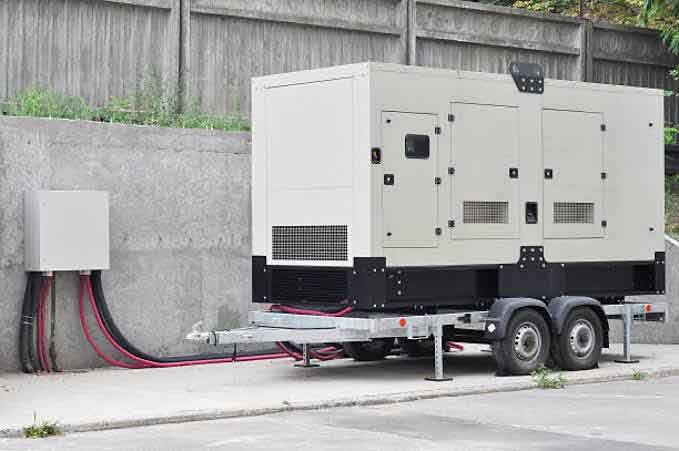
Reliable electricity is essential for almost every business in the UAE. Offices need power for computers and communication systems, construction sites depend on equipment and temporary facilities, hotels and retail businesses need uninterrupted operations, and events rely on electricity for lighting, sound, cooling and other services.
Buying a generator can make sense when a business has a permanent and predictable requirement. But when additional power is needed only for a limited period, short-term generator rental can be a more practical option.
Short-term generator rental gives businesses access to temporary power without requiring them to purchase, store and maintain their own generating equipment. Depending on the application, rental generators can support planned maintenance, construction projects, events, emergency situations and temporary increases in electricity demand.
In Dubai, the importance of backup power is also reflected in DEWA’s guidance for major commercial, tourism and cultural projects. DEWA’s requirements identify essential services such as lifts, safety systems, security systems, CCTV, alarms and certain lighting as loads that may need backup generation.
Short-term generator rental means hiring a generator for a defined period instead of purchasing the equipment outright.
The rental period can vary according to the project. A business may require a generator for a few days during planned electrical maintenance, several weeks during construction work, or longer for a temporary facility or project.
The main advantage is flexibility. A business can select generator capacity according to its current load and return the equipment when the temporary requirement ends.
Rental Power, for example, provides temporary, standby and emergency generator solutions across Dubai, Abu Dhabi, Sharjah and other UAE locations, with generator capacities ranging from smaller units to large industrial sets.
Electrical maintenance sometimes requires equipment or sections of a facility to be temporarily isolated.
For businesses that cannot afford to stop essential operations, a temporary generator can provide an alternative power source while maintenance or equipment replacement is carried out.
DEWA itself provides a temporary power-disconnection service for customers carrying out annual maintenance, equipment replacement or emergency shutdown work. Its process requires relevant documentation, including a methodology statement, risk assessment and single-line diagram for the applicable installation.
A rented generator can therefore be part of a carefully planned temporary-power arrangement when the normal supply needs to be interrupted.
The important point is that generator installation and changeover should be planned with qualified electrical professionals and in accordance with applicable site and authority requirements.
Construction sites often need electricity before permanent building power is available or while temporary power arrangements are being used.
Generators can support site offices, lighting, tools, welding equipment, pumps and other construction-related loads.
The required generator size depends on the equipment being operated and whether loads run simultaneously. For example, Rental Power’s 100 kVA generator is marketed for applications including construction sites, where it can support site offices, hoists, welding equipment, power tools and floodlighting.
Instead of purchasing a generator that may have limited use after the project is completed, contractors can rent the required capacity for the duration of the construction phase.
Events can create substantial temporary electricity requirements.
Exhibitions, outdoor events, corporate functions, festivals and temporary venues may require power for:
A generator rental allows event organizers to arrange temporary power according to the event’s expected load and duration.
For larger events, more than one generator may be required, along with synchronization, distribution equipment, cables and suitable changeover arrangements. The complete electrical plan should be prepared according to the event’s actual requirements rather than selecting a generator based only on the event’s size.
Unexpected electrical problems can interrupt business operations with little warning.
A generator can provide temporary power while the cause of an outage or electrical problem is investigated and repaired.
DEWA has highlighted the role of mobile generators and backup generators in improving resilience and maintaining essential services during interruptions. DEWA has also described backup generation for major projects as part of efforts to maintain necessary power during emergencies.
For businesses where downtime has significant operational consequences, having access to a reliable rental provider can reduce the time required to arrange temporary power.
However, emergency generator rental should not be treated as a substitute for proper electrical planning. Businesses with critical operations should have a documented emergency power strategy and regularly verify that backup equipment can support the intended loads.
Purchasing a commercial generator involves more than the equipment price.
The owner may also need to consider:
For a short project, these costs may not make sense.
Rental transfers much of the equipment ownership responsibility to the rental provider. The business pays for the period and equipment it actually needs rather than investing in a generator that may remain unused afterward.
This can be particularly useful for contractors, event companies, facility managers and businesses handling temporary projects.
Power requirements can vary considerably from one project to another.
A small office backup requirement is very different from the electrical demand of a construction site, manufacturing facility or major event.
Rental gives businesses the option to select equipment based on the project’s current requirement.
Rental Power currently lists generator rental options from 20 kVA through large-capacity units up to 2000 kVA, depending on the application and location.
This flexibility can be useful when a company’s power requirement changes during different project stages.
A business may already have a permanent electrical supply but temporarily need additional capacity.
For example, a facility might be undergoing expansion, adding temporary equipment, hosting a major event or carrying out a project that increases its electricity demand.
Instead of permanently upgrading its electrical infrastructure for a short-term requirement, the business can investigate whether temporary generation is a suitable alternative.
This should be evaluated carefully by a qualified electrical professional because the generator, existing supply and connected loads must be safely coordinated.
Not every electrical load needs to be backed up.
For many businesses, the priority is to keep essential systems operating rather than reproduce the entire normal electricity supply.
DEWA’s guidance for major commercial, tourism and cultural projects identifies essential loads including lifts, escalators, fire and safety equipment, security systems, CCTV, alarms, BMS systems, control rooms, data centers, electrical rooms and specified lighting.
This illustrates an important principle when planning backup power: identify the critical loads first.
Once essential loads have been identified, the required generator capacity can be assessed more accurately.
Some businesses only need additional electricity for a particular project.
A construction contractor may need temporary power until permanent electrical service is available. An event company may require generators for a weekend. A facility may need temporary generation during planned maintenance.
Buying a generator for a single project can leave the business with an asset it does not regularly need.
Short-term rental is designed around this type of temporary requirement.
The business can arrange delivery, operation and removal around the project schedule instead of maintaining the equipment permanently.
A generator alone may not be enough to create a working temporary power system.
Depending on the application, the setup can require distribution boards, changeover switches, synchronization panels, cables, cable ramps, fuel tanks and other accessories.
Rental Power states that its generator rental packages can include equipment such as diesel tanks, distribution boards, manual or automatic changeover switches, synchronization panels, cables and cable ramps, with load-bank rental available on request.
This can simplify temporary power planning because the business can discuss the complete setup with one supplier instead of sourcing every component separately.
One of the biggest mistakes businesses make is choosing generator capacity based only on the largest appliance or piece of equipment.
The correct capacity should be based on the total electrical load, starting currents, load type, operating schedule and whether different loads will operate simultaneously.
For example, motors, pumps, compressors and other equipment can have different starting characteristics from ordinary lighting or office equipment.
A professional supplier should therefore ask about the connected loads and expected operating conditions before recommending a generator.
For a 100 kVA unit, for example, Rental Power states that the generator provides approximately 80 kW of usable power under its stated conditions. The actual generator selection should still be based on the project’s specific electrical requirements.
Diesel generators require a suitable fuel plan, especially when operating continuously.
Before renting, businesses should understand expected operating hours, fuel consumption, tank capacity, refueling arrangements and access requirements.
For long-running projects, fuel logistics can become a major part of the temporary power operation.
A rental quotation should clearly explain whether fuel is included or billed separately and who is responsible for refueling.
A temporary generator is only useful if it remains available when the business needs it.
Maintenance, inspection and technical support are therefore important considerations when choosing a rental provider.
DEWA’s backup-generator guidance emphasizes that generators must be properly maintained so they can operate effectively when required.
Businesses should ask potential rental providers about equipment condition, preventive maintenance, emergency support, technician availability and response arrangements.
For critical projects, it is also sensible to confirm how faults will be handled if the rented generator experiences a problem during operation.
The right option depends on the duration and nature of the requirement.
Short-term rental can be suitable when:
Buying may make more sense when:
There is no universal answer. The decision should consider expected usage, total ownership costs, maintenance responsibilities, storage, fuel requirements and the importance of having equipment available whenever needed.
Before signing a short-term generator rental agreement in the UAE, businesses should confirm:
Generator capacity: Does the unit have enough capacity for the actual connected load?
Load characteristics: Are there motors or other equipment with significant starting loads?
Rental duration: Is the equipment available for the entire project period?
Fuel: Who provides fuel and handles refueling?
Accessories: Are cables, distribution boards, changeover equipment and tanks included?
Installation: Who delivers, positions and connects the generator?
Safety: Are appropriate protection and installation procedures being followed?
Maintenance: Who handles servicing during the rental?
Emergency support: What happens if the generator develops a fault?
Delivery: Can the provider meet the required delivery schedule and site-access conditions?
Quotation: Are generator, accessories, fuel, delivery and other charges clearly itemized?
Clear answers to these questions can prevent unexpected costs and operational problems.
Short-term generator rental can give UAE businesses a practical way to maintain temporary power without committing to the cost and responsibilities of generator ownership.
It can support construction projects, events, planned maintenance, emergency situations and temporary increases in electricity demand. For businesses in Dubai and elsewhere in the UAE, the key is to treat generator rental as a complete temporary-power solution rather than simply hiring a generator and connecting it to the site.
Start by identifying the essential electrical loads, calculate the required capacity, consider starting loads and operating hours, and then discuss the installation and support requirements with an experienced rental provider.
For businesses that need temporary, standby or emergency power, the right rental arrangement can provide flexibility while helping keep important operations running when normal power is unavailable or additional capacity is required.