Phone:
(701)814-6992
Physical address:
6296 Donnelly Plaza
Ratkeville, Bahamas.

Phone:
(701)814-6992
Physical address:
6296 Donnelly Plaza
Ratkeville, Bahamas.
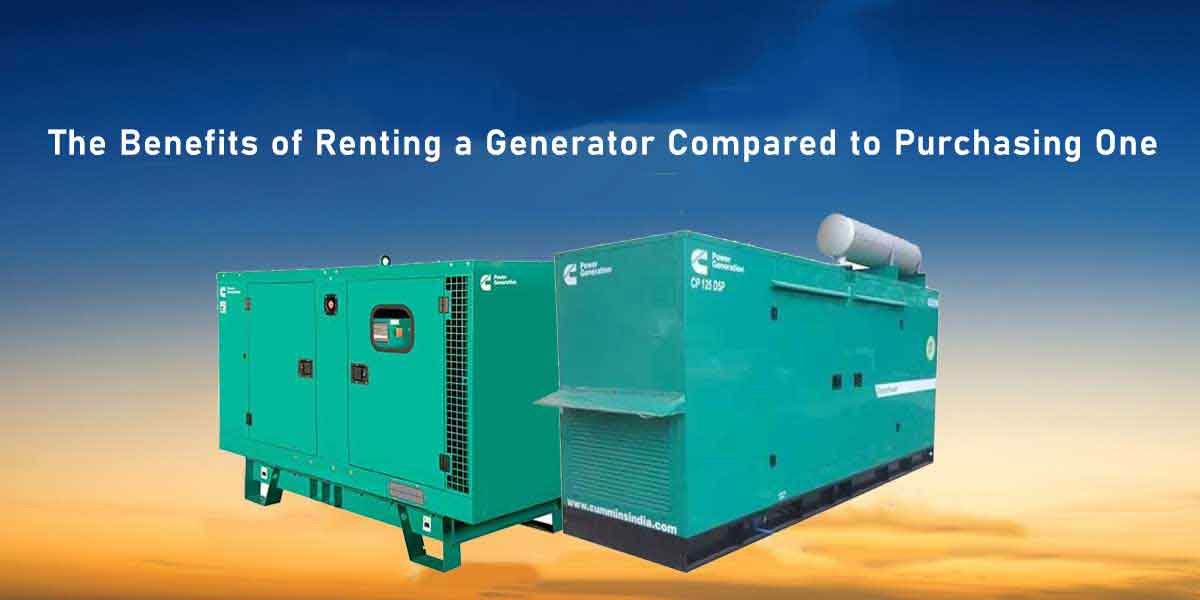
Power interruptions can create serious operational problems for businesses. Even a short disruption can stop production, interrupt essential systems, affect customer service, or delay work at a project site. For businesses that cannot afford to wait for permanent power to be restored, an emergency generator can provide a practical temporary solution.
In the UAE, business continuity and resilience are increasingly important considerations. The UAE’s national business continuity framework is designed to help organisations prepare for, respond to, and recover from disruptions, while the country’s energy strategy also places emphasis on power-supply reliability, security, and resilience.
This is where emergency generator rental services can be useful. Instead of purchasing a generator solely for occasional emergencies, businesses can arrange temporary generating capacity when they need it. Depending on the application, rental providers can supply equipment for emergency outages, maintenance periods, construction projects, events, and other temporary power requirements.
Emergency generator rental is a temporary power solution designed to provide electricity when normal power is unavailable, insufficient, or interrupted.
A rental arrangement may involve more than simply delivering a generator. Depending on the project and supplier, the service can include equipment selection, transportation, installation, electrical connections, testing, fuel arrangements, monitoring, maintenance, technical support, and removal after the rental period.
For example, specialist rental providers in the UAE describe temporary power solutions for emergency power, construction projects, maintenance activities, commissioning, remote locations, and sites where grid electricity is limited or unavailable.
The exact setup depends on the site’s electrical demand, available connection points, operating environment, duration, and the equipment that needs to remain powered.
One of the biggest benefits of emergency generator rental is reducing the operational impact of an unexpected power interruption.
A business may depend on electricity for production equipment, pumps, HVAC systems, refrigeration, lighting, IT infrastructure, security systems, or other essential equipment. If these systems stop, the consequences can extend beyond the period of the actual outage.
Temporary generators can help businesses restore essential electrical capacity while the underlying power problem is being resolved.
Specialist rental providers specifically position temporary power as a way to minimise downtime during unexpected breakdowns and provide rapid access to additional capacity.
The important point is that a generator does not eliminate the original electrical problem. Rather, it can provide a temporary source of power that allows critical operations to continue while the business addresses the cause of the interruption.
Buying a standby or industrial generator can involve more than the initial equipment price. Businesses also need to consider installation, testing, maintenance, storage, fuel systems, space requirements, and eventual replacement.
For a company that only occasionally needs additional power, purchasing equipment that sits unused for long periods may not be the most practical approach.
Rental changes the financial model. The business pays for the temporary capacity it requires rather than committing capital to equipment that may only be used during emergencies or specific projects.
Rental providers also highlight the ability to use temporary power without making a long-term equipment commitment, which can be useful when power requirements fluctuate.
However, rental is not automatically cheaper in every situation. Businesses with continuous and predictable power requirements may find ownership more suitable over the long term. The decision should therefore be based on usage, duration, maintenance requirements, and total cost.
Generator sizing is one of the most important parts of temporary power planning.
A generator that is too small may not support the required electrical load. An incorrectly selected or poorly configured system can also create operational and efficiency problems. Atlas Copco’s generator-selection guidance, for example, notes that incorrect sizing can result in insufficient power, circuit-breaker interruptions, and unnecessary fuel consumption.
Professional rental services can help businesses assess their requirements before equipment is deployed.
The assessment should consider:
Total connected load
Starting current of motors and other equipment
Essential versus non-essential loads
Voltage and frequency requirements
Required operating hours
Available installation space
Cable routes and connection points
Fuel requirements
Environmental and safety considerations
This approach is more reliable than simply choosing a generator based on its advertised kVA rating.
Business continuity is about maintaining essential functions during a disruption and recovering operations as quickly as practical.
The UAE Government’s National Standard for Business Continuity Management is intended to help organisations reduce the impact of disruptions and prepare for response and recovery.
Emergency power can form one part of a broader continuity plan.
For example, a company may identify certain systems that must remain operational during an outage. Instead of trying to power an entire facility, it may use a temporary generator to support those priority loads.
This can make an emergency response more structured because the business already knows:
The generator therefore becomes part of a planned response rather than an improvised purchase after an outage occurs.
Emergency rental is not limited to unexpected grid failures.
Businesses sometimes need temporary generators while permanent power equipment is undergoing maintenance, repair, replacement, or upgrading.
This can be particularly useful for industrial facilities where shutting down an entire operation for maintenance may have significant operational consequences.
Temporary power providers specifically offer rental solutions for planned maintenance and turnaround activities so businesses can maintain operations while permanent utility equipment is unavailable.
For example, a facility could arrange temporary generation before a scheduled electrical shutdown. The equipment can then be tested and connected according to the agreed plan rather than waiting until the permanent system has already been switched off.
Construction sites often have changing electrical requirements and may not have permanent grid power available at every stage of development.
Generators can provide temporary electricity for site offices, lighting, tools, pumps, ventilation, security systems, and other equipment.
Rental is particularly useful because construction power requirements can change as the project progresses. A site might need one level of capacity during early construction and a different level later.
Temporary power suppliers in the UAE specifically identify large construction projects and remote or off-grid locations among applications for rented diesel generators.
Instead of buying multiple generators for different project phases, contractors can potentially adjust rented capacity according to their actual requirements.
Business electricity demand is not always constant.
A manufacturing facility may experience production peaks. A construction site may add equipment temporarily. An event may require substantial power for only a few days. A facility undergoing expansion may need additional electricity before its permanent infrastructure is ready.
Rental provides a way to respond to these changes without permanently increasing the company’s owned generator fleet.
Specialist rental providers describe flexible temporary power as a solution for production fluctuations, seasonal demand, capacity shortages, commissioning, and special projects.
This flexibility can be particularly valuable when the additional capacity is temporary rather than a permanent business requirement.
Owning a generator means taking responsibility for keeping it ready before an emergency occurs.
That can include scheduled servicing, inspections, battery maintenance, testing, fuel management, troubleshooting, and replacement of worn components.
With a rental arrangement, the supplier may provide maintenance and technical support as part of the service, depending on the agreement.
For example, specialist rental services may include installation, commissioning, ongoing technical support, site visits, preventative maintenance, and eventual decommissioning.
Businesses should confirm exactly what is included in the rental contract rather than assuming every provider offers the same level of support.
An emergency generator is only useful if it can be safely and correctly integrated into the site’s electrical system.
Businesses may need help with generator selection, load calculations, cabling, distribution, earthing, connection, testing, and operational monitoring.
This is one reason why choosing a rental company based solely on the lowest daily rate can be risky.
A professional temporary-power provider can assess the application and design a setup around the site’s actual requirements. Atlas Copco, for example, describes site assessments, project sizing, installation, technical support, preventative maintenance, and 24/7 emergency assistance as components of its rental approach.
The level of service varies by supplier, so businesses should establish these responsibilities before signing a rental agreement.
Not every electrical load has the same level of importance.
During an emergency, a business may prioritise systems such as:
Emergency lighting
Security and access systems
Pumps
Refrigeration
Critical production equipment
IT and communications equipment
Essential HVAC equipment
Medical or laboratory equipment where applicable
Fire and life-safety-related systems where the applicable design requires backup power
UAE information-assurance guidance also recognises the importance of protecting information systems from disruptions caused by supporting-utility failures and calls for measures supporting uninterrupted power for information systems where applicable.
The correct backup arrangement depends on the facility and applicable regulations. A generator should therefore be integrated into a properly designed emergency-power plan rather than connected to sensitive equipment without technical assessment.
Sometimes a business does not have a complete power failure. Instead, its available electrical capacity is temporarily insufficient.
For example, a facility might be expanding production, waiting for a permanent electrical upgrade, or carrying out commissioning work.
In such cases, renting additional generating capacity can act as a temporary bridge.
Rental providers describe this type of solution for capacity shortages, commissioning, production changes, and situations where permanent equipment is not yet available.
This allows the business to address the immediate capacity requirement without necessarily making a rushed permanent investment.
Events have unique power requirements because electricity may be needed for lighting, sound systems, catering equipment, temporary structures, air conditioning, screens, and other event infrastructure.
The power demand can also vary throughout the event.
For temporary events, power planning should account for the total demand, distribution points, cable routes, safety requirements, noise considerations, and applicable local requirements.
Rental generators can therefore provide a temporary power source that is scaled to the event rather than permanently owned after the event has finished.
The generator itself is only one part of the solution. The rental provider can have an equally important role.
Before choosing a supplier, businesses should ask:
Do not select equipment based only on the largest load written on a machine. Have the actual electrical requirements assessed, including starting loads and critical equipment.
For an emergency service, response time matters. Ask about emergency availability, delivery arrangements, installation support, and technician availability.
Clarify whether the quotation includes:
Delivery
Installation
Cables and distribution equipment
Fuel
Fuel management
Testing
Maintenance
Technical support
Removal
Emergency call-outs
An electrical failure can happen outside normal working hours. If the generator is being rented specifically for emergency use, understand how after-hours support works.
A supplier that can assess the site, size the equipment, install it, test the system, and provide technical support may offer more value than a company that only delivers a generator.
Generator installations involve electrical, fuel, ventilation, noise, environmental, and fire-safety considerations. Requirements can vary according to the emirate, site, application, and authority. Dubai Municipality, for example, maintains building and safety requirements that apply to relevant projects in Dubai.
Businesses should confirm the applicable requirements with the relevant authority and their qualified electrical or safety professionals.
There is no universal answer to whether a business should rent or buy a generator.
| Consideration | Emergency Generator Rental | Generator Ownership |
|---|---|---|
| Initial capital | Generally lower upfront commitment | Requires equipment investment |
| Short-term emergencies | Well suited | Requires owned equipment to be available |
| Temporary projects | Flexible | May leave equipment underused afterward |
| Maintenance | May be handled under rental agreement | Owner’s responsibility |
| Capacity changes | Can be adjusted through rental | Limited to owned fleet |
| Long-term continuous use | May become expensive over time | Can make sense depending on utilisation |
| Emergency response | Depends on supplier availability | Equipment is already on site if maintained |
| Technical support | Can be included in service | Must be arranged or managed by owner |
The right choice depends on how frequently the business needs backup power, how long it needs it, its required capacity, and the total cost of ownership.
The strongest argument for rental is not simply the generator itself. It is the flexibility surrounding the equipment.
A business can arrange temporary power for a specific problem, project, maintenance period, or emergency without necessarily adding a permanent asset to its equipment fleet.
For companies with changing requirements, this can provide operational flexibility. For facilities with critical loads, it can also form part of a wider business continuity strategy.
At the same time, businesses should not treat generator rental as a substitute for proper electrical planning. Emergency power should be assessed alongside load requirements, connection arrangements, fuel availability, safety measures, maintenance, and the applicable local regulations.
Emergency generator rental services can provide businesses in the UAE with a practical way to respond to unexpected power interruptions, planned shutdowns, temporary capacity shortages, construction requirements, and special projects.
The main benefits include reducing downtime, avoiding unnecessary capital expenditure, accessing appropriately sized equipment, supporting business continuity, and obtaining technical assistance when temporary power is needed.
The UAE’s broader energy policies emphasise reliability, resilience, efficiency, and the ability of infrastructure to support continued economic activity.
For businesses considering emergency generator rental, the best approach is to plan before an outage occurs. Identify critical loads, understand the required generator capacity, confirm site requirements, compare the full rental scope, and choose a supplier capable of providing the technical and emergency support your operation actually needs.
A well-planned temporary power arrangement is not simply a backup machine. It is part of a broader strategy for keeping essential business operations moving when normal power is unavailable.