Phone:
(+971) 56 921 3754
Physical address:
Office #201, Al Quoz Industrial Area
Dubai, United Arab Emirates.
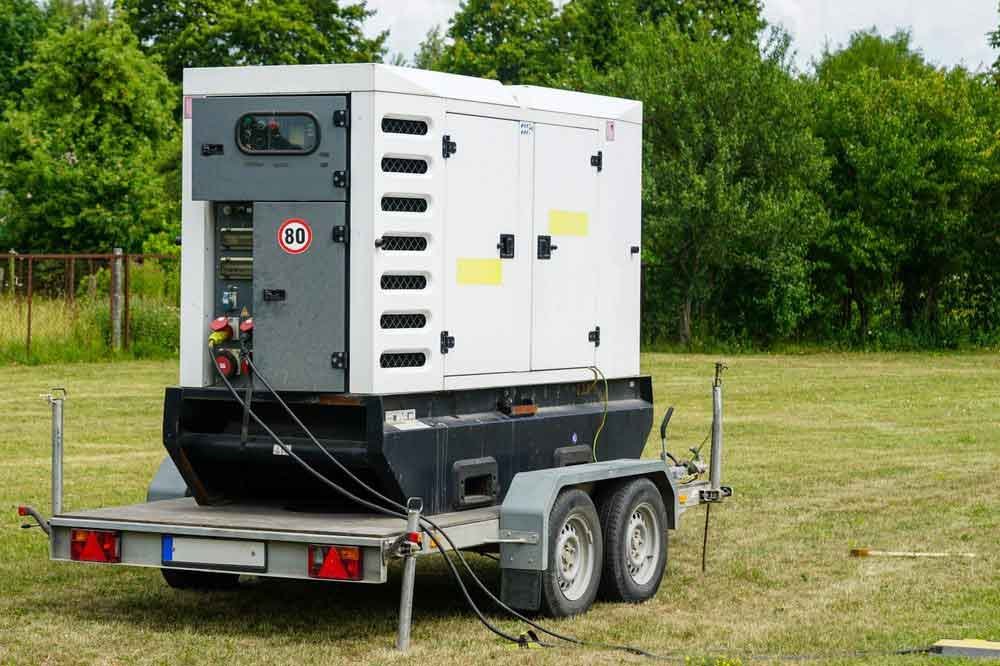
How to Arrange Emergency Generator Rental in UAE
A sudden power failure can create serious problems for businesses that depend on continuous electricity. Manufacturing equipment can stop, refrigeration systems can lose temperature control, IT infrastructure can go offline, and essential building systems may be interrupted. For these situations, emergency generator rental in UAE can provide temporary power while the permanent electrical supply or generator system is being repaired.
However, arranging an emergency generator is not simply about finding the biggest available generator and bringing it to the site. The generator must be correctly sized, compatible with the site’s electrical system, safely installed, fuelled, tested and monitored.
Dubai Electricity and Water Authority (DEWA) publishes specific requirements concerning standby generators and electrical installations, highlighting the importance of proper electrical arrangements when standby generation is used.
This guide explains what businesses should consider when arranging emergency generator rental for critical operations in the UAE.
What Is Emergency Generator Rental?
Emergency generator rental is the temporary provision of generator equipment to maintain electrical power when the normal supply is unavailable or insufficient.
Unlike planned generator rental, an emergency requirement can occur with little notice. Typical causes include:
Unexpected power failure
Generator breakdown
Electrical-system faults
Transformer problems
Planned maintenance of permanent generators
Emergency repairs
Temporary increases in electrical demand
Construction or infrastructure incidents
Equipment failure
The rental generator can be connected to selected essential loads or, where appropriately designed, a wider electrical system.
Why Critical Operations Need a Reliable Backup Power Plan
Not every electrical load has the same level of importance.
A small office may be able to tolerate a short interruption, whereas a hospital-related facility, data centre, manufacturing plant, cold-storage operation or telecommunications site may have systems that need to remain operational.
Critical loads can include:
Emergency lighting
Security systems
Fire and life-safety systems
Servers and networking equipment
Refrigeration
Pumps
HVAC systems
Production machinery
Medical equipment
Access-control systems
Communication systems
The first step in an emergency power plan is therefore to identify which loads must remain operational.
1. Assess the Emergency Power Requirement
Before calling a generator rental company, establish what equipment needs to run during the outage.
Prepare a list of essential loads and, where possible, provide their electrical ratings.
For example:
| Load | Information to Provide |
|---|---|
| HVAC | Motor size / electrical demand |
| Pumps | Motor rating and starting characteristics |
| Refrigeration | Running and starting load |
| IT equipment | UPS/load capacity |
| Lighting | Connected load |
| Production equipment | Motor and operating load |
| Security systems | Connected load |
| Fire/life-safety systems | Required backup capacity |
This information helps the rental provider determine an appropriate generator size.
2. Understand kVA and kW Requirements
Generator capacity is commonly specified in kVA, while electrical equipment may be described in kW.
The relationship between them depends on power factor. As a simplified relationship:
kW = kVA × power factor
However, generator selection should not be based on this calculation alone.
Motors, compressors, pumps and other inductive loads can require significantly more power during starting than during normal operation. A generator that appears large enough based only on running load may therefore struggle when several motors start simultaneously.
Tell the rental provider about the equipment’s starting requirements and whether loads will be started sequentially or simultaneously.
3. Decide Which Loads Must Be Powered
In an emergency, it may not be necessary—or practical—to power the entire facility.
A better approach can be to separate:
Essential loads: Equipment that must continue operating.
Non-essential loads: Equipment that can remain switched off during the outage.
This can reduce the generator capacity required and may make the emergency power system easier to deploy.
For critical facilities, the electrical engineer or responsible technical team should determine which circuits are essential and how they should be transferred to the temporary generator.
4. Check Whether an ATS Is Required
An Automatic Transfer Switch (ATS) can transfer selected electrical loads from the normal supply to the standby generator when the normal source fails, depending on the system design.
This can be particularly useful when continuity of power is important and manual intervention would create unacceptable delays.
DEWA’s published material on uninterrupted power supply refers to standby generators of adequate capacity with automatic-changeover facilities for certain essential services/loads.
When arranging emergency generator rental, ask whether the required transfer equipment is already available at the site or needs to be supplied as part of the rental package.
5. Check Electrical Compatibility Before Delivery
One of the most important emergency-rental checks is electrical compatibility.
Provide the rental company with information about:
Voltage
Frequency
Number of phases
Generator connection point
Main distribution board
Cable requirements
Breaker ratings
Load characteristics
Earthing arrangements
Transfer-switch configuration
A generator should not simply be connected to an electrical system without appropriate engineering controls.
DEWA states that standby generators are not permitted to operate in parallel with the DEWA network and that appropriate interlocking must be provided where required.
This is an important reason to have qualified electrical personnel manage the connection between the temporary generator and the facility’s electrical system.
6. Choose the Right Generator Type
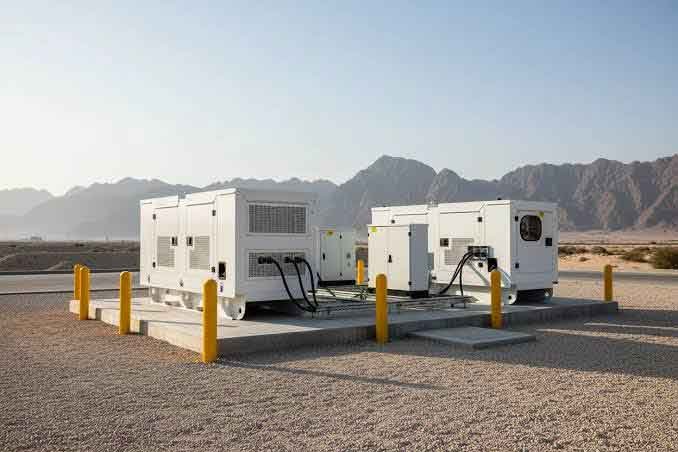
Emergency generator rental in the UAE can involve different generator configurations depending on the application.
Diesel Generators
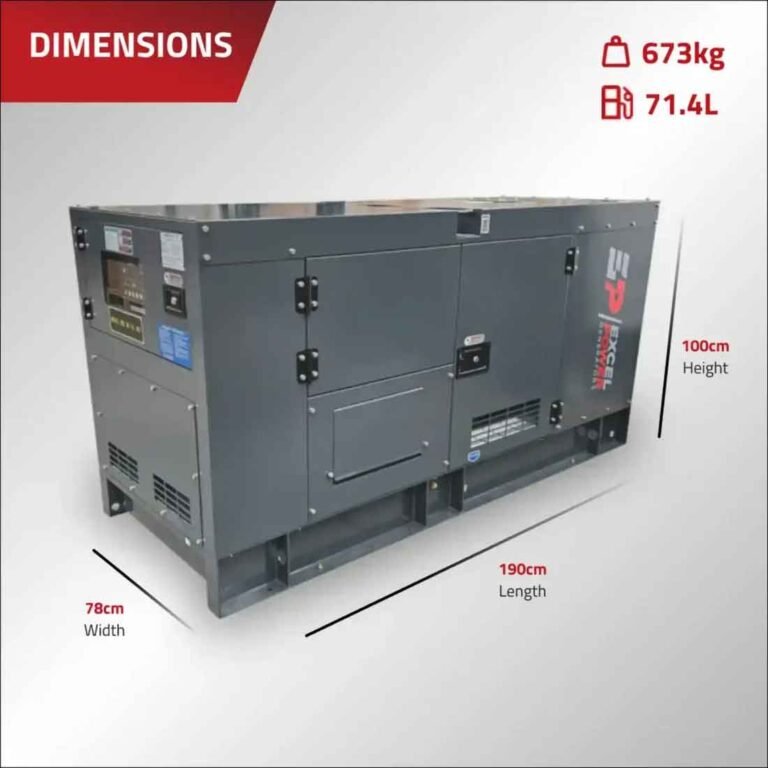
Diesel generator sets are commonly used for temporary and standby power applications because they can provide substantial electrical output for extended operating periods.
They can be suitable for:
Construction sites
Industrial facilities
Commercial buildings
Events
Emergency backup
Large temporary loads
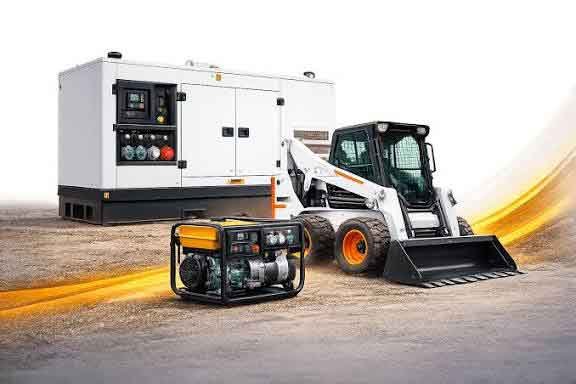
Smaller Generator Sets
For smaller essential loads, a lower-capacity generator may be sufficient.
The key is to match the equipment to the actual load instead of selecting capacity based only on the size of the building.
7. Consider Generator Redundancy for Critical Operations
For highly critical operations, relying on a single generator may not always provide the desired level of resilience.
Depending on the application, businesses may consider:
One generator plus standby capacity
Multiple generators
Separate generator sets for different load groups
Generator plus UPS systems
Automatic transfer arrangements
The appropriate level of redundancy depends on the consequences of power interruption.
For example, an operation where even a short interruption could cause significant financial or safety consequences may require a different backup strategy from a normal office.
8. Make Sure Fuel Supply Is Adequate
A generator cannot provide emergency power for long if its fuel supply is insufficient.
Before rental begins, determine:
Fuel tank capacity
Expected fuel consumption
Required operating hours
Refuelling schedule
Who supplies the fuel
Who monitors fuel levels
Whether additional fuel storage is required
For an emergency expected to last several hours, a basic fuel arrangement may be sufficient. For prolonged outages, the rental provider should have a clear refuelling plan.
9. Consider the Generator’s Location
The generator needs to be placed in an appropriate location with sufficient space for operation and maintenance.
Consider:
Access for delivery vehicles
Ventilation
Exhaust discharge
Distance from occupied areas
Noise
Fuel access
Cable routing
Weather protection
Maintenance access
Fire-safety requirements
The location should be assessed before delivery so that an emergency generator can be installed quickly without creating additional safety or operational problems.
10. Check Cable and Distribution Requirements
The generator itself is only one part of a temporary power system.
Depending on the installation, you may need:
Power cables
Distribution boards
Circuit breakers
Changeover equipment
Temporary panels
Cable ramps or protection
Earthing arrangements
The cable size and protection system should be appropriate for the generator output and installation conditions.
This is especially important for high-capacity generators and long cable runs, where voltage drop and installation conditions need to be considered.
11. Ask for Testing and Commissioning
Before the generator becomes the primary emergency power source, it should be tested.
The commissioning process may include checking:
Voltage
Frequency
Phase sequence
Load response
Automatic transfer operation
Protective devices
Earthing
Fuel system
Emergency shutdown
Connection integrity
Testing gives the technical team an opportunity to identify problems before a real outage occurs.
For critical operations, a simulated transfer or controlled load test can be particularly valuable where permitted by the site’s electrical procedures.
12. Confirm Maintenance and 24/7 Support
Emergency generator rental is not just about delivering a machine.
For critical applications, technical support can be just as important as generator capacity.
Ask the rental company:
Is a technician available 24/7?
What is the emergency response time?
Who handles breakdowns?
Is preventive maintenance included?
Are replacement generators available?
Who monitors the generator?
Is refuelling support available?
If the generator fails during a prolonged power outage, rapid technical support can make a major difference to business continuity.
13. Consider Noise and Environmental Conditions
Generator sets can produce significant noise and exhaust emissions.
The location should therefore be selected with consideration for nearby:
Offices
Residential buildings
Hospitals
Hotels
Schools
Event areas
Public spaces
The generator should also have appropriate ventilation and exhaust arrangements.
The UAE’s hot environmental conditions should be considered when selecting and operating temporary generator equipment, particularly for installations expected to run continuously for extended periods.
14. Check Regulatory and Site Requirements
Emergency power installations may be subject to electrical, fire-safety, site-management or authority requirements depending on where and how the generator is installed.
Dubai’s electrical framework includes DEWA regulations and published guidance concerning standby generators and electrical installations.
Before installation, confirm the applicable requirements with:
Site management
Electrical consultant
Facility manager
Relevant utility
Free-zone authority, where applicable
Fire and safety personnel, where applicable
Do not assume that a temporary generator automatically falls outside site or electrical requirements.
15. Choose a Rental Company That Can Respond Quickly
Speed matters during an emergency.
When comparing suppliers, look beyond the generator’s advertised capacity.
Evaluate:
24/7 availability
Fleet size
Generator capacity range
Delivery capability
Installation team
Electrical technicians
Fuel support
Replacement equipment
Maintenance service
Experience with critical facilities
A company that can supply the generator quickly but cannot provide proper installation or technical support may not be the best choice for a critical operation.
16. Provide Complete Information When Requesting a Quote
Emergency situations are already stressful, so providing complete technical information can speed up the rental process.
When contacting a supplier, provide:
Project location: City, site and access details.
Required capacity: kVA/kW if known.
Load type: Motors, HVAC, refrigeration, IT equipment, pumps, lighting, etc.
Operating duration: Expected number of hours or days.
Voltage: Required electrical voltage.
Phase: Single-phase or three-phase.
Transfer method: Manual or automatic, depending on the system.
Installation: Whether cables, distribution and connection are required.
Fuel: Whether fuel supply is required.
Access: Delivery and crane/handling requirements where applicable.
The more accurate the information, the easier it is for the rental company to propose a suitable solution.
Emergency Generator Rental Process in the UAE
A well-organised emergency rental process can generally be divided into several stages.
Step 1: Identify the Failure
Determine what has caused the power interruption and whether the outage is expected to be short-term or prolonged.
Step 2: Identify Critical Loads
Decide which equipment and systems must remain operational.
Step 3: Calculate or Confirm the Required Capacity
Determine running load, starting load and any required future margin.
Step 4: Contact a Generator Rental Provider
Provide the supplier with the site and electrical information.
Step 5: Confirm Equipment Availability
Make sure the required generator and accessories are actually available for immediate deployment.
Step 6: Assess the Site
Confirm access, placement, cables, fuel arrangements and electrical connection requirements.
Step 7: Install and Connect
Qualified personnel should handle the electrical connection and transfer arrangements.
Step 8: Test the System
Verify voltage, frequency, load response, transfer operation and safety systems.
Step 9: Monitor During Operation
Monitor fuel, load, temperature, alarms and generator condition throughout the outage.
Step 10: Return or Extend the Rental
Once permanent power is restored and the generator is no longer required, arrange safe shutdown, disconnection and collection. If the outage continues, extend the rental and maintain the refuelling and service schedule.
Common Mistakes to Avoid
Renting Based Only on kVA
A generator’s capacity should account for starting loads and operating characteristics, not simply the total running load.
Forgetting Essential Accessories
Cables, distribution equipment, transfer switches, fuel arrangements and installation may be required in addition to the generator.
Ignoring Fuel Requirements
An undersized fuel arrangement can interrupt power even when the generator itself is functioning correctly.
Connecting Without Proper Electrical Controls
Temporary generation must be connected safely and in accordance with the applicable electrical requirements. DEWA specifically states that standby generators must not operate in parallel with its network without appropriate interlocking.
Choosing a Supplier Without Emergency Support
A generator is not much help if there is no technician available when a fault occurs.
Failing to Test the System
A generator should be tested before it is relied upon during a critical outage.
Emergency Generator Rental Checklist
Before accepting the generator, confirm:
Required kVA/kW capacity
Running and starting loads
Voltage and frequency
Single- or three-phase requirement
Essential circuits identified
ATS/changeover arrangement
Cable size and routing
Distribution equipment
Earthing arrangements
Fuel capacity
Refuelling plan
Generator location
Ventilation and exhaust
Noise considerations
Installation and commissioning
Emergency technician support
Backup/replacement generator availability
Rental duration
Delivery and collection
Applicable site requirements
Final Thoughts
Arranging emergency generator rental in UAE for critical operations requires more planning than simply renting a generator with a high kVA rating. The temporary power system needs to be matched to the facility’s essential loads, electrical characteristics, operating duration and site conditions.
Start by identifying which systems must remain operational and determine their running and starting requirements. Then confirm the generator’s voltage, frequency, capacity, fuel requirements and connection method. Make sure the installation is carried out by qualified personnel and that the transfer arrangement complies with the applicable electrical requirements.
For critical operations, also look beyond the equipment itself. Fast delivery, proper installation, fuel support, preventive maintenance, 24/7 technical assistance and replacement capacity can be just as important as generator size.
DEWA’s published guidance demonstrates that standby-generator installations require proper electrical arrangements, including appropriate interlocking where generators interact with the utility network.
With the right preparation and a capable rental provider, temporary generator power can help businesses maintain essential operations and reduce the impact of an unexpected electrical outage.
Need Reliable Temporary Power or Cooling in the UAE?
From 20 kVA mobile silent generators up to multi-megawatt synchronized power plants and 500 TR packaged chillers. Complete turnkey delivery, cabling, and 24/7 on-site maintenance across Dubai, Abu Dhabi, and Sharjah.