Phone:
(+971) 56 921 3754
Physical address:
Office #201, Al Quoz Industrial Area
Dubai, United Arab Emirates.

Warehouse Climate Control
Air conditioning is essential for maintaining comfortable working conditions in the United Arab Emirates, particularly during the summer months when outdoor temperatures can exceed 45°C. For warehouses, factories, commercial buildings, construction sites and temporary event venues, maintaining suitable indoor temperatures can be challenging when permanent cooling systems are unavailable, under maintenance or unable to meet increased demand.
In these situations, rental AC in UAE provides a flexible way to introduce temporary cooling without waiting for permanent HVAC installations. Businesses can hire portable spot coolers for individual workstations, packaged air-conditioning units for enclosed work areas, or larger cooling systems for warehouses, exhibition halls and industrial facilities.
However, choosing temporary air conditioning involves HVAC cooling rental AC in UAE more than calculating the floor area. Engineers must consider heat entering through the roof and walls, solar radiation, ventilation, air leakage, occupancy, machinery, humidity, electrical supply and the location of the equipment.
The American Society of Heating, Refrigerating and Air-Conditioning Engineers (ASHRAE) identifies building-envelope heat transfer, internal heat gains, ventilation and infiltration as important elements of cooling-load calculations. Its technical guidance provides a foundation for evaluating temporary HVAC requirements.
This guide explains how businesses can select temporary air conditioning, estimate cooling requirements for uninsulated steel-frame warehouses, compare packaged units with spot coolers, manage condensate and exhaust ducting, and plan an efficient temporary power supply.
What Is Rental AC in the UAE?
Rental air conditioning is the temporary provision of cooling equipment for a specific period, ranging from a few days to several months or longer. It is useful when a business needs additional cooling capacity without purchasing permanent equipment or undertaking a major HVAC installation.
Depending on the application, a rental package may include air-conditioning units, supply and return ducting, electrical distribution, condensate drainage, installation, commissioning and maintenance.
Common applications include:
-
Warehouses and factories: Cooling packing stations, inspection areas, dispatch offices and enclosed production zones.
-
Commercial buildings: Providing backup during air-conditioning breakdowns, maintenance or building refurbishment.
-
Construction projects: Cooling temporary offices, worker facilities and enclosed site cabins.
-
Events and exhibitions: Maintaining suitable conditions inside marquees, exhibition halls and temporary venues.
-
IT and technical facilities: Delivering targeted cooling to server rooms, control panels and heat-sensitive equipment.
-
Industrial operations: Supporting production processes that require controlled temperatures.
The appropriate system depends on the area being cooled, the heat load, the required indoor conditions and the available electrical infrastructure. For this reason, businesses should assess their application before choosing equipment based solely on advertised cooling capacity.
For projects requiring temporary cooling across different parts of the country, explore rental AC in UAE to review available cooling options.
Why Businesses Need Temporary Air Conditioning in the UAE
The UAE’s hot climate creates substantial cooling requirements for commercial and industrial facilities. Metal-roofed warehouses, temporary structures and buildings with frequently open loading doors can experience particularly high heat gains.
Permanent air-conditioning systems may also struggle when operating conditions change. A warehouse that previously stored packaged goods, for example, might later accommodate additional machinery, more employees or a larger operational area. The original cooling capacity may no longer be sufficient.
Temporary HVAC equipment can address these situations without requiring immediate changes to the permanent installation.
Emergency Cooling During HVAC Failure
When a central air-conditioning system fails, indoor temperatures can rise while repairs are arranged. This is particularly concerning in occupied commercial buildings, technical rooms and temperature-sensitive work areas.
Rental equipment can provide interim cooling while engineers repair the existing system. Depending on the size of the affected area, the solution may involve portable spot coolers, packaged units or a temporary chiller connected to suitable air-handling equipment.
Seasonal Cooling for Warehouses and Industrial Sites
Some facilities require more cooling during peak summer than during the rest of the year. Hiring additional equipment allows businesses to increase capacity when needed and reduce it when demand falls.
This is especially useful for warehouses, distribution centres, manufacturing facilities and temporary project buildings.
Commercial and Event Cooling
Temporary cooling is also important for retail activations, conferences, exhibition spaces and outdoor events. A tent may have little insulation, while occupants, lighting and event equipment introduce additional heat.
Tent air conditioning hire should therefore be planned around the structure’s dimensions, fabric, occupancy, solar exposure, ventilation and the number of entrances that remain open during the event. A simple floor-area estimate may be useful for an initial budget, but it is not a substitute for a proper cooling-load assessment.
Understanding Thermal Heat Gain in an Uninsulated Steel-Frame Warehouse
One of the most important considerations when arranging rental air conditioning in the UAE is the heat entering an industrial warehouse.
A steel-frame warehouse with an uninsulated metal roof and walls behaves differently from an insulated office building. Solar radiation heats the roof and external walls, while outdoor air entering through loading doors and gaps adds both sensible heat and, where humid air is involved, latent heat.
ASHRAE’s non-residential cooling-load guidance explains that building-envelope heat transfer, solar gains, ventilation, infiltration, occupants and equipment all contribute to the cooling load.
1. Identify the Main Sources of Heat
Roof and wall heat gain
An uninsulated metal roof exposed to strong sunlight can transfer considerable heat into the building. External wall exposure, roof colour, material properties and shading affect the amount of heat entering the space.
Air infiltration and open doors
Hot outdoor air enters through open loading bays, poorly sealed doors and other openings. If doors remain open throughout operating hours, the additional cooling demand can be substantial.
Machinery, lighting and employees
Motors, production equipment, forklifts charging indoors, lighting and people release heat into the space. These internal gains must be included in the overall load calculation.
High ceilings and air distribution
A tall warehouse has a greater internal volume, and heat may accumulate near the roof. Supply-air placement, return-air locations, destratification and the occupied work zone all influence cooling performance.
2. Estimate the Cooling Load Under 45°C Ambient Conditions
Cooling-load calculations should use the expected design conditions rather than assuming that every warehouse has the same cooling requirement.
For a building operating in outdoor temperatures around 45°C, the engineer should consider:
-
Outdoor design dry-bulb temperature and humidity.
-
Required indoor temperature and humidity.
-
Roof and wall construction, insulation and solar exposure.
-
Building dimensions and ceiling height.
-
Door-opening frequency and outdoor-air requirements.
-
Internal equipment, lighting and occupancy.
-
The manufacturer’s capacity correction for high ambient temperatures.
A simplified heat-transfer relationship for an individual building surface is:
This equation illustrates conductive heat transfer through a surface. However, it is not a complete warehouse cooling-load calculation. Solar radiation, air leakage, ventilation, internal equipment and moisture loads require additional calculations. For a sun-exposed metal roof, the effect of solar heating must also be evaluated rather than treating the outdoor air temperature as the only boundary condition.
3. Worked Example: A 1,000 m² Steel Warehouse
Consider a hypothetical warehouse with the following characteristics:
| Parameter | Illustrative assumption |
|---|---|
| Floor area | 1,000 m² |
| Approximate ceiling height | 8 m |
| Outdoor design temperature | 45°C |
| Target indoor temperature | 27°C |
| Roof and walls | Uninsulated steel |
| Loading doors | Frequently opened |
The temperature difference between outdoor air and the target indoor condition is 18°C. The internal volume is approximately 8,000 m³.
These values describe the building but do not establish the required cooling capacity. It would be misleading to convert the temperature difference or floor area directly into a definitive tonnage figure without knowing the roof and wall properties, solar exposure, air leakage, equipment loads and required outdoor-air supply.
A professional assessment should calculate the individual heat gains and combine them into the design cooling load. Engineers must then account for the actual performance of the selected equipment under the expected operating conditions.
For a preliminary assessment, the process is:
-
Measure the roof, wall and floor areas and document construction materials.
-
Record the daily operating schedule and the periods of maximum solar exposure.
-
Estimate infiltration from loading bays and other openings.
-
Calculate heat from people, lighting, machinery and other equipment.
-
Evaluate outdoor-air and humidity loads.
-
Select suitable equipment based on its rated capacity at the actual design conditions.
-
Check airflow distribution and the electrical supply needed to operate the system.
ASHRAE’s load-calculation guidance supports a component-based approach rather than relying on a single universal square-metre rule.
4. Why High-Ambient Equipment Selection Matters
An air conditioner’s nominal rating does not necessarily equal its available cooling capacity at every outdoor temperature. Condenser conditions, airflow and equipment design affect performance, so the selection must be checked against the manufacturer’s operating data.
For a warehouse exposed to 45°C ambient temperatures, ask the rental provider to confirm the selected unit’s available cooling output at the expected outdoor conditions.
This helps prevent a situation in which a unit appears adequately sized on paper but cannot maintain the required indoor conditions during peak summer heat.
Where the warehouse has substantial heat gains and high ceilings, an engineered combination of packaged cooling units, ductwork and suitable return-air arrangements may be more effective than placing small portable units around the building.
Packaged Ducted AC Units vs Portable Spot Coolers
The choice between packaged air-conditioning systems and portable spot coolers depends on whether the goal is to cool an entire enclosed area or provide relief at specific workstations.
For industrial applications, the distinction is important: a portable unit can be effective at one location without having enough capacity to control the temperature of an entire warehouse
Packaged ducted air-conditioning units
Typical project range: 10–50 TR
Packaged units are suitable for larger enclosed areas, including warehouse work zones, temporary production spaces, commercial halls and event venues. They deliver cooled air through ducts or flexible air-distribution systems.
Their principal advantage is the ability to distribute cooling across multiple workstations or a defined occupied zone. Larger installations may require several units operating together.
The final arrangement depends on required airflow, available space, electrical capacity and the heat load.
Portable spot coolers
Typical project range: 2–5 TR for this comparison
Spot coolers provide targeted cooling for individual workstations, control desks, technical rooms and isolated equipment areas.
They can be easier to reposition than larger systems and are useful when cooling the entire building is unnecessary. However, each unit has limited capacity, and its warm exhaust air must be discharged appropriately.
Multiple spot coolers may be required where workstations are spread across a large area.
The ranges above are comparison categories for planning, not universal equipment limits. Actual rental fleets include smaller and larger configurations. Supplier specifications should be checked before selecting equipment. Published UAE rental guidance similarly distinguishes portable spot cooling from higher-capacity ducted solutions for industrial areas.
Comparison Table: Which Cooling System Should You Choose?
| Consideration | Packaged ducted AC, 10–50 TR | Spot cooler, 2–5 TR |
|---|---|---|
| Primary purpose | Cooling larger enclosed zones | Cooling specific workstations |
| Air distribution | Supply ducts or flexible ducting | Localised discharge or short ducts |
| Installation | Requires suitable placement and duct connections | Usually simpler, subject to ventilation and drainage |
| Best applications | Warehouses, workshops, temporary halls | Control stations, small offices, equipment areas |
| Exhaust heat | Rejected outdoors by the condenser | Must be rejected outside the cooled space |
| Expansion | Additional units can serve separate zones | Additional units can serve individual work areas |
| Main limitation | Greater power, airflow and installation requirements | Limited cooling coverage per unit |
When Should You Use Commercial AC Rental in Dubai?
Commercial AC rental Dubai is particularly useful when an office, showroom, workshop or commercial facility needs temporary cooling during maintenance, fit-out work or a period of increased occupancy.
A packaged unit may be appropriate for a large open-plan commercial area, while a spot cooler can support a reception desk, electrical control station or small enclosed room.
For buildings with an existing chilled-water system, a temporary chiller connected to compatible air-handling equipment may be a better option than installing multiple independent air conditioners.
The decision should consider the size of the affected area, whether it can be enclosed, the required temperature, the duration of the rental and the availability of power.
When Is Spot Cooler Rental in the UAE More Practical?
Spot cooler rental UAE is worth considering when only a limited part of a facility requires additional cooling.
For example, a warehouse might have an open loading area that cannot realistically be air-conditioned throughout the day. Instead, the business could establish an enclosed inspection station and cool that zone with a suitably sized unit.
Similarly, a technical control room might need supplementary cooling while the main HVAC system undergoes repair.
The important point is to direct the cooled air towards the occupied or heat-sensitive area while ensuring that the unit’s hot exhaust is discharged outside. A spot cooler should not be assumed to lower the temperature of an entire large warehouse.
How to Plan Tent Air Conditioning Hire in the UAE
Temporary tents and marquees present a different cooling challenge from permanent buildings. Their roofs and walls may offer limited insulation, and the structure can be exposed to direct sunlight for much of the day.
Occupancy, lighting, catering equipment, stage lighting and frequent entrance-door openings can further increase the cooling requirement.
For this reason, tent air conditioning hire should be planned using a heat-load assessment rather than floor area alone.
Important Factors for Tent Cooling
-
Tent dimensions: Floor area, ceiling height and overall internal volume affect the amount of air that must be conditioned.
-
Fabric and insulation: The roof and sidewalls determine how much external heat enters the structure.
-
Solar exposure: Direct sun can increase heat gain, particularly on exposed roofs.
-
Occupancy: Guests and staff contribute heat and moisture.
-
Event equipment: Lighting, screens, sound equipment and catering facilities add internal heat.
-
Door openings: Frequent movement between indoor and outdoor areas allows hot air to enter.
-
Air distribution: Poorly placed ducts can create hot and cold spots instead of consistent comfort.
Choosing the Right Air Distribution Arrangement
Packaged air-conditioning units are often suitable for enclosed event tents because they can be positioned outside the occupied space and supply cooled air through flexible ducts.
Depending on the structure, supply air can be delivered through overhead ducts, carefully positioned outlets or an engineered under-floor arrangement.
The design should distribute air across the occupied zone without creating uncomfortable drafts or obstructing entrances, emergency exits or event operations.
The rental provider should also consider where warm condenser air will be discharged so that it does not recirculate into the equipment’s air intake.
A tent used for a short daytime exhibition may have different requirements from a fully occupied evening event with extensive lighting and catering. Therefore, cooling capacity should be based on the expected peak operating conditions.
Condensate Water Management and Hot-Air Exhaust Ducting
Cooling equipment removes heat from the air, and many systems also remove moisture. When humid air passes over a sufficiently cold evaporator coil, water vapour condenses and collects in a drain pan or condensate reservoir.
In a UAE installation, the condensate management plan should be established before the equipment starts operating. Poor drainage can cause leaks, wet floors, interrupted cooling and avoidable maintenance.
1. Plan a Reliable Condensate Drainage Route
The drainage arrangement depends on the equipment design. Some portable units use an internal collection tank, while others support continuous drainage or automatic condensate removal. Larger packaged systems generally require a suitable drain connection.
Before installation:
-
Identify the manufacturer’s designated condensate outlet.
-
Provide an appropriate drain hose or pipe.
-
Ensure that gravity drainage has the required slope, or use a compatible condensate pump where necessary.
-
Confirm that the discharge point is approved and does not create a slip hazard.
-
Check that connections are secure and that water cannot leak onto electrical equipment.
-
Inspect the drain during commissioning and regular operation.
If an internal tank is used, its capacity and inspection frequency must be suitable for the operating conditions. In humid environments, condensate may accumulate quickly enough to require more frequent emptying.
Manufacturer guidance confirms that portable AC drainage methods vary by model and that tanks can overflow if collected water is not removed.
2. Manage Exhaust Air Correctly
Portable spot coolers and packaged air-conditioning systems have different exhaust arrangements.
For a portable spot cooler, the exhaust duct carries heat away from the unit. That hot air must reach an appropriate outdoor discharge point. If the exhaust is released into the same enclosed area being cooled, the heat returns to the space and undermines cooling performance.
Honeywell’s portable AC guidance explains the importance of venting warm exhaust air outdoors and sealing the connection so that hot air does not leak back into the cooled room. It also warns that unsuitable exhaust-hose extensions can restrict airflow.
For temporary installations, check the following:
-
Keep exhaust ducting as short and direct as the equipment instructions allow.
-
Avoid unnecessary bends, kinks and restrictions.
-
Seal the exhaust opening where it passes through a window, wall or temporary panel.
-
Discharge hot air away from doors, windows and fresh-air intakes.
-
Keep exhaust outlets clear of obstructions.
-
Follow the manufacturer’s maximum duct length and diameter requirements.
A packaged unit installed outside a warehouse typically delivers conditioned air through supply ducting. Its condenser separately rejects heat to the outdoor environment. Both the supply-air route and condenser clearance must be considered during site planning.
3. Coordinate Equipment Placement With Warehouse Operations
Industrial sites have forklifts, delivery vehicles, employees and stored materials moving through the same spaces used for temporary cooling equipment.
Units and ducts should therefore be positioned to avoid blocking walkways, emergency exits, loading routes and access to electrical panels. Flexible ducts may require protection where they cross areas used by vehicles or equipment.
The installation team should also check that outdoor equipment has adequate airflow and is not positioned where hot exhaust can be drawn back into the condenser.
These practical arrangements help maintain cooling performance while reducing the risk of interruptions during normal warehouse operations.
Energy Efficiency Tips for Temporary HVAC Systems
Temporary air conditioning can represent a significant operating cost, particularly when equipment runs for extended periods during the UAE summer. Correct equipment selection, sensible temperature settings and proper airflow management can help reduce unnecessary energy consumption.
The following practices are consistent with published guidance from Dubai Electricity and Water Authority (DEWA), which recommends maintaining a reasonable cooling setpoint, cleaning filters and reducing unwanted heat entering a building.
1. Set a Practical Indoor Temperature
Avoid selecting an unnecessarily low thermostat setting. DEWA recommends setting residential air conditioning to 24°C or higher as an energy-saving measure. Industrial and commercial facilities should establish their own appropriate setpoints based on occupancy, operational needs and equipment requirements.
Where processes or sensitive equipment require tighter temperature control, those requirements take priority over general comfort recommendations.
2. Reduce Heat Entering the Building
In a steel warehouse, cooling demand can be reduced by addressing avoidable heat gains:
-
Improve roof and wall insulation where practical.
-
Use suitable reflective roof treatments where compatible with the building.
-
Keep loading doors closed when operationally possible.
-
Seal unnecessary gaps around doors and other openings.
-
Use suitable curtains or barriers to separate conditioned zones from hot areas.
Reducing heat entering a space can allow the temporary HVAC system to maintain its target conditions with less operating effort.
3. Maintain Filters and Condenser Airflow
Dirty filters can restrict airflow and reduce equipment performance. Condenser coils obstructed by dust or debris can also interfere with heat rejection.
During a rental period, schedule inspections and cleaning according to the manufacturer’s instructions and the site’s operating conditions. UAE industrial sites may require more frequent attention because of dust exposure and extended operating hours.
4. Cool the Areas That Need It
Not every warehouse requires the entire floor area to be maintained at office-like temperatures.
Where operationally appropriate, an enclosed inspection station, packing area or control room can be cooled separately. This can make a spot cooler or a small ducted system more practical than cooling a much larger space.
However, zoning must not compromise required ventilation, worker safety or process conditions. If the entire warehouse requires controlled temperatures, the cooling system must be sized for the whole relevant load.
5. Select Equipment Based on Real Operating Conditions
Avoid choosing equipment solely because its advertised tonnage appears sufficient. Compare its available cooling capacity at the expected outdoor temperature, and assess airflow, electrical consumption and humidity performance.
Oversized or poorly matched equipment can increase costs, while undersized equipment may run continuously without maintaining the desired indoor conditions.
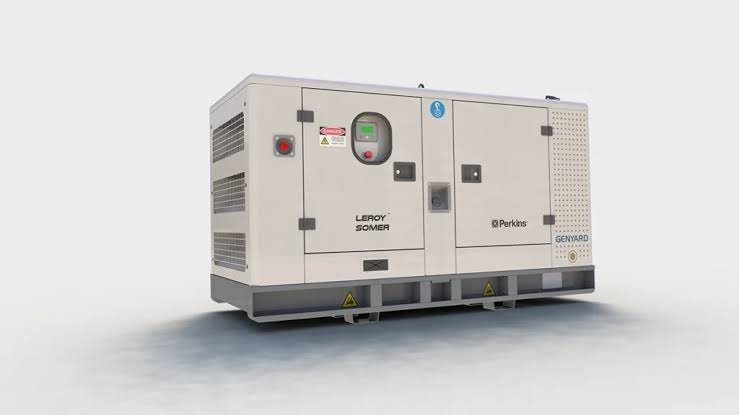
Temporary Generator Sizing for Rental Air Conditioning
Some industrial sites, construction projects and temporary venues do not have sufficient electrical capacity to operate additional air-conditioning equipment. In such cases, a temporary generator may be needed alongside the cooling system.
Generator sizing must account for both the steady electrical load and the additional demand when compressors and other motors start. Cummins’ power-generation guidance explains that motor-starting requirements can affect generator selection and cause voltage dips if the system is not properly sized.
Step 1: Collect the Electrical Specifications
Obtain the following information for every proposed AC unit:
-
Rated electrical input in kilowatts or kilovolt-amperes.
-
Supply voltage and phase configuration.
-
Running current.
-
Compressor starting current or locked-rotor current, where applicable.
-
Starter type, including any soft starter or variable-frequency drive.
-
Manufacturer requirements for generator operation.
Do not confuse cooling capacity with electrical input. A 20 TR air conditioner provides a nominal cooling capacity of 20 refrigeration tons; it does not consume 20 kW of electricity.
Step 2: Calculate the Combined Running Load
Add the electrical input of the AC units and all other equipment that must operate at the same time.
For example, a temporary installation might include several packaged units, ventilation fans, pumps, lighting, control systems and office equipment. All relevant loads must be included.
The resulting figure represents the combined running demand, not necessarily the generator capacity required for reliable operation.
Step 3: Account for Compressor Starting Demand
Air-conditioning compressors can draw considerably more current during startup than during normal operation. If several compressors start simultaneously, the resulting demand can exceed the generator’s ability to maintain acceptable voltage and frequency.
An engineer should assess the largest starting load, whether compressors start together or sequentially, the starting method and the generator’s transient performance.
Where appropriate, staged starting or approved soft-start equipment may reduce the peak demand. These measures must be compatible with the AC units and their control systems.
Step 4: Select and Verify the Generator
The generator supplier should calculate the required kilowatt and kilovolt-ampere capacity, considering power factor, starting loads, ambient conditions, altitude where relevant, load-step performance and any other equipment connected to the supply.
For UAE summer operations, the supplier should also confirm the generator’s available output under the actual site conditions.
The final selection should include suitable electrical distribution, protective devices, cable sizing, earthing and safe equipment placement. Generator exhaust must be kept away from occupied areas and building air intakes.
Illustrative Generator Sizing Checklist
| Requirement | What to verify |
|---|---|
| AC electrical load | Rated input and running current for every unit |
| Starting demand | Compressor starting current and largest simultaneous load step |
| Other connected loads | Pumps, fans, lighting and operational equipment |
| Generator rating | kW, kVA, power factor and transient capability |
| Site conditions | High ambient temperature, ventilation and installation location |
| Distribution | Voltage, phase balance, cabling, protection and earthing |
There is no reliable universal generator-size-per-ton rule that applies to every temporary HVAC installation. The correct rating must be based on the actual equipment specifications and the way the system operates.
For projects requiring both cooling and power, coordinating the HVAC and generator selections through one technical team can simplify equipment matching, installation and commissioning.
When Should You Consider Industrial Chiller Rental?
Packaged AC units and spot coolers are not always the most appropriate solutions for large industrial facilities. If a building already has a chilled-water distribution system, or the project needs substantial cooling capacity across several air-handling units, a temporary chiller may be a better fit.
Industrial chiller rental can support applications such as:
-
Temporary replacement of a failed central chiller.
-
Cooling during planned HVAC maintenance.
-
Additional capacity during peak summer demand.
-
Industrial process cooling.
-
Temporary cooling for large commercial buildings.
A chiller installation may require pumps, temporary pipework, compatible heat exchangers or air-handling equipment, electrical distribution and condensate management. The engineering assessment should confirm water flow, temperature requirements and system compatibility before installation.
For larger applications, explore industrial chiller rental to review temporary cooling options.
How to Choose a Rental AC Provider in the UAE
Selecting a supplier involves more than comparing rental prices. The provider should be able to establish what the site needs, confirm that the equipment is suitable for the operating conditions and plan the supporting installation.
Before finalising an agreement, check the following:
Cooling-load assessment: Can the provider assess heat gains, occupancy, ventilation and the expected outdoor temperature?
Equipment specifications: Are the available cooling capacity, airflow, electrical input and operating limits documented?
Installation planning: Can the supplier arrange the required ducts, condensate drainage, electrical distribution and equipment placement?
Power requirements: Can the supplier coordinate a suitable temporary generator if the site’s electrical supply is inadequate?
Maintenance and support: Is there a defined process for equipment inspections, fault reporting and responding to breakdowns?
Rental flexibility: Can the equipment quantity or configuration be adjusted if project requirements change?
Safety and access: Will the installation preserve access to emergency exits, walkways, electrical panels and vehicle routes?
A technically suitable system can help reduce downtime and operating problems. The most effective solution is one that matches the site’s actual cooling demand, available power and installation constraints.
Frequently Asked Questions
What is rental AC in the UAE?
Rental AC in the UAE refers to hiring temporary air-conditioning equipment for commercial, industrial, construction or event applications. Equipment may include portable spot coolers, packaged ducted units and larger HVAC systems. The rental period can range from a few days to several months, depending on the project.
How do I calculate the cooling requirement for an uninsulated steel warehouse?
Start by measuring the warehouse dimensions and identifying the roof and wall materials. Assess solar exposure, outdoor temperature, indoor setpoint, air leakage, ventilation, occupancy, machinery and lighting. Calculate the sensible and latent heat loads, then select equipment based on its actual capacity at the expected outdoor conditions.
A square-footage estimate can be useful for initial planning, but an uninsulated steel warehouse operating in 45°C weather requires a more detailed engineering assessment.
Are 10–50 TR packaged AC units suitable for industrial warehouses?
They can be suitable for particular warehouse zones or smaller facilities, depending on the heat load and air distribution requirements. Larger warehouses may need multiple packaged units or a higher-capacity system. The correct configuration must be established through a cooling-load assessment.
When should I choose a portable spot cooler instead of a packaged unit?
A spot cooler is generally more appropriate when a specific workstation, control room or piece of equipment needs targeted cooling. A packaged ducted unit is usually more appropriate when several workstations or a larger enclosed area require conditioned air.
What is commercial AC rental in Dubai used for?
Commercial AC rental in Dubai can provide temporary cooling during HVAC breakdowns, office renovations, retail fit-outs, seasonal demand increases and temporary commercial operations. Equipment selection depends on the space, heat load, duration and electrical supply.
What should I consider when arranging tent air conditioning hire?
Assess the tent’s floor area, height, insulation, solar exposure, occupancy, event lighting, catering equipment and frequency of door openings. Also plan duct distribution, equipment placement, condenser airflow, condensate drainage and electrical supply.
Why does a portable AC need an exhaust duct?
The unit removes heat from the cooled space and must discharge that heat elsewhere. During cooling, the hot exhaust should be routed to a suitable outdoor location. If the exhaust is released inside the same enclosed area, cooling performance can deteriorate substantially.
How should condensate water be managed?
Use the manufacturer’s approved drainage method. Depending on the unit, this may involve a collection tank, continuous drain hose or condensate pump. Check drainage regularly, prevent leaks and ensure that water does not accumulate near electrical equipment or create a slip hazard.
Can rental AC units operate using a temporary generator?
Yes, provided the generator and electrical distribution are correctly sized for the cooling equipment and other connected loads. The assessment must account for compressor starting current, running demand, power factor and the generator’s ability to handle load changes.
Is a rental chiller better than several packaged AC units?
Not in every case. A temporary chiller may be more appropriate for a large building with a compatible chilled-water system or for certain industrial processes. Packaged AC units may be simpler for independent enclosed zones. The choice depends on capacity, existing infrastructure, installation requirements and the intended application.
Conclusion
Arranging rental AC in UAE requires a clear understanding of the building’s heat gains, the type of space being cooled and the practical requirements of temporary HVAC equipment.
Uninsulated steel warehouses exposed to 45°C outdoor temperatures need particular attention because solar heating, open loading bays, machinery and ventilation can significantly increase the cooling load. Packaged ducted units can serve larger enclosed areas, while portable spot coolers are useful for targeted cooling at individual workstations.
Reliable operation also depends on appropriate condensate drainage, correctly routed exhaust air, efficient equipment operation and a properly engineered electrical supply. Where substantial cooling demand or an existing chilled-water system makes it appropriate, a temporary chiller may provide another solution.
Businesses should therefore select equipment through a site-specific assessment rather than relying on floor area or nominal tonnage alone.
To review temporary cooling configurations for commercial and industrial applications, visit rental AC in UAE. For larger cooling requirements, explore industrial chiller rental.
Need Reliable Temporary Power or Cooling in the UAE?
From 20 kVA mobile silent generators up to multi-megawatt synchronized power plants and 500 TR packaged chillers. Complete turnkey delivery, cabling, and 24/7 on-site maintenance across Dubai, Abu Dhabi, and Sharjah.