Phone:
(+971) 56 921 3754
Physical address:
Office #201, Al Quoz Industrial Area
Dubai, United Arab Emirates.
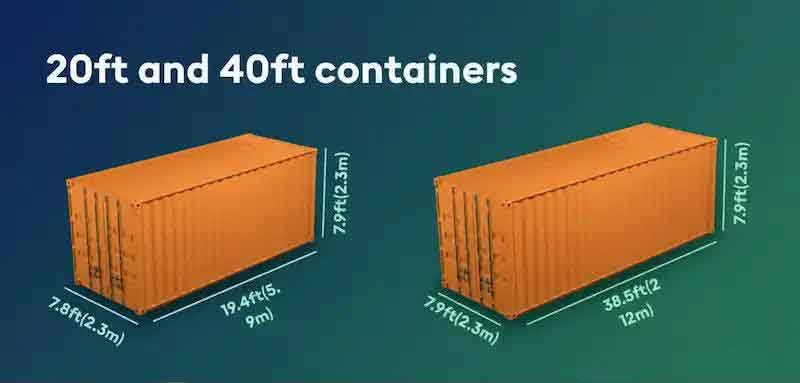
20ft vs 40ft High Cube Used Shipping Containers
Businesses across Dubai and the wider UAE require reliable storage and transportation solutions for construction materials, industrial equipment, commercial goods, and project supplies. Purchasing a used shipping container can be a practical option for companies that need secure storage without investing in a brand-new unit.
However, buying a second-hand container requires more than checking its external appearance. Buyers should understand container dimensions, internal capacity, structural condition, door seals, floor quality, certification requirements, and transportation arrangements before making a purchase.
Whether you need a 20ft storage unit, a 40ft high-cube container, or a modified container for industrial use, selecting the correct specification can help reduce unnecessary costs and avoid operational problems.
This guide explains how to evaluate a used container in Dubai, compare available grades, choose the right dimensions, and arrange delivery to industrial locations such as JAFZA, Al Quoz, and Sharjah.
Why Buy a Used Shipping Container in Dubai?
Dubai is an important logistics, trading, construction, and industrial centre. Businesses operating around Jebel Ali, Dubai Industrial City, Al Quoz, and other commercial areas regularly require additional space for equipment, inventory, tools, and materials.
A used shipping container offers an enclosed steel structure that can be transported to different project locations and adapted for several applications.
Some common reasons businesses purchase used containers include:
-
Additional storage for construction materials and machinery.
-
Secure storage for tools and site equipment.
-
Temporary warehouse space for commercial inventory.
-
Storage for spare parts and maintenance supplies.
-
Industrial workshops and equipment rooms.
-
Modified offices and site facilities.
-
Temporary storage during warehouse expansion or relocation.
One of the main advantages of purchasing a second-hand container is the possibility of obtaining a functional storage structure at a lower initial investment than a comparable new unit.
However, the actual value depends on its condition, previous usage, age, maintenance history, and suitability for the intended application.
For buyers comparing used shipping containers for sale UAE, the most important step is to identify the required container grade before comparing quotations.
Used Container in Dubai: Complete Buying Guide to Sizes, Grades, Inspections and Delivery
Dubai’s construction, logistics, manufacturing, and trading industries depend on secure storage facilities to keep equipment, materials, and commercial inventory protected. For businesses that need additional storage without investing in permanent warehouse construction, purchasing a second-hand shipping container can be a practical solution.
A used shipping container provides a steel-enclosed structure that can be transported between project locations, installed at industrial facilities, and modified for different operational requirements. However, not every second-hand container offers the same structural condition or level of protection.
Before purchasing a used container in Dubai, buyers should understand the difference between standard and high-cube dimensions, Wind and Watertight (WWT) and Cargo Worthy (CW) grades, flooring condition, door seals, and delivery arrangements.
This guide explores the technical and commercial considerations involved in purchasing used shipping containers in the UAE, including conversion opportunities and transportation to JAFZA, Al Quoz, and Sharjah industrial areas.
Why Businesses Choose Used Shipping Containers in Dubai
Dubai is a major trading and logistics centre, with industrial operations spread across Jebel Ali, Al Quoz, Dubai Industrial City, and Sharjah’s manufacturing and warehouse districts.
Companies operating in these locations often require additional storage for tools, machinery, spare parts, building materials, and commercial inventory.
Buying a second-hand container can help businesses establish additional enclosed storage without constructing a permanent building.
Common applications include:
-
Construction-site material storage.
-
Industrial equipment and machinery storage.
-
Warehouse overflow and inventory management.
-
Secure tool storage for contractors.
-
Spare-parts storage for maintenance companies.
-
Temporary workshops and fabrication facilities.
-
Modified offices and site administration rooms.
-
Agricultural and commercial storage.
The main commercial advantage is flexibility. A container can be delivered to a suitable location, used for the duration of a project, and relocated or resold when storage requirements change.
However, purchasing decisions should be based on the intended use rather than appearance alone. A container suitable for storing construction materials may not meet the requirements for international cargo transportation or climate-controlled operations.
Understanding Container Sizes: 20ft Standard vs 40ft High Cube
Container dimensions are among the first specifications buyers should evaluate.
The two commonly considered options are the 20ft standard container and the 40ft high-cube container. Both provide enclosed steel storage, but they offer different floor areas, internal heights, and usable volumes.
20ft Standard Shipping Container
A practical choice for smaller construction sites, workshops, spare-parts storage, and businesses with limited installation space.
External height: 8ft 6in
40ft High Cube Shipping Container
Provides additional floor space and approximately one extra foot of external height compared with a standard-height container.
External height: 9ft 6in
20ft Standard Container Dimensions
A typical 20ft standard dry container has the following approximate specifications:
| Measurement | Approximate dimension |
|---|---|
| External length | 20ft / 6.06m |
| External width | 8ft / 2.44m |
| External height | 8ft 6in / 2.59m |
| Internal length | 19ft 4in / 5.90m |
| Internal width | 7ft 8.5in / 2.35m |
| Internal height | 7ft 10in / 2.39m |
| Internal volume | 33.2 m³ |
A 20ft container is particularly useful for contractors who need secure storage near their working areas without occupying too much site space.
It can accommodate hand tools, packaged materials, maintenance supplies, electrical equipment, and smaller machinery, subject to the container’s payload limits and loading arrangement.
40ft High Cube Container Dimensions
A 40ft high-cube container is designed to provide greater internal volume through additional height.
Its typical specifications are:
| Measurement | Approximate dimension |
|---|---|
| External length | 40ft / 12.19m |
| External width | 8ft / 2.44m |
| External height | 9ft 6in / 2.90m |
| Internal length | 39ft 5in / 12.03m |
| Internal width | 7ft 8.5in / 2.35m |
| Internal height | 8ft 10in / 2.70m |
| Internal volume | 76.4 m³ |
The extra headroom makes this configuration useful for businesses storing taller equipment, bulky materials, industrial components, or goods requiring additional vertical clearance.
For example, a contractor storing long equipment, stacked supplies, or workshop materials may benefit from the extra internal height.
What Is the Difference in Storage Capacity?
Approximate internal container volume
Representative dry-container specifications in cubic metres.
0 m³25 m³50 m³75 m³100 m³20ft standard40ft high cube
A 40ft high-cube container offers more than twice the approximate internal volume of a 20ft standard container.
This makes it useful for larger storage requirements, but the additional capacity is not always necessary. Businesses should consider the quantity and dimensions of their materials, available installation space, access routes, and delivery costs before selecting a larger unit.
Important: Actual internal measurements, door openings, tare weight, and payload capacity vary by manufacturer and container model. Always request the specification plate and measure the actual unit before purchase.
Wind and Watertight (WWT) vs Cargo Worthy (CW): Understanding Container Grades
Container grading is one of the most important factors when purchasing a second-hand unit.
Two commonly advertised conditions in the used container market are Wind and Watertight (WWT) and Cargo Worthy (CW).
Although both may be suitable for certain storage requirements, they do not offer exactly the same structural assurance.
An important distinction is that WWT and CW are commercial condition descriptions used in the container industry. They should not be treated as interchangeable ISO certifications.
1. Wind and Watertight (WWT) Containers
A Wind and Watertight container is intended to prevent wind and rainwater from entering through its roof, walls, doors, and other external openings.
It is commonly selected for static storage applications where keeping stored materials protected from outdoor weather is the main requirement.
A typical WWT inspection should cover:
-
No holes or perforations through the roof.
-
No openings through the side or end walls.
-
Properly closing cargo doors.
-
Functional door locking rods and handles.
-
Intact door rubber gaskets.
-
No visible water penetration.
-
A floor that is suitable for the intended storage load.
-
No serious structural deterioration.
One practical inspection method is the daylight test. The inspector closes the container doors from inside and checks whether sunlight is visible through the roof, walls, or door edges.
Visible daylight can indicate openings that may allow rainwater or dust to enter.
However, passing this test does not establish that the understructure is suitable for cargo transportation.
A WWT container should therefore be purchased for storage only when its actual structural condition has been checked.
2. Cargo Worthy (CW) Containers
Cargo Worthy containers are intended to be suitable for carrying cargo, subject to the relevant inspection and safety approval requirements.
A buyer should look beyond the external appearance and check the container’s structural components.
Important inspection points include:
CSC safety plate: Check that the Container Safety Convention (CSC) safety approval plate is present, legible, and valid for the intended transport operation. Confirm the applicable examination or ACEP status.
Corner castings: Inspect all eight corner castings for cracks, serious deformation, and damage that could interfere with lifting or securing equipment.
Corner posts: Check for bending, cracks, or impact damage.
Floor and cross-members: Confirm that the floor is firmly supported and that the underlying cross-members are not seriously corroded or damaged.
Cargo doors: Both doors should open and close properly. Locking rods, handles, hinges, and keepers should operate correctly.
Door seals: Rubber gaskets should be intact and should provide proper contact when the doors are closed.
Roof and side panels: Check for holes, through-corrosion, and structural damage.
A container described as CW should be supported by suitable inspection evidence. A seller’s description alone does not establish that the container is approved for international shipping.
WWT vs CW: Which Grade Should You Purchase?
| Inspection requirement | WWT | CW |
|---|---|---|
| Weather protection | Required | Required |
| Functional cargo doors | Required | Required |
| Door gasket condition | Important | Important |
| Sound storage floor | Must be checked | Must be checked |
| Structural underframe assessment | Buyer should verify | Essential |
| CSC safety approval | Not necessarily included | Normally required for cargo-worthy shipping status |
| International cargo transportation | Not established by WWT alone | Subject to valid approval |
| Static storage | Common application | Suitable |
| Structural shipping suitability | Not guaranteed | Intended to meet cargo-worthy requirements |
Buying recommendation
For ordinary construction-site storage, a properly inspected WWT container may be sufficient.
For businesses that intend to transport cargo internationally, a CW container with valid CSC approval and appropriate inspection documentation is the more suitable option.
Used Container Inspection Checklist: What to Check Before Buying
A second-hand container can look acceptable from the outside while having problems inside its structure.
A proper inspection before payment and delivery can help buyers avoid unexpected repair expenses.
Check the exterior steel structure
Inspect the complete exterior, including the roof, sidewalls, front wall, bottom rails, and corner posts.
Surface rust and small dents may be acceptable depending on the agreed grade. However, deep corrosion, holes, cracked welds, and significant deformation require further investigation.
Pay particular attention to the lower side rails and bottom structure because these areas can experience damage from handling, moisture, and prolonged exposure.
Inspect the flooring condition
The container floor is an important part of the storage system.
Many conventional dry containers use marine plywood flooring supported by steel cross-members.
Before purchasing, check:
-
Soft or weakened floor sections.
-
Cracks and holes.
-
Water damage and swelling.
-
Delamination or damaged plywood.
-
Exposed nails or protruding fasteners.
-
Chemical stains and unusual smells.
-
Damage to the supporting steel cross-members.
If the container will store heavy machinery, the floor should be assessed for the intended loading arrangement. A general cargo payload rating does not automatically establish the capacity of every individual floor section for concentrated loads.
Examine the door seals and locking system
Door condition directly affects weather protection and security.
Open both doors and check that they move without excessive resistance. Examine the locking rods, hinges, handles, keepers, and rubber gaskets.
Damaged seals can allow rainwater and dust to enter the container, potentially affecting stored equipment and materials.
A practical test is to close the doors completely and inspect the interior for visible daylight.
Request identification and inspection documents
Before finalising a purchase, ask the supplier for:
-
Container identification number.
-
Size and type.
-
Photographs of the exterior and interior.
-
CSC plate details, if cargo transportation is required.
-
Available inspection or survey report.
-
Condition grade in writing.
-
Sales invoice and ownership documentation.
-
Details of any previous repairs.
Practical Conversion Ideas for Used Shipping Containers
A shipping container is not limited to traditional cargo storage. With appropriate engineering, insulation, ventilation, and interior modifications, it can be converted into a functional workspace or site facility.
For businesses purchasing a used container in Dubai, the conversion should be planned around the actual operating requirements.
1. Construction-site tool vaults
Contractors can convert a used container into a secure storage area for power tools, electrical equipment, welding accessories, spare parts, and other valuable site materials.
Additional security features may include reinforced doors, lockboxes, lighting, shelving, and inventory storage systems.
2. Climate-controlled workshops
Industrial companies can modify containers into enclosed workspaces for maintenance, electronics repair, equipment servicing, and light fabrication.
These conversions may require insulated walls, suitable air conditioning, ventilation, electrical distribution, and additional fire protection.
3. Modular office setups
A shipping container can be modified into a temporary administrative office with windows, doors, lighting, electrical outlets, partitions, flooring, and cooling equipment.
Multiple engineered units can also be arranged to create larger modular office facilities.
Conversion requirements for tool storage
A construction-site tool vault should prioritise security and easy access.
Depending on the equipment being stored, a conversion may include:
-
Reinforced locking arrangements.
-
Internal shelving and tool racks.
-
LED lighting.
-
Electrical outlets.
-
Anti-slip flooring.
-
Ventilation.
-
Security cameras and alarm systems.
For particularly valuable tools, businesses should also consider access control and an inventory management system.
Conversion requirements for climate-controlled workshops
A workshop requires more than an air-conditioning unit.
The steel structure can absorb considerable solar heat, particularly in exposed outdoor locations. Proper insulation is therefore important.
A suitable conversion may require insulated wall and ceiling panels, sealed doors, ventilation, air conditioning, and appropriate electrical installations.
If the workshop involves welding, grinding, painting, or chemical handling, ventilation and fire protection must be designed around the specific activity. A normal split AC system is not a substitute for industrial exhaust ventilation.
Conversion requirements for modular offices
Office conversions generally require a more extensive interior fit-out.
Common features include:
-
Office partitions.
-
Windows and external doors.
-
Insulated ceiling and wall lining.
-
Air conditioning.
-
Lighting and power sockets.
-
Workstations and storage cabinets.
-
Flooring and interior finishing.
-
Fire detection and emergency provisions.
For businesses requiring a ready-to-use office rather than a custom conversion, Rental Generator also offers converted container offices.
Before modifying a container, buyers should confirm that cutting openings or altering structural components will not compromise its lifting arrangement or any applicable CSC approval. Occupied or modified units may also require approvals from the relevant site authority.
Storage Container Yard: Selecting and Preparing the Right Location
A suitable storage container yard is important for businesses purchasing multiple containers or planning to keep units at a fixed industrial location.
The installation area should provide sufficient space for delivery vehicles, lifting equipment, container positioning, and future access.
In Dubai and Sharjah, industrial locations such as JAFZA, Al Quoz, and Sharjah Industrial Areas have different access and operational requirements.
What makes a suitable container yard?
Before arranging delivery, assess the following:
Ground conditions: The installation surface should be level, stable, and capable of supporting the container and its intended contents.
Drainage: Avoid locations where rainwater or cleaning water can collect beneath the container.
Access: Ensure sufficient clearance for delivery trucks, crane operations, and container doors.
Spacing: Leave adequate room for opening doors, loading equipment, and future maintenance.
Security: Consider perimeter fencing, lighting, CCTV, and access control where valuable equipment is stored.
Local approvals: Check whether container storage is permitted at the selected property or industrial facility.
Important JAFZA storage restrictions
Businesses planning to install a storage container inside Jebel Ali Free Zone should pay particular attention to the applicable authority requirements.
The published JAFZA Rules 2023, Section 15.7, generally restrict containers and portacabins used for material storage on customer premises. Certain operational uses can be reviewed by EHS.
The rules also address exceptional approvals, including time limits and refundable deposits. The published rules specify that an approved temporary use period cannot exceed four months under this provision.
Jebel Ali Free Zone (Jafza)
Therefore, businesses should not assume that purchasing a container automatically gives them permission to install it inside JAFZA.
Obtain the necessary approval before arranging transportation.
For Al Quoz and Sharjah industrial locations, check the relevant property management, municipality, or industrial-area requirements before installation. Rules applicable to JAFZA should not automatically be applied to other industrial areas.
Boom Truck (Hiab) Delivery and Crane Positioning Across Dubai and Sharjah
Purchasing the right container is only part of the process. Delivery and positioning also require careful planning.
A container can weigh several tonnes even when empty. A 20ft unit is generally lighter than a 40ft high-cube container, but actual weights vary according to manufacturer, construction, and previous modifications.
For this reason, the delivery vehicle and lifting equipment should be selected according to the container’s actual weight, dimensions, lifting points, and placement distance.
What is Hiab delivery?
Hiab is commonly used as a name for truck-mounted loader crane equipment.
A boom truck combines transportation and lifting capabilities, allowing an operator to carry a container and position it at a suitable location, subject to the crane’s capacity and operating limits.
This can be useful when a business does not have a separate mobile crane available at the installation site.
When is a Hiab truck suitable?
A truck-mounted loader crane may be appropriate when:
-
A 20ft container needs to be positioned near a warehouse.
-
A construction site requires a tool-storage container.
-
A workshop needs a container placed in a designated area.
-
The installation location has suitable vehicle access.
-
The crane’s rated capacity covers the container weight at the required working radius.
However, not every Hiab truck can lift every container.
Crane capacity decreases as the horizontal lifting distance increases. Therefore, a unit that can lift a container close to the truck may not have the same capacity when positioning it several metres away.
When is a separate mobile crane required?
A larger mobile crane may be necessary when:
-
A 40ft container needs to be lifted over an obstruction.
-
The placement area is far from the truck’s parking position.
-
The container must be installed in a restricted yard.
-
The required lifting radius exceeds the loader crane’s rated capacity.
-
Site access does not allow the delivery vehicle to position the container directly.
The final lifting plan should consider the container’s weight, centre of gravity, approved lifting points, crane load chart, ground conditions, and overhead obstructions.
Delivery considerations for major industrial locations
| Delivery location | Important considerations |
|---|---|
| JAFZA | Confirm entry authorisation, container-use approval, delivery documentation and site access |
| Al Quoz | Check industrial plot access, turning space, overhead clearance and unloading position |
| Sharjah Industrial Areas | Confirm truck access, site dimensions, ground conditions and local permissions |
| Dubai Industrial City | Check site access, unloading space and property requirements |
| Ras Al Khor | Confirm vehicle approach, loading restrictions and available positioning space |
Preparing the site before delivery
A properly prepared site helps reduce delays and unnecessary handling costs.
Before the truck arrives:
-
Measure the available installation area.
-
Confirm the container’s external dimensions.
-
Check the vehicle approach and turning space.
-
Identify overhead cables, roofs, trees, and other obstructions.
-
Prepare a stable and level supporting surface.
-
Confirm crane positioning and outrigger requirements.
-
Arrange access permissions and site coordination.
-
Ensure the unloading area is clear of unnecessary personnel.
Truck-mounted crane operations require appropriate ground support, safe working clearances, and equipment operated by competent personnel. UAE lifting guidance also addresses stable crane positioning, outrigger and base-plate use, and exclusion zones around lifting operations.
How to Choose the Right Used Container for Your Business
Before requesting quotations, buyers should identify the container’s intended purpose.
A storage container used for ordinary construction materials has different requirements from a container used for international cargo transportation or a modified industrial workshop.
The following comparison can help narrow down the options.
| Business requirement | Suitable option |
|---|---|
| Small construction-site storage | 20ft WWT |
| Spare-parts storage | 20ft WWT or CW |
| Large warehouse overflow | 40ft standard |
| Bulky or taller equipment | 40ft high cube |
| International cargo transportation | CW with valid CSC approval |
| Secure industrial tool storage | Inspected WWT or CW |
| Climate-controlled workshop | Insulated and modified container |
| Temporary office | Professionally converted container |
Consider the total purchase and operating cost
The cheapest container is not necessarily the most economical option.
Businesses should compare:
-
Initial purchase price.
-
Container condition and grade.
-
Repair and refurbishment expenses.
-
Delivery and crane positioning charges.
-
Site preparation.
-
Insulation and ventilation costs.
-
Security modifications.
-
Future relocation expenses.
-
Potential resale value.
For example, a container with damaged flooring may require repairs before it can safely store machinery. Similarly, a unit with defective door seals may require refurbishment to protect inventory from rain and dust.
Requesting photographs, inspection details, and a complete delivery quotation can help buyers compare suppliers more accurately.
Buying a Used Container in Dubai from Rental Generator
For businesses searching for a reliable storage solution, Rental Generator provides a dedicated option for purchasing used containers in Dubai.
The selection process should begin with the required dimensions, intended application, and preferred condition grade.
Whether you need a compact storage unit for a construction project or a larger high-cube container for industrial inventory, confirming the specification before purchase helps ensure that the selected unit matches your operational needs.
Information to provide when requesting a quotation
To receive a more relevant quotation, share:
-
Required size: 20ft, 40ft, or 40ft high cube.
-
Preferred condition: WWT, CW, or another clearly specified grade.
-
Intended application: storage, workshop, or office conversion.
-
Required quantity.
-
Delivery location.
-
Whether Hiab or separate crane unloading is required.
-
Any additional modification requirements.
Providing these details helps the supplier understand the actual project requirements and recommend a suitable container.
Frequently Asked Questions
1. What is the best used container size for storage in Dubai?
A 20ft standard container is suitable for smaller storage requirements, construction tools, and spare parts. A 40ft high-cube container is more suitable for businesses requiring additional floor space and vertical storage capacity.
2. What is the difference between a 20ft standard and a 40ft high-cube container?
A 20ft standard container has an external height of approximately 8ft 6in, while a 40ft high-cube container has an external height of approximately 9ft 6in.
The high-cube model also offers significantly greater internal volume because it is twice as long and approximately one foot taller.
3. Is a WWT container suitable for construction-site storage?
Yes. A properly inspected Wind and Watertight container can be suitable for storing tools, equipment, and building materials.
However, buyers should check its floor, supporting frame, doors, seals, and overall condition before purchasing.
4. Is a Cargo Worthy container suitable for international shipping?
A Cargo Worthy container is intended for cargo transportation, but buyers should verify the valid CSC safety approval, examination status, and applicable inspection requirements before arranging international shipment.
5. How can I check whether a used container is waterproof?
Inspect the roof, walls, door gaskets, and locking mechanisms. Close the doors and perform a daylight test from inside. Visible daylight can indicate openings that require further inspection.
6. Can a used shipping container be converted into a workshop?
Yes. A container can be modified into a workshop with insulation, lighting, ventilation, electrical systems, workbenches, and air conditioning.
The conversion should be designed around the intended industrial activity and applicable fire and safety requirements.
7. Can a 40ft high-cube container be delivered using a Hiab truck?
It depends on the crane’s lifting capacity, working radius, container weight, and site conditions. Some truck-mounted cranes may be unsuitable for lifting a 40ft container, making a separate mobile crane necessary.
8. Can used containers be delivered to JAFZA and Al Quoz?
Delivery arrangements depend on vehicle access, site conditions, and applicable permissions.
For JAFZA, businesses must also confirm that the proposed container use has received the required approval before arranging entry.
9. What should I check before buying a used container?
Check the roof, external walls, corner posts, floor, understructure, door hinges, locking rods, rubber seals, and container identification details.
For cargo transportation, also verify the CSC safety approval and inspection documentation.
10. Is a 40ft high-cube container better than a 20ft container?
It depends on the storage requirement. A 40ft high cube offers more than twice the internal volume of a 20ft standard container, but it also requires more installation space and appropriate transportation equipment.
Conclusion
Purchasing a used shipping container in Dubai can be a practical investment for construction companies, logistics operators, manufacturers, and businesses requiring additional industrial storage.
The right purchase depends on selecting suitable dimensions, understanding WWT and CW condition grades, checking flooring and door seals, and arranging safe transportation and positioning.
A 20ft standard container can meet smaller storage requirements, while a 40ft high-cube container provides additional capacity and headroom for larger or bulkier materials.
Businesses planning conversions should also evaluate insulation, ventilation, electrical installations, and structural modifications before starting work.
Finally, delivery planning is just as important as container selection. Whether the destination is JAFZA, Al Quoz, or a Sharjah industrial location, checking access, ground conditions, crane capacity, and site permissions beforehand can help avoid unnecessary delays.
By evaluating these factors before purchasing, businesses can select a suitable used container in Dubai that supports their storage and operational requirements.
Need Reliable Temporary Power or Cooling in the UAE?
From 20 kVA mobile silent generators up to multi-megawatt synchronized power plants and 500 TR packaged chillers. Complete turnkey delivery, cabling, and 24/7 on-site maintenance across Dubai, Abu Dhabi, and Sharjah.