Phone:
(701)814-6992
Physical address:
6296 Donnelly Plaza
Ratkeville, Bahamas.

Phone:
(701)814-6992
Physical address:
6296 Donnelly Plaza
Ratkeville, Bahamas.
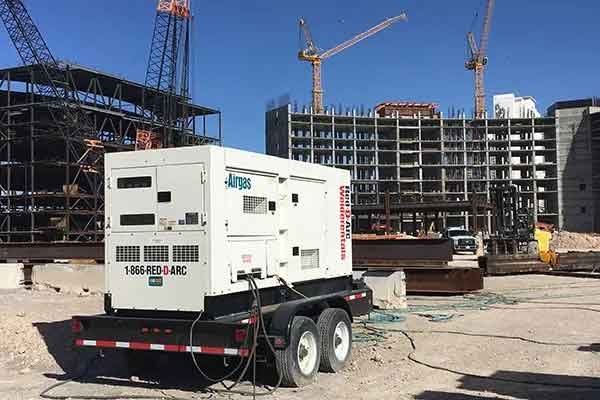
Reliable electricity is one of the first requirements of a construction project. From site offices and lighting to cranes, welding equipment, concrete pumps, power tools and temporary facilities, construction sites can have a wide range of electrical loads operating at different times.
Where permanent utility power is unavailable, insufficient or delayed, temporary generator rental for construction projects can provide the power needed to keep work moving. Rental generators are also useful when a project’s electrical demand changes as construction progresses.
In the UAE, specialist rental providers offer generators and supporting equipment for construction sites, including temporary power systems for site offices, tower cranes, commissioning, testing, temporary accommodation, piling and foundation works.
A construction site rarely has a simple electricity requirement.
During the early stages, contractors may need power for site offices, lighting, pumps and smaller tools. As the project develops, larger loads such as tower cranes, hoists, welding equipment, compressors and concrete equipment can be added.
On some sites, grid electricity may not yet be available. Dubai Municipality, for example, provides a specific service for obtaining temporary electricity connections for construction sites, allowing temporary electrical supply before buildings are completed.
However, a temporary grid connection is not necessarily available immediately or may not provide enough capacity for every project. In these situations, generators can serve as a temporary or supplementary source of power.
Temporary generator rental means hiring diesel generators for a defined project period rather than purchasing permanent generating equipment.
The rental arrangement can be as simple as one generator delivered to a small site, or it can involve a complete temporary power system with multiple synchronized generators, fuel tanks, distribution equipment, cabling and technical support.
Current UAE rental offerings range from smaller generators to industrial power modules. Atlas Copco, for example, lists rental generators from 20 kVA to 1,250 kVA and larger capacities through parallel configurations.
The appropriate setup depends on the site’s actual electrical requirements.
Temporary generators can support many different construction activities.
Construction offices need electricity for lighting, computers, printers, communication equipment, air conditioning and other office equipment.
A smaller generator may be sufficient during the early stages of a project, although the load should be calculated rather than estimated simply from the number of offices.
Tower cranes can create significant electrical demand, particularly during lifting operations.
Large construction projects may therefore require dedicated or synchronized generator systems capable of handling both continuous and starting loads.
Construction power suppliers in the UAE specifically identify tower cranes among the major applications for temporary generators.
Concrete pouring operations can require substantial power, particularly during major pours when equipment needs to operate continuously.
An interruption during a critical concrete operation can create delays and material-management problems, making dependable temporary power important.
Construction sites frequently use welding machines, cutting equipment and other fabrication tools.
These loads can vary significantly depending on how many machines are operating simultaneously.
Lighting is essential for safe movement around the site and for projects operating during evening or night shifts.
Temporary power systems can supply site lighting and lighting towers alongside other construction equipment. UAE rental providers commonly offer lighting towers as part of construction power packages.
Construction sites may need pumps for groundwater control, drainage or other temporary water-management requirements.
In some projects, these pumps must operate for extended periods, making reliable generator capacity particularly important.
Temporary accommodation, kitchens, welfare facilities and other site buildings can also require generator power.
Historical UAE rental project information from Al Shola identifies temporary accommodation as one of the construction applications supported by rental generators.
The generator should not be selected simply by looking at the largest electrical appliance on the site.
A proper temporary power assessment considers the complete load profile.
Start by identifying every major piece of equipment that will use electricity.
This may include:
Tower cranes
Hoists
Welding machines
Concrete pumps
Compressors
Water pumps
Site lighting
Air conditioners
Office equipment
Worker accommodation
Battery chargers
Power tools
The goal is to understand what equipment needs to operate and when.
A UAE temporary-power planning guide recommends starting with the actual load and operating plan rather than choosing a generator from a nominal kVA estimate.
Some electrical motors require considerably more power when starting than they consume during normal operation.
This is important for cranes, pumps, compressors and other motor-driven equipment.
A generator that appears large enough based on running load may still struggle if starting requirements are ignored.
Not every machine on a construction site operates at the same time.
For example, the crane may not be lifting while several welding machines and concrete pumps are operating at full capacity.
Understanding the operating schedule can help engineers determine the actual required generator capacity and avoid unnecessarily large equipment.
A construction site’s electrical demand often increases as work progresses.
The generator solution should therefore be reviewed when major new equipment is introduced.
Modular rental systems can be useful because additional generators can be connected as demand grows. Atlas Copco’s UAE power modules, for example, are designed for connection with other generators and site components.
The answer depends on the project’s size, load profile and reliability requirements.
A single generator can be appropriate for a small site with relatively straightforward electrical demand.
It can be simpler to install and operate, but a failure can remove the entire site’s power supply unless another backup arrangement exists.
Larger projects may use multiple generators operating together.
This can provide greater flexibility and allow the available capacity to be adjusted according to the project’s changing requirements.
Parallel generator systems can also provide redundancy when designed appropriately.
For example, UAE rental providers describe synchronized generator systems with fuel tanks, cables, isolators and common busbars for temporary construction and building power applications.
A construction site’s temporary power system usually involves more than the generator itself.
Depending on the project, the rental package may include:
Distribution boards
Heavy-duty power cables
Fuel tanks
Synchronization panels
Changeover equipment
Transformers
Cable ramps or protection
Earthing arrangements
Monitoring equipment
Lighting towers
Some UAE providers offer complete temporary power infrastructure, including generators, distribution boards, fuel systems and cable management.
This is important when comparing quotations. A generator with a low rental rate may not be the cheapest complete solution if cables, distribution equipment, fuel management and installation are charged separately.
Fuel is one of the ongoing operating considerations when renting diesel generators.
A generator running continuously can consume substantial amounts of fuel, so the project needs a practical refuelling plan.
Depending on the rental arrangement, fuel may be:
Supplied by the contractor
Supplied by the rental company
Stored in dedicated temporary tanks
Managed through scheduled deliveries
Some UAE rental providers offer fuel delivery and fuel-management services as part of their temporary power solutions.
Fuel storage and handling should follow the applicable safety requirements for the project.
Where the generator is placed can affect both safety and practicality.
The installation area should provide adequate access for:
Delivery vehicles
Refuelling
Maintenance
Exhaust ventilation
Emergency access
The generator should also be positioned with consideration for noise, heat, exhaust gases and proximity to workers or occupied temporary buildings.
For urban construction projects, noise can be an additional concern. Rental suppliers offer enclosed or silent generator options for locations where noise needs to be controlled.
The generator only produces the power; that electricity still needs to be distributed safely around the site.
Temporary distribution can involve long cable runs between the generator and construction equipment.
Cables should be appropriately sized and protected against mechanical damage, water and site traffic. Where cables cross vehicle routes or pedestrian areas, suitable protection should be used.
The temporary power system, including protection, cabling, earthing and commissioning, should be designed and checked by competent electrical professionals against the actual site requirements and applicable regulations.
One advantage of renting is that the power solution can change as the project develops.
Early-stage requirements may include:
Site offices
Security cabins
Lighting
Small pumpsHand tools
Basic welfare facilities
As the main structure develops, larger equipment can be introduced, such as:
Tower cranes
Hoists
Welding equipment
Concrete pumps
Compressors
This stage can significantly increase the site’s electrical demand.
During finishing works, the load profile may change again.
Electrical requirements can include:
Lighting
HVAC
Power tools
Elevators
Testing equipment
Temporary building systems
A flexible rental arrangement allows contractors to adjust the generator capacity rather than purchasing a fixed system that may no longer match the project’s requirements.
Buying a large generator fleet requires substantial capital.
Rental allows contractors to access the required equipment without purchasing generators that may only be needed for one project.
Construction projects change over time. Rental equipment can be added, removed or replaced as the electrical demand changes.
Rental companies can provide generators and associated equipment in different capacities and configurations without requiring the contractor to maintain a large permanent fleet.
Many rental agreements include maintenance or technical support.
This can reduce the burden on a contractor’s own maintenance team.
Specialist rental providers maintain equipment fleets that can be mobilized for temporary projects. Atlas Copco, for example, describes its rental power equipment as designed for fast onsite delivery and plug-and-play installation.
Some construction projects are located far from permanent electrical infrastructure.
Examples can include remote infrastructure works, road projects, large developments and sites where grid connection has not yet been established.
A recent UAE industry guide notes that some remote construction projects operate entirely on temporary generated power for extended periods. It also emphasizes the importance of designing the power system around the site’s actual loads rather than relying on a generic generator size.
For these projects, the rental package may need to include fuel logistics, multiple generators, distribution equipment, monitoring and maintenance support.
Large projects can have highly variable loads.
A single generator may not be the most efficient arrangement when several major machines operate at different times.
A modular system using multiple synchronized generators can provide additional flexibility.
For example, a construction power supplier in the UAE describes configurations using multiple 500 kVA generators for large projects, while emphasizing backup capacity and synchronized operation.
However, these figures should not be treated as universal recommendations. The appropriate generator configuration must be calculated from the actual project’s electrical load, starting currents, operating schedule and required reliability.
There is no single rental price for construction generators.
The total cost can depend on:
Generator capacity
Number of generators
Rental duration
Fuel consumption
Delivery distance
Installation requirements
Distribution equipment
Cabling
Fuel tanks
Synchronization equipment
Maintenance
Operator or technician support
Emergency response requirements
Daily, weekly and monthly rental arrangements are available in the UAE, with some suppliers also offering longer-term contracts.
For a meaningful comparison, contractors should request a quotation based on the complete temporary power requirement rather than comparing only the generator’s daily rental rate.
Before hiring equipment, construction companies should ask:
These questions help turn a basic equipment rental into a properly planned temporary power solution.
Construction sites already involve numerous hazards, so temporary electrical systems should receive particular attention.
Generator installations should be properly designed, connected, protected and maintained. Electrical distribution, earthing, fuel storage, exhaust arrangements and cable routing all need to be considered.
Dubai Municipality maintains construction-site requirements and circulars covering areas such as construction-site utilization, organization, protection and periodic inspections.
Contractors should also follow their project’s applicable electrical, fire-safety, occupational-health and environmental requirements.
Temporary generator rental for construction projects provides contractors with a flexible way to supply electricity when grid power is unavailable, insufficient or still being established.
The right solution is not necessarily the biggest generator available. It should be based on the site’s actual load, motor-starting requirements, operating schedule, project stage and reliability needs.
For smaller projects, one appropriately sized generator may be sufficient. Larger developments may require synchronized generator systems, distribution equipment, fuel management and backup capacity.
Most importantly, temporary power should be planned as a complete electrical system rather than as a generator-only purchase. UAE rental providers offer everything from individual diesel generators to larger modular power packages with installation, accessories and technical support.
By assessing the load properly and choosing a rental provider that can support delivery, installation, maintenance and changing project requirements, construction companies can create a temporary power system that supports productivity while the permanent electrical infrastructure is being developed.