Phone:
(+971) 56 921 3754
Physical address:
Office #201, Al Quoz Industrial Area
Dubai, United Arab Emirates.
Short Term Generator Rental in UAE
Reliable electricity is essential for construction projects, commercial facilities, industrial operations, events, and emergency response. Yet not every power requirement justifies purchasing a permanent generator. A project may need electricity for only a few days, a facility may require backup during planned maintenance, or a business may suddenly lose part of its normal power supply.
In these situations, short-term generator rental in UAE can provide a flexible way to obtain temporary power without investing in equipment that may have limited use after the project ends.
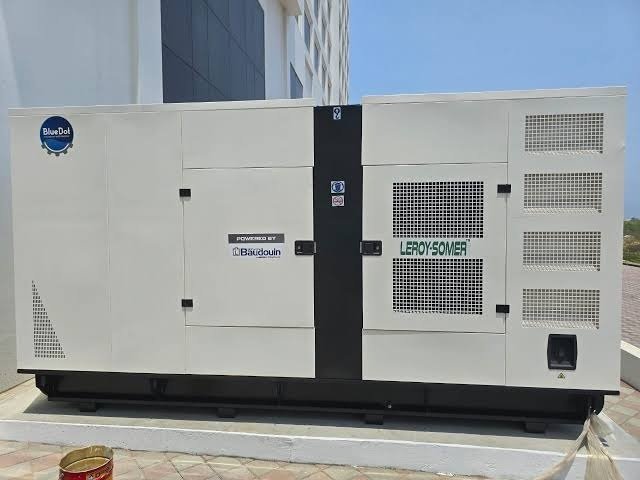
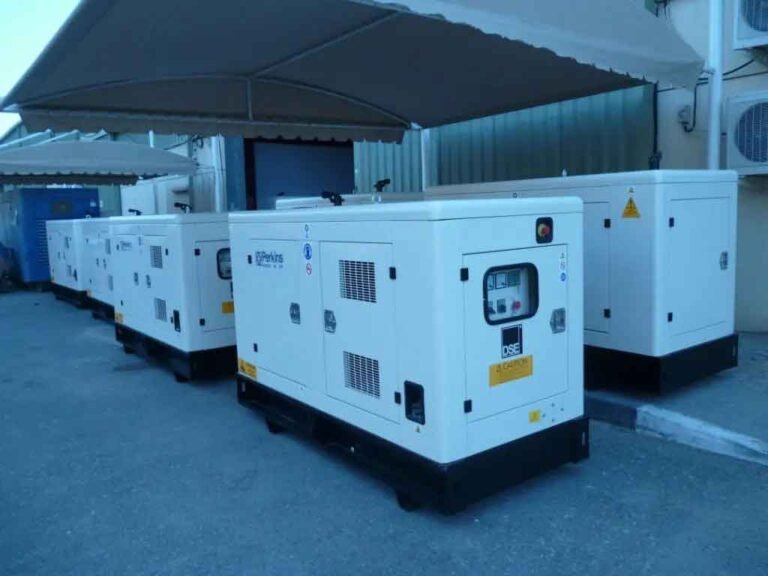
UAE rental providers currently offer temporary power solutions ranging from conventional diesel generator sets to modular power stations and hybrid systems. Atlas Copco, for example, describes its UAE rental fleet as including diesel generators, modular power stations, transformers and energy-storage solutions for temporary installations.
The important point is that renting a generator is not simply about selecting a kVA rating and delivering the machine. The generator, distribution equipment, cabling, fuel arrangements, load requirements, installation and site conditions all need to work together.
What Is Short-Term Generator Rental?
Short-term generator rental means hiring a generator for a limited period to meet a temporary electricity requirement.
The rental period could be:
- A few days for an event
- Several weeks during construction
- A few months during a facility upgrade
- The duration of planned electrical maintenance
- An emergency period following generator or utility failure
The exact rental arrangement depends on the provider and the application.
A temporary power package may include more than the generator itself. Depending on the project, it can involve:
- Diesel generator sets
- Distribution panels
- Cables
- Transformers
- Fuel tanks
- Automatic transfer switches
- Load banks
- Synchronisation equipment
- Remote monitoring
- Technicians and maintenance support
This makes it important to discuss the complete power requirement with the rental provider before selecting equipment.
Why Businesses Choose Short-Term Generator Rental in the UAE
1. Temporary Power for Construction Sites
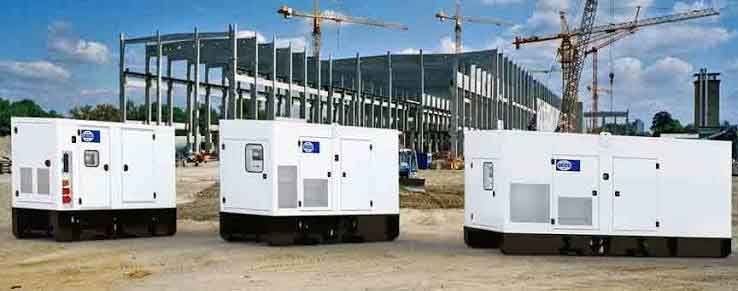
Construction projects often require electricity before permanent building services are available.
Power may be needed for:
- Site offices
- Lighting
- Tools
- Welding equipment
- Pumps
- Elevators during later construction stages
- Temporary air conditioning
- Security systems
- Worker facilities
Dubai Municipality provides a specific service for obtaining temporary electricity supply for construction sites, allowing electricity to be temporarily connected before a building is completed so that electro-mechanical, elevator, security and fire-protection systems can function.
Where grid supply is unavailable, insufficient, delayed or unsuitable for a particular temporary requirement, a properly designed generator-based system may provide an alternative temporary power source, subject to the applicable site and authority requirements.
2. Backup During Planned Maintenance
Businesses sometimes need temporary power while electrical equipment is being serviced or replaced.
A rental generator can provide continuity during work involving:
- Main distribution equipment
- Transformers
- Switchgear
- Permanent generators
- Electrical panels
- Building upgrades
Instead of purchasing a generator for a short maintenance window, a company can rent suitable equipment for the required period.
3. Emergency Power
Unexpected power interruptions can affect businesses quickly.
Depending on the facility, an outage can stop:
- Production
- Refrigeration
- IT equipment
- HVAC systems
- Pumps
- Security systems
- Lighting
- Communication systems
A temporary generator can help restore power while the permanent system or utility supply is being repaired.
For critical facilities, however, the generator should not be treated as an improvised connection. The electrical changeover arrangement needs to be properly engineered.
Dubai’s Building Code specifies standby-generator provisions for certain commercial, tourism and cultural buildings and includes requirements for essential services and automatic changeover arrangements.
Short-Term Generator Rental for Events
Events frequently have temporary electricity requirements.
Examples include:
- Outdoor exhibitions
- Corporate events
- Concerts
- Weddings
- Festivals
- Temporary hospitality areas
- Sports events
- Exhibition stands
Event power requirements can vary considerably depending on lighting, sound systems, catering equipment, cooling, screens and other electrical loads.
A generator should therefore be selected after calculating the expected load rather than simply choosing equipment based on the size of the event.
For temporary installations, site access, noise, exhaust location, fuel storage, cable routing and distribution should also be considered.
Generator Rental for Industrial Applications
Industrial facilities may require temporary power for more demanding loads.
Applications can include:
Manufacturing plants
Warehouses
Workshops
Oil and gas operations
Process facilities
Temporary production areas
Pumps
Heavy machinery
Maintenance shutdowns
Industrial rental providers in the UAE offer generator fleets and modular power solutions designed for temporary and industrial applications.
For industrial users, the rental provider may need information about motor starting currents, continuous loads, sensitive electronic equipment and the possibility of several generators operating together.
How to Select the Right Generator Size
One of the most important steps is determining the actual electrical load.
Generator capacity is commonly expressed in kVA, while many electrical loads are specified in kW.
The relationship depends on power factor:
kW = kVA × power factor
For example, a generator’s apparent-power rating cannot automatically be treated as its equivalent real-power output.
When calculating requirements, consider:
Lighting
Air conditioning
Pumps
Motors
Compressors
Refrigeration
Welding equipment
IT equipment
Lifts
Production machinery
Temporary facilities
You should also identify which loads operate simultaneously.
Starting Loads Matter
Motors can require significantly more power during startup than during normal operation.
This includes equipment such as:
Pumps
Compressors
HVAC equipment
Large fans
Refrigeration systems
If starting demand is ignored, a generator that appears large enough on paper may experience voltage or frequency problems when heavy equipment starts.
This is one reason professional load assessment is preferable to choosing a generator solely from the total nameplate ratings.
What Does “Short-Term” Actually Mean?
There is no universal rental period that applies to every UAE generator project.
Short-term rental can refer to different situations, such as:
Emergency Rental
The generator may be required immediately following an unexpected failure.
Event Rental
Power may only be needed for the duration of an event and its setup and dismantling period.
Project Rental
Construction or infrastructure projects may need generators for several weeks or months.
Maintenance Rental
A facility may rent equipment while its permanent generator or electrical system is offline.
Before signing the rental agreement, confirm the minimum rental period, extension conditions, delivery arrangements and removal schedule.
What Is Included in a Generator Rental Package?
Do not assume that every quotation includes the same services.
A complete rental package may include:
Generator
The main power-generating equipment.
Distribution System
Temporary distribution boards and associated equipment may be required to safely distribute electricity to different loads.
Cabling
The correct cable size and routing depend on current, voltage, distance, installation method and site conditions.
Fuel System
Diesel generators require an appropriate fuel supply. Depending on operating hours, a larger external fuel tank may be necessary.
Changeover Equipment
Where the generator is providing backup to an existing electrical installation, appropriate changeover equipment is essential.
Installation and Commissioning
The generator should be positioned, connected, tested and commissioned correctly before being placed under load.
Maintenance and Technical Support
Rental agreements may include routine servicing, breakdown support and technician availability.
Always ask the supplier to clearly identify what is included in the quotation.
Generator Rental and Fuel Management
Fuel consumption is an important part of the operating cost of a diesel generator.
Consumption varies according to:
Generator size
Electrical load
Engine efficiency
Operating hours
Ambient conditions
Maintenance condition
Running a generator substantially below its optimal operating range for long periods can also create operational and efficiency concerns.
For longer rentals, discuss fuel arrangements in advance. Depending on the contract, the customer may purchase and manage fuel independently, or the rental company may provide fuel-management services.
A proper estimate should consider expected operating hours rather than assuming the generator will operate continuously at full load.
Generator Rental for Data Centres and Critical Loads
Critical facilities require more careful planning than ordinary temporary power applications.
Potential critical loads include:
Data centres
Telecommunications facilities
Hospitals
Security systems
Server rooms
Control systems
Industrial automation
Dubai’s Building Code identifies systems such as security, CCTV, alarms, BMS, data centres, electrical rooms and other essential services among loads requiring standby-generator provisions in applicable projects.
For critical applications, the rental arrangement may need to include redundancy, automatic transfer, synchronisation, monitoring and testing.
A single generator should not automatically be considered sufficient simply because its capacity exceeds the calculated load.
Generator Synchronisation for Larger Loads
When one generator cannot efficiently meet the required demand, multiple generators may sometimes be operated together through a synchronised system.
This can provide:
Higher available capacity
Greater flexibility
Load sharing
Redundancy
Easier capacity adjustment
Modern rental fleets include modular power solutions designed to provide flexible temporary power, including systems that can be configured for larger applications.
However, synchronisation requires appropriate control and distribution equipment and should be designed by qualified professionals.
Safety Considerations for Temporary Generators
Generator installation requires careful attention to electrical and physical safety.
Important considerations include:
Proper earthing
Correct cable sizing
Protection devices
Safe generator positioning
Adequate ventilation
Exhaust management
Fuel storage
Fire protection
Weather protection
Restricted access
Emergency shutdown arrangements
Temporary electrical systems should not be treated as less important than permanent installations.
Dubai’s electrical requirements include specific provisions for construction-site installations, while Dubai’s Building Code also addresses generator installation and changeover arrangements.
Where a generator is connected to a building’s electrical system, the changeover arrangement must prevent unsafe paralleling with the utility supply. Dubai’s Building Code specifically states that standby-generator installations must be arranged so that generator and DEWA supplies cannot be paralleled unintentionally.
Noise and Generator Placement
Generator location is particularly important in commercial, residential and event environments.
Consider:
Distance from occupied areas
Exhaust direction
Noise levels
Ventilation
Access for refuelling
Maintenance access
Nearby buildings
Heat discharge
Cable length
A generator should not simply be placed wherever there is available space.
The rental provider should assess the site and determine an appropriate location that allows safe operation and maintenance.
Generator Rental vs Buying
The decision between renting and purchasing depends largely on how long the generator will be required.
| Requirement | Short-Term Rental | Purchase |
|---|---|---|
| Event power | Usually suitable | Often unnecessary |
| Emergency backup | Very suitable | Useful for permanent backup |
| Construction project | Flexible | May become idle afterward |
| Planned maintenance | Suitable | Not normally necessary |
| Seasonal requirement | Flexible | Fixed asset |
| Long-term daily operation | May become expensive | Often worth evaluating |
| Temporary capacity increase | Suitable | May create excess capacity |
Rental can be especially useful when the requirement is temporary, uncertain or project-specific.
Purchasing may be more appropriate when a business has a predictable long-term requirement and wants to retain the equipment as a permanent asset.
Hidden Costs to Ask About Before Renting
The quoted generator rental rate is not necessarily the final project cost.
Ask whether the quotation includes:
Delivery
Collection
Installation
Cabling
Distribution boards
Fuel
Fuel delivery
Operator
Maintenance
Breakdown support
Crane or lifting
Synchronisation equipment
Transformer
Changeover equipment
Removal
An itemised quotation makes it easier to compare rental providers fairly.
What to Ask a Generator Rental Company
Before confirming a short-term rental, provide the supplier with as much information as possible.
Ask:
- What generator capacity is recommended?
- What is the expected continuous load?
- What are the largest motor-starting loads?
- Is the generator suitable for the available voltage?
- Is an ATS or other changeover equipment required?
- Are cables included?
- Is fuel included?
- Who handles installation?
- What maintenance support is available?
- How quickly can replacement equipment be provided in case of failure?
- Are multiple generators available for redundancy?
- What site approvals or NOCs are required?
- What happens if the rental period needs to be extended?
A reputable provider should be able to answer these questions before equipment arrives at the site.
UAE Compliance and Temporary Power Requirements
Generator rental does not remove the need to consider applicable local requirements.
For example, Dubai Municipality provides a service for temporary electricity supply at construction sites, while the Dubai Development Authority offers a temporary construction permit where applicable. The DDA service lists items such as consultant-stamped design drawings and relevant NOCs or structural documents where required.
The exact approvals depend on the location, type of project, connection arrangement and authority jurisdiction.
Businesses should therefore confirm requirements with the relevant authority, consultant, facility management team or master developer rather than assuming that a rented generator automatically requires—or does not require—a particular permit.
How to Make Short-Term Generator Rental More Efficient
A few practical steps can make temporary power projects easier to manage:
Calculate the Load Before Ordering
Do not estimate generator size from guesswork.
Separate Essential and Non-Essential Loads
This can help determine the actual backup requirement.
Consider Starting Loads
Large motors may require additional generator capacity.
Avoid Excessive Oversizing
An unnecessarily large generator can increase fuel and operating costs.
Plan Cable Routes Early
Long cable runs can affect equipment selection and installation requirements.
Arrange Fuel in Advance
A generator without sufficient fuel cannot provide reliable backup.
Test Before the Critical Period
For emergency or backup applications, the system should be tested under realistic operating conditions before it is needed.
Choose a Provider With Technical Support
Temporary power is much easier to manage when the rental company can respond to faults and operational issues.
When Is Short-Term Generator Rental in the UAE the Best Option?
Short-term rental can be a strong choice when:
Power is required for a temporary construction project.
A permanent generator is undergoing maintenance.
A utility connection is not yet available.
An event needs temporary electricity.
Production must continue during electrical work.
A facility needs additional backup capacity.
Emergency power is required following equipment failure.
A company needs temporary capacity without purchasing another generator.
The most suitable solution depends on the actual load, rental duration, site conditions and required level of reliability.
Final Thoughts
Short-term generator rental in UAE offers businesses a flexible way to manage temporary and emergency power requirements without purchasing permanent equipment for every situation.
However, reliable temporary power requires more than delivering a generator. Load calculations, motor starting requirements, distribution, fuel, cabling, changeover arrangements, ventilation, exhaust, safety and applicable approvals all need to be considered.
For construction projects, events, industrial facilities and commercial buildings, the best rental solution is one designed around the site’s actual requirements.
A professional rental provider should therefore assess the application, recommend suitable equipment, explain the complete rental scope and provide technical support throughout the rental period.
Need Reliable Temporary Power or Cooling in the UAE?
From 20 kVA mobile silent generators up to multi-megawatt synchronized power plants and 500 TR packaged chillers. Complete turnkey delivery, cabling, and 24/7 on-site maintenance across Dubai, Abu Dhabi, and Sharjah.