Phone:
(+971) 56 921 3754
Physical address:
Office #201, Al Quoz Industrial Area
Dubai, United Arab Emirates.
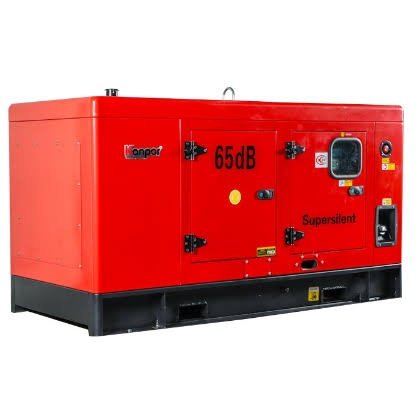
how to calculate generator kVA
Choosing the correct rental generator capacity is essential for construction sites, commercial buildings, industrial facilities, temporary accommodation cabins, and projects that depend on reliable backup power. A generator that is too small may struggle to start electric motors, experience voltage drops, or trip when several machines operate together. An oversized generator, on the other hand, may consume more fuel than necessary when operating under a light load.
Understanding how to calculate generator kVA helps project managers estimate the required capacity, account for motor starting current, and select a generator that can handle both normal operation and peak electrical demand.
In the UAE, generator sizing also requires consideration of high ambient temperatures, equipment operating schedules, site conditions, and the type of electrical load being supplied. The calculations in this guide provide a starting point, but the final generator selection should be checked against the equipment manufacturer’s data and the generator’s rated performance.
What Is Generator kVA and Why Does It Matter?
Generator capacity is commonly expressed in kilovolt-amperes (kVA) and kilowatts (kW). Although these measurements are related, they describe different aspects of electrical power.
-
kW (kilowatts): The real power used to operate equipment.
-
kVA (kilovolt-amperes): The apparent power supplied by the generator.
-
Power factor (PF): The relationship between real power and apparent power.
The basic relationship is:
Cummins explains this relationship in its Liquid-Cooled Generator Set Application Manual. The manual also explains that generator sizing must account for power factor and the characteristics of the connected loads.
This means the running load requires 100 kVA before considering motor starting, reserve capacity, site derating, or other design requirements.
Important: The 0.8 power factor is a common rating basis for three-phase generator sets, not a universal value for every load. Where equipment nameplates provide actual power factor and efficiency, use those values for a more accurate calculation.
How to Calculate Generator kVA Step by Step
A reliable generator sizing formula for UAE projects should consider more than the total connected load. Project managers need to determine which equipment will operate simultaneously, identify the largest motor, assess its starting method, and confirm the generator’s usable rating.
Step 1: Prepare an Equipment Load List
Start by listing all equipment that may run at the same time. Include the rated power, quantity, and starting method for each motor-driven machine.
Typical construction and industrial loads include:
-
Tower cranes and other lifting equipment
-
Dewatering and drainage pumps
-
Air compressors and welding machines
-
Air-conditioning units and ventilation fans
-
Site cabins, lighting, and office equipment
-
Tools, control panels, and other electrical equipment
Use the manufacturer’s electrical input rating where available. For motor-driven equipment, the mechanical output rating may not equal the electrical input because motors are not 100% efficient.
If equipment is rated in horsepower, convert it to kilowatts using:
For example, a motor rated at 20 HP has a mechanical output equivalent of approximately 14.92 kW. Its electrical input will be higher if motor efficiency is below 100%.
Avoid simply adding every item on site if some machines never operate together. Instead, prepare a realistic operating schedule and identify the maximum combination of loads that the generator must support.
Step 2: Calculate the Total Running kW
Add the electrical input power of all equipment expected to run simultaneously.
For example, assume a construction project has the following running loads:
| Equipment | Running power |
|---|---|
| Crane auxiliary equipment | 18 kW |
| Dewatering pumps | 24 kW |
| Site cabin air conditioning | 12 kW |
| Lighting and office equipment | 6 kW |
| Total running load | 60 kW |
The total running load is:
This is the estimated real power required during normal operation. The next step is to convert it into apparent power.
Step 3: Convert Running kW to kVA
Apply the generator power factor of 0.8 as a preliminary estimate:
The equipment requires approximately 75 kVA under these assumptions.
However, this does not automatically mean that a 75 kVA generator will be suitable. If a large pump or crane motor starts while the other equipment is running, the temporary starting demand may be significantly higher.
Step 4: Calculate Motor Starting Demand
Motor inrush current is one of the most important considerations when calculating generator capacity. An electric motor can draw substantially more current during startup than it draws after reaching its normal operating speed.
The starting demand depends on motor design, load torque, starting equipment, and the manufacturer’s specifications. Terex Diesel’s guide to generator sizing for electric motors explains how high starting current can cause generator voltage and frequency dips.
Use the following multipliers as initial planning estimates, not guaranteed values:
| Motor starting method | Approximate starting-current multiplier |
|---|---|
| Direct-on-line (DOL) | 4–6 times |
| Star-delta | 2–3 times |
| Soft starter | 1.5–2 times, where current-limited accordingly |
| Variable frequency drive (VFD) | 1.5–2 times as a conservative planning estimate |
These multipliers are simplified estimates aligned with the requested planning ranges. Actual starting current can fall outside them, particularly with soft starters and VFDs, so verify the motor’s locked-rotor current or drive current limit before selecting a generator. Published technical guidance shows that starting requirements vary by equipment and starter configuration.
Step 5: Add Reserve Capacity and Check Site Conditions
After calculating running demand and motor starting demand, allow suitable operating headroom. A preliminary allowance of may be useful for changing loads and reasonable future expansion, but it is not a substitute for motor-starting calculations.
For UAE projects, also check:
-
The generator’s prime or standby rating, depending on the intended duty.
-
Ambient temperature and any manufacturer-specified derating.
-
Installation altitude and ventilation.
-
Acceptable voltage and frequency dips.
-
Harmonics from VFDs, UPS equipment, and other nonlinear loads.
-
Whether multiple motors may start simultaneously.
Caterpillar’s guidance on generator-set selection recommends assessing both steady-state loads and the starting sequence rather than sizing a generator from running demand alone.
Motor Inrush Current Generator Calculation: A Worked Example
Consider a dewatering pump with a rated electrical input of 15 kW. Assume it uses a direct-on-line starter and has a running power factor of 0.8.
First, calculate the pump’s running kVA:
Next, estimate its starting demand using a six-times multiplier:
The estimated motor starting demand is therefore 112.5 kVA. This is a preliminary starting-load estimate, not a recommendation to select a 112.5 kVA generator automatically.
The generator must start the pump while supplying any other equipment already running. Its alternator and engine must also be capable of handling the transient load without an unacceptable voltage or frequency dip.
If the same pump uses a current-limited starter with an effective starting multiplier of 2, the estimated starting demand becomes:
This illustrates why the starting method can make a significant difference to generator selection. The actual starting kVA must be confirmed using the motor’s electrical data and the starter manufacturer’s specifications.
Equipment Power Draw and Starting kVA Table
The following table provides illustrative planning ranges for common construction-site equipment. These are not measured values or manufacturer specifications for particular models. Actual power consumption varies with equipment size, operating conditions, motor efficiency, and control systems.
For comparison, the table assumes a power factor of 0.8 and applies the indicative starting multipliers to the running kVA of motor-driven equipment.
| Equipment | Assumed running input | Estimated running kVA | Indicative starting kVA |
|---|---|---|---|
| Crane motor or auxiliary drive | 15–30 kW | 18.75–37.5 | 75–225 kVA (DOL) |
| Dewatering pump | 5.5–22 kW | 6.9–27.5 | 27.5–165 kVA (DOL) |
| Site cabin with air conditioning | 5–15 kW | 6.25–18.75 | 9.4–37.5 kVA (AC motor startup) |
| Ventilation fan | 2–7.5 kW | 2.5–9.4 | 10–56.3 kVA (DOL) |
| Air compressor | 7.5–22 kW | 9.4–27.5 | 37.5–165 kVA (DOL) |
The starting figures are calculated using the lower and upper ends of the assumed running-power ranges and the planning multipliers of four to six times for DOL, and 1.5 to two times for the cabin’s assumed AC-related starting demand.
How to interpret the table: These are individual equipment starting estimates, not the final generator sizes. The generator must support the starting motor alongside the existing running load. Crane drives may use specialised controls, while compressors and pumps can have high starting torque requirements. Cabin air conditioners may start individually or together, making their starting sequence important.
For a more accurate assessment, obtain the rated input current, locked-rotor current, power factor, efficiency, and starter details from the equipment nameplates or technical datasheets. Manufacturer sizing tools such as FG Wilson GenSelect can help assess site conditions, load characteristics, and generator performance.
How to Size a Generator for Multiple Motors
When several motors operate on one generator, the most important question is not just how much power they consume. It is which motors are running when the largest motor starts.
Suppose a site has a running load of 60 kW, equivalent to 75 kVA at a power factor of 0.8. A 15 kW pump then starts using a DOL starter.
The pump’s estimated starting kVA is 112.5 kVA using the six-times example above. The generator must handle this transient while the remaining site load is still connected.
A common preliminary screening method is to compare:
-
The total steady-state running kVA, including appropriate reserve capacity.
-
The worst-case motor-starting event with the other operating loads included.
Do not simply add the full starting kVA of every motor if those motors will never start simultaneously. Equally, do not ignore simultaneous starts if the automatic controls, operator procedures, or site process could cause them.
Caterpillar recommends breaking up large load steps, starting large motors first, and considering reduced-voltage starting methods where appropriate.
For a project with cranes, pumps, compressors, and cabin air conditioning, a properly prepared load schedule can help establish whether one generator is adequate or whether staged starts or multiple generator sets should be considered.
Understanding the Generator Load Sweet Spot
Correct sizing is not only about having enough capacity. It also means choosing a generator that operates efficiently under the expected load.
For many prime- and standby-rated diesel generator sets, operating within roughly of rated capacity is a useful preliminary design target. The exact optimum depends on the generator model, duty rating, load profile, and manufacturer’s recommendations.
Caterpillar states that prime- and standby-rated sets are generally designed to operate between of nameplate capacity, while continuous-rated sets have different operating targets. Its guidance also warns that extended operation below 30% load can contribute to wet stacking.
What is wet stacking?
Wet stacking is associated with extended low-load operation in diesel engines. When the engine does not reach suitable operating conditions, unburned fuel and carbon deposits can accumulate in the exhaust system. This may lead to exhaust residue, additional maintenance, and accelerated component wear if underloading continues.
Cummins recommends a minimum operating load of 30% of nameplate rating in its Liquid-Cooled Generator Set Application Manual, while emphasising the importance of following the applicable generator rating and operating requirements.
Example: Selecting capacity for a typical operating load
Assume a project has a steady demand of 60 kW at a power factor of 0.8.
The generator would operate at approximately of its rated kVA under these assumptions, which falls within the suggested planning range.
However, this does not prove that the 125 kVA generator can start the site’s largest motor. The starting capability must be checked separately against the manufacturer’s performance data.
The objective is to balance running efficiency, transient performance, expansion requirements, and reliable operation-not simply to choose the smallest or largest available unit.
How UAE Site Conditions Affect Generator kVA Calculations
A generator that performs adequately under standard test conditions may deliver less usable capacity under demanding site conditions. Project managers should check the manufacturer’s specified operating limits before confirming the required rating.
High ambient temperatures
High outdoor temperatures can affect engine output, cooling performance, and alternator capability, depending on the generator design and specified ambient rating. This is especially relevant for outdoor installations and temporary power systems in the UAE.
Check the generator datasheet for its rated ambient temperature and any required derating. Do not apply a universal temperature correction without confirming the manufacturer’s guidance.
Prime power versus standby power
The correct rating also depends on how the generator will be used.
-
Prime power: Used where the generator supplies the main electrical source for a variable load over extended operating periods, subject to the manufacturer’s rating limits.
-
Standby power: Intended primarily for supplying power during utility interruptions, within the specified operating conditions and annual usage limits.
-
Continuous power: Intended for supplying a constant load under the manufacturer’s stated continuous-duty conditions.
A project that needs daily power for construction machinery may have different requirements from a building that only needs emergency backup. The required generator should be selected using the appropriate rating, not just the largest kVA number printed on the datasheet. Caterpillar explains these distinctions in its generator rating and selection guidance.
For projects requiring temporary power, compare available generators by kVA to identify suitable capacity options. If the project needs a temporary primary supply or emergency backup, explore diesel generator rental in UAE and confirm the load schedule and site conditions with the supplier before deployment.
Common Mistakes When Calculating Generator kVA
Even when the basic formula is correct, certain oversights can result in poor generator performance.
Using total kW without considering power factor: Dividing by 0.8 provides a useful estimate for a generator rated at that power factor, but actual equipment characteristics may require a more detailed calculation.
Ignoring motor inrush current: Pumps, compressors, cranes, and air-conditioning equipment may demand considerably more power during startup than during normal operation.
Adding all equipment without checking simultaneous operation: This can produce an unnecessarily large generator. However, assuming that loads will never overlap when they actually can is equally problematic.
Treating starting kVA as a guaranteed generator size: Starting demand must be checked against the alternator’s motor-starting capability, allowable voltage dip, and engine response.
Choosing capacity without considering operating load: An oversized generator can spend extended periods at low load, while an undersized generator may struggle with normal demand or motor startup.
Ignoring site conditions and rating type: Temperature, ventilation, the selected duty rating, and electrical characteristics can affect the final selection.
A sound design uses load calculations as a first step and validates the proposed generator against manufacturer data.
Frequently Asked Questions
1. What is the formula for calculating generator kVA?
The basic formula is:
For example, a 100 kW running load requires 125 kVA before allowances for motor starting, reserve capacity, and site derating.
2. Why is generator power factor 0.8 commonly used?
Many three-phase generator sets are rated at a power factor of 0.8. It provides a standard basis for relating apparent power to real power.
At this power factor, a 100 kVA generator corresponds to 80 kW of real power at its rated operating conditions. The actual load power factor should still be checked when sizing the generator.
3. How do I calculate motor inrush current for generator sizing?
Use the motor’s rated current and its starting-current characteristics. As a preliminary estimate, a DOL starter may draw around four to six times rated current, while star-delta starting may draw approximately two to three times rated current.
Soft starters and VFDs can reduce starting current, but the actual result depends on the motor, drive configuration, and current-limit settings. For the final calculation, use manufacturer data and check the generator’s transient performance.
4. Is a 100 kVA generator enough for a construction site?
It depends on the equipment’s combined running load and the largest motor’s starting requirements.
At a power factor of 0.8, 100 kVA corresponds to 80 kW of real power at the rated conditions. A site with a 50 kW running load may fit within that capacity during normal operation, but a large crane or pump could still cause unacceptable voltage dips during startup.
5. What generator load percentage is recommended for fuel economy?
A load in the range is a useful preliminary target for many applications, but the optimum depends on the generator model and duty rating. Caterpillar identifies as a general operating range for prime- and standby-rated diesel generator sets.
Extended operation below 30% load can contribute to wet stacking. Follow the specific manufacturer’s minimum-load guidance, especially when operating a generator for long periods.
6. Should I add a reserve to the calculated generator size?
A reserve allowance can help accommodate reasonable future expansion and variations in running demand. However, a fixed margin does not guarantee that the generator can start a large motor.
Calculate the running load, evaluate the worst-case starting event, account for applicable derating, and then select a suitable generator rating.
7. How can I choose the right generator for a UAE project?
Prepare a list of all equipment, its electrical input power, operating schedule, and starting method. Identify the largest motor and determine which loads will already be running when it starts. Then check the generator’s prime or standby rating, site conditions, and allowable voltage dip.
For a more detailed assessment, consult the manufacturer’s application-sizing resources or a qualified electrical engineer.
Conclusion
Knowing how to calculate generator kVA helps project managers plan reliable temporary power for construction sites, industrial facilities, commercial buildings, and other applications across the UAE.
Start by adding the expected running loads and converting total kW into kVA using the appropriate power factor. Then assess motor inrush current, check the largest starting event, allow for realistic operating headroom, and confirm the generator’s rated performance under site conditions.
The load range can be a useful preliminary target for many applications, but correct motor-starting capability and compliance with the generator manufacturer’s operating limits remain essential.
For a project-specific capacity assessment, explore generators by kVA or review diesel generator rental in UAE to find an appropriate solution for your site’s electrical requirements.
Need Reliable Temporary Power or Cooling in the UAE?
From 20 kVA mobile silent generators up to multi-megawatt synchronized power plants and 500 TR packaged chillers. Complete turnkey delivery, cabling, and 24/7 on-site maintenance across Dubai, Abu Dhabi, and Sharjah.