Phone:
(+971) 56 921 3754
Physical address:
Office #201, Al Quoz Industrial Area
Dubai, United Arab Emirates.

Industrial Generator Rental in UAE: Multi-Megawatt Base Load & Standby Power
Rental Generator supplies industrial generator rental across the UAE: 500 kVA to 2,500+ kVA, single units or paralleled multi-set deployments, for process plant, manufacturing, district cooling and base-load industrial power across Dubai, Abu Dhabi and Sharjah. Call it in and we dispatch within 2 hours; a system engineered for your actual load profile and redundancy requirement, not a single oversized box parked on site and hoped for.
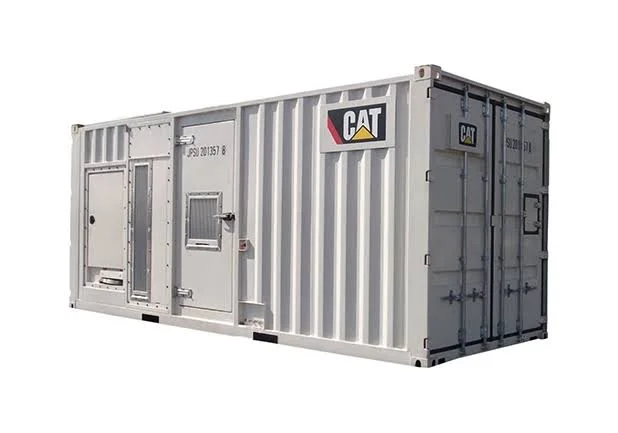
Why Choose Our Industrial Fleet?
At industrial scale, the question stops being “can you deliver a big enough generator” and becomes “can you deliver a power system that doesn’t take your whole plant down when one component fails.” Most rental quotes at this level still answer the first question and quietly skip the second — a single large set, a day rate, and a shrug if you ask about redundancy.
We don’t default to the biggest single unit that technically covers your kVA number. We size against your load profile, your tolerance for a single point of failure, and your maintenance access requirements, and we’ll tell you directly when a paralleled multi-unit system costs less over the contract term than one oversized box — even though it’s a more complex quote to write.
At a glance:
- 500 kVA to 2,500+ kVA per unit, single-set or paralleled multi-MW deployments
- N+1 and N+2 redundancy configurations available for critical continuous-duty loads
- Rated for continuous 50°C ambient operation, no output derating
- Full turnkey package: cabling, switchgear, bunded tanks, synchronisation panels, commissioning
- 2-hour emergency dispatch target across Dubai, Abu Dhabi and Sharjah
- Load-bank testing and documented compliance on every deployment
Paralleling vs. a Single Large Unit: Why Redundancy Changes the Math
This is the section almost none of your competitors write — and it’s the one that actually closes deals at industrial scale, because the “biggest single unit” quote is the easy one to write, not necessarily the right one.
A single large generator sized to your full load is a single point of failure: if it trips, goes into fault, or needs scheduled service, your whole site loses power with no graceful fallback. A paralleled system — two or more smaller units synchronised onto a common bus through paralleling switchgear — splits that risk. Lose one unit and the others automatically pick up the load; take one offline for scheduled maintenance and the rest keep the site running, so you’re never choosing between servicing the generator and keeping production live.
There’s a load-quality dimension too: industrial sites running VFDs, large motors or rectifier-fed equipment put a non-linear, harmonic-rich current draw on the generator — a 6-pulse rectifier load, for instance, typically produces around 30% total harmonic distortion (THD), rich in 5th and 7th harmonics. That distortion causes excess heating in the alternator and voltage distortion across the whole system if the generator isn’t sized and configured to absorb it. A correctly speced single large unit or a paralleled bus with the right alternator design and filtering handles this; an undersized or incorrectly configured set doesn’t — and the symptom shows up as nuisance tripping or damaged sensitive equipment, not an obvious generator fault.
| Single Large Unit | Paralleled Multi-Unit System |
|---|---|---|
Redundancy | None — single point of failure | N+1 / N+2 configurable |
Maintenance | Requires planned downtime or a temporary unit | Rolling maintenance, one unit offline at a time |
Load flexibility | Fixed capacity, risk of under-loading at partial load | Units brought online/offline to match actual demand |
Fuel efficiency at partial load | Poor — oversized unit runs inefficiently below ~50% load | Better — units run closer to their efficient load band |
Footprint & access | One large unit, simpler site layout | More units, more cabling and access planning needed |
Upfront complexity | Simpler quote and install | More engineering: switchgear, synchronisation, cabling |
Tell us your load profile, your tolerance for a single point of failure, and whether your loads are harmonic-heavy, and we’ll quote the configuration that actually protects your production — not just the one with the fewest line items.
Built to Meet UAE Regulations & Site Standards
At industrial scale, a compliance gap doesn’t mean a warning notice — it means a shut-down plant and a production loss that dwarfs the rental cost. This is the section most quotes gloss over because getting it right takes real engineering input, not a template.
Utility & electrical compliance — correct earthing, anti-islanding protection, and (for paralleled systems) synchronisation protection that prevents out-of-phase connection to the bus, per DEWA requirements in Dubai and equivalent ADDC/SEWA requirements in Abu Dhabi and Sharjah.
Civil Defence & fire safety — bunded fuel storage sized to the installation, correct clearance and ventilation for multi-unit deployments, and documented fire and life-safety compliance under UAE Civil Defence codes — non-negotiable for an installation this size, and the first thing an inspector checks.
Noise ordinances — Dubai Municipality’s construction and residential noise caps apply regardless of scale; a multi-unit industrial deployment near occupied areas needs acoustic treatment planned into the layout, not bolted on after a complaint.
Oilfield & classified-zone standards — for ADNOC-adjacent and process-industry sites, expect requirements around explosion-proof fittings in classified zones, spark arrestors, and documented load-bank testing before handover. We confirm the site’s zone classification before a unit leaves the yard, not after it’s rejected at the gate.
Environmental Agency (EAD) compliance — Abu Dhabi’s EAD actively monitors emissions and noise across industrial zones including Mussafah and ICAD; we can advise on emissions-compliant engine specification where your site falls under stricter environmental conditions.
Test certificates, load-bank test records and full compliance documentation are handed over with every industrial deployment — what your HSE and MEP consultants need for sign-off, not a generic spec sheet.
Ideal Applications in Dubai & Abu Dhabi
- Process plant & manufacturing — continuous and standby power for production lines, batch processes and utilities in Mussafah, ICAD and Dubai Industrial City, where an unplanned stoppage costs far more than the rental
- Oil, gas & petrochemical support — classified-zone-capable sets for ADNOC-adjacent operations and process support, specified to the site’s hazardous-area rating
- District cooling plants — base-load and standby power for chiller plant and pump stations during capacity upgrades or planned maintenance windows
- Data centres & critical facilities — N+1 or N+2 paralleled configurations for loads that cannot tolerate a single point of failure
- Marine & port infrastructure — shore power and continuous supply for port operations, dry docks and heavy equipment
- Large-scale construction & infrastructure — multi-MW temporary power for major infrastructure projects where grid connection isn’t yet available
- Government & utility-scale projects — documented, compliant power for public infrastructure and utility-tendered contracts
Tell us the plant, the load profile and your redundancy requirement, and we’ll engineer the system — not just quote the nearest unit in stock.
Available Fleet Capacities
Capacity (kVA) | Typical Use | Fuel / Spec | Runtime @ 75% Load | Quick Link |
|---|---|---|---|---|
500-750 kVA | Mid-size industrial plant, hospitals | Skid, synchronisation-ready | ~30-33 hrs on tank | View |
1000-1250 kVA | Base-load industrial, large plant | Containerised, parallel-capable | ~33-35 hrs on tank | View |
1500-1750 kVA | Heavy industrial, large-scale construction | Containerised, Class H insulation | ~35-36 hrs on tank | View |
2000-2500 kVA | Data centres, petrochemical support | Containerised, multi-unit sync | ~36+ hrs on tank | View |
Paralleled systems | Multi-MW, N+1/N+2 redundancy | Multiple units + switchgear | Sized to configuration | Enquire |
Every capacity ships as a complete turnkey package: bunded fuel tanks (up to 120% spill-contained capacity) sized to your runtime needs, lifting eyes and forklift access for crane positioning on industrial sites, IP-rated control panels built for coastal humidity and desert dust, and — for multi-unit deployments — synchronisation and paralleling switchgear engineered to your redundancy configuration. Need a multi-MW system or a configuration outside this table? Tell us the load and redundancy requirement and we’ll confirm what’s available.
Prime vs. Standby vs. Continuous — Which Rating Do You Need?
At industrial scale this isn’t a line item, it’s the difference between a power system that survives the full contract term and one that needs an emergency replacement unit mid-project, with the production losses that come with it.
- Standby rating — maximum output during a mains outage, variable load, limited annual hours. Right for a facility with a reliable grid connection that needs backup for outages only.
- Prime rating — unlimited running hours at variable load. Right where the generator is the actual power source — remote industrial sites, construction phases before grid connection, temporary plant power.
- Continuous rating — unlimited hours at a fixed, steady load. The correct rating for base-load industrial operation: a continuous-duty process line running on generator power as its primary, ongoing supply, not a backup.
The cost of getting it wrong: a standby- or prime-rated set pushed into continuous base-load duty runs into thermal cycling and duty-cycle stress it wasn’t engineered for — it doesn’t fail on day one, it fails weeks or months in, typically during a peak-demand period, and the unplanned downtime on an industrial process line costs multiples of what the correctly rated set would have added to the original quote. We size against your actual duty cycle and get the rating right before the contract starts, not after the first failure.
Built for 50°C: Why UAE Ambient Conditions Matter
At industrial scale, thermal derating isn’t a minor efficiency loss — it’s the gap between a plant that holds full production through August and one that quietly runs under capacity during the exact months demand (and ambient load) peaks.
Nameplate output is rated at 25°C ambient under ISO 3046/8528. Push ambient toward 50°C and two things work against the set at once: hotter, less dense intake air means less oxygen per combustion cycle for the same displacement, and the cooling matrix has a smaller temperature differential to reject heat into — the radiator is dumping heat into air that’s already most of the way to the engine’s own operating temperature. On a multi-unit paralleled system, this compounds: units positioned too close together can recirculate each other’s exhaust heat into their own intake air, derating the whole bus rather than one isolated set.
Every unit in our industrial fleet is specified against UAE ambient conditions, and multi-unit layouts are engineered with intake/exhaust separation in mind:
- Oversized radiator and cooling matrix per unit, sized for continuous 50°C ambient operation with no output derating within rated capacity
- Class H alternator insulation — the temperature-rise margin that protects the windings when ambient heat alone has already consumed the thermal headroom a standard-spec set would need
- Layout engineering for multi-unit deployments — spacing and airflow direction planned so units don’t derate each other through recirculated exhaust heat
Ask for the ambient temperature rating on any competing quote, and for a multi-unit system, ask whether the layout accounts for inter-unit heat recirculation. If the answer is vague, the quote wasn’t engineered for a UAE summer.
Features That Set Our Fleet Apart
ATS/AMF panels — Automatic Transfer Switch / Auto Mains Failure control brings backup power online within seconds of a mains outage, with no manual switching on site.
DSE synchronisation & paralleling switchgear — for multi-unit deployments, our control systems (Deep Sea Electronics-class) handle automatic synchronisation and load-sharing across the bus using droop control, so units split load proportionally without active inter-unit communication, and automatically redistribute if one unit trips or is taken offline for service.
Bunded fuel tanks — every unit ships with a spill-contained base (up to 120% capacity), keeping multi-unit installations compliant with UAE environmental and fire-safety requirements.
Remote telemetry across the fleet — fuel levels and performance data for every unit in a deployment flagged to our operations team, so a developing issue on one unit in a 6-set bus doesn’t go unnoticed.
Class H alternator insulation, IP-rated enclosures — the thermal and ingress protection margin industrial continuous-duty applications need as standard, not an upgrade option.
Lifting eyes & crane-access positioning — containerised and skid formats engineered for the lifting equipment industrial sites actually have on hand.
Load-bank testing & documented commissioning — proof the system holds its rated output, individually and in parallel, before it’s signed over to your operations team.
Rolling maintenance without downtime — on paralleled systems, we service one unit at a time while the rest of the bus carries the load, so scheduled maintenance never means a planned outage.
Frequently Asked Questions
Depends on your tolerance for a single point of failure. One large unit is the simpler install; a paralleled system costs more to engineer but lets you service one unit without downtime and survives a single-unit fault. For critical continuous-duty processes, paralleled N+1 is usually the right call.
Yes. Non-linear loads like VFDs generate harmonic distortion (THD) that can heat the alternator and distort system voltage if the generator isn't sized for it. Send us your equipment list and we'll confirm the right generator and filtering.
Only on a paralleled system. On a single large unit, maintenance means planned downtime or a temporary backup unit during the service window.
The remaining units automatically absorb the load via the synchronisation controller's load-sharing logic, within the system's rated redundancy margin (N+1 means it's sized to lose one unit and keep running at full load).
Most standard sizes (50–250 kVA) are available for same-day or next-day delivery across Dubai and Abu Dhabi. Larger units (500 kVA+) typically need 24–48 hours' notice.
Yes, as standard practice — units are tested individually and, for paralleled systems, as a synchronised bus, with documented test certificates.
Tanks are sized to your runtime needs per unit, with fuel included and topped up on a scheduled cycle — not left for your team to arrange.
Need a Industrial Generator for Rent in UAE?
Speak with our power engineers for instant availability, fast turnkey pricing, and same-day delivery across the UAE.