Phone:
(+971) 56 921 3754
Physical address:
Office #201, Al Quoz Industrial Area
Dubai, United Arab Emirates.
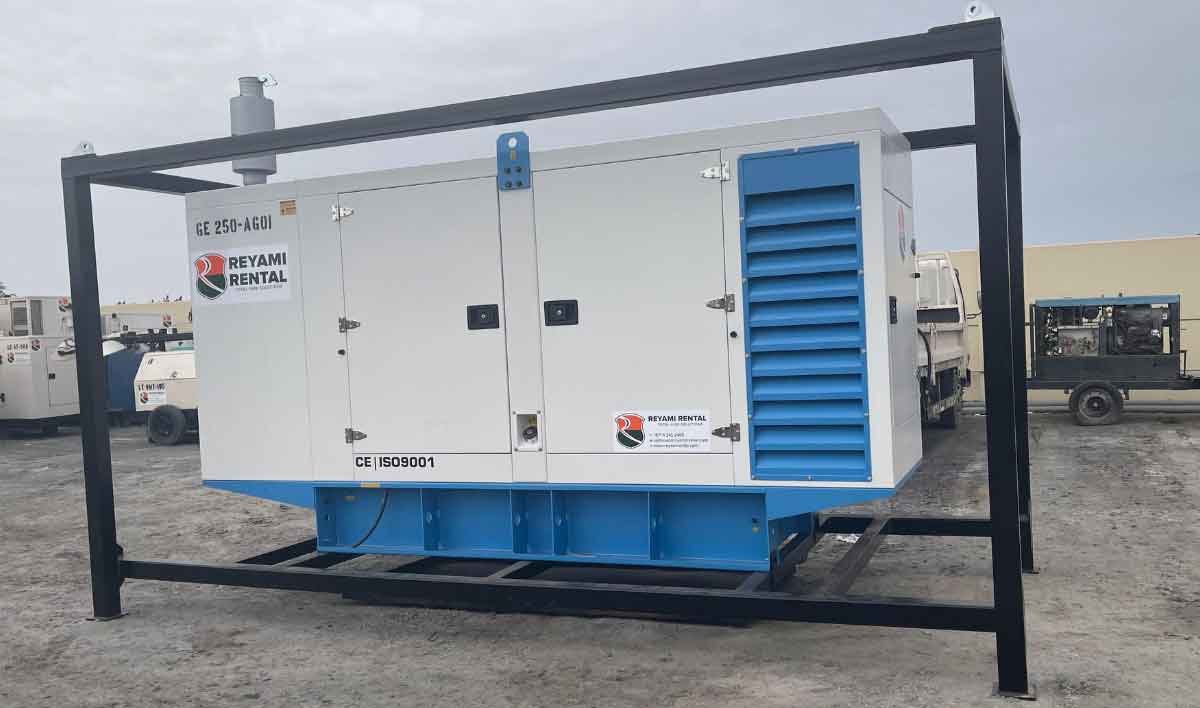
How to Choose the Right Rental Generator in UAE
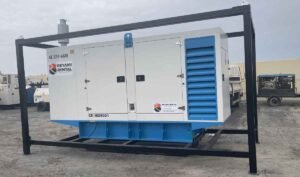
Reliable temporary power is essential for construction sites, commercial facilities, events, industrial operations, emergency situations, and projects where the permanent electrical supply is unavailable or interrupted. In the UAE, choosing a rental generator is not simply a matter of selecting the highest kVA rating available. The generator must match the actual electrical load, operating conditions, application, runtime, site requirements, and safety requirements.
Generator manufacturers such as Caterpillar and Cummins recommend considering running loads, starting or inrush demands, power factor, voltage, frequency, load profile, environmental conditions, and the intended duty when selecting a generator.
This guide explains the key factors businesses and contractors should consider when choosing a rental generator in UAE.
Calculate Your Actual Power Requirement
The first and most important step is determining how much electrical power your project actually needs.
Do not select a generator simply because its kVA rating looks large enough. Make a list of the equipment that will operate from the generator, including:
Air-conditioning and HVAC systems
Pumps
Motors
Lighting
Refrigeration equipment
Welding machines
Elevators
Construction equipment
Office equipment
IT and data-processing equipment
Temporary site facilities
You should identify both the running load and the starting load. Motors, compressors, pumps, and HVAC equipment can require substantially more power during startup than during normal operation. Caterpillar specifically notes that generator sizing should account for both running demand and higher starting or surge demands.
For complex installations, a qualified electrical engineer or generator specialist should verify the load calculation rather than relying on a basic estimate.
Understand kW and kVA
Generator capacity is commonly expressed in kVA, while many electrical loads are specified in kW.
The relationship between them depends on power factor:
kW = kVA × Power Factor
For example, a generator rated at 500 kVA does not necessarily provide 500 kW of usable real power under every operating condition.
This distinction becomes particularly important when supplying motors, industrial machinery, HVAC equipment, UPS systems, or other loads with unusual power characteristics. Caterpillar also highlights power factor, harmonics, and other electrical characteristics as factors that can influence generator sizing.
Therefore, give the rental supplier detailed information about your equipment instead of providing only a total kW figure.
Account for Starting and Inrush Loads
One of the most common generator-sizing mistakes is looking only at normal running consumption.
A large motor or compressor can demand significant current when it starts. If the generator cannot handle that sudden demand, you may experience:
Voltage dips
Frequency fluctuations
Equipment shutdown
Generator overload
Failed motor starts
Unstable operation of sensitive equipment
Caterpillar recommends considering load-starting requirements and, where appropriate, dividing loads into multiple starting steps rather than applying a large block load simultaneously.
For a construction site, for example, starting several motors at the same time may require a different generator configuration from one operating the same equipment sequentially.
Choose the Correct Generator Rating
Generators are available with different duty ratings, and choosing between them depends on how the equipment will be used.
Standby Power
A standby generator is generally intended to provide backup electricity when the normal power supply fails.
This can be appropriate for applications such as:
Offices
Commercial buildings
Retail facilities
Emergency backup
Certain residential or institutional applications
Prime Power
Prime-rated generators are designed for applications where the generator is the main source of power and the load varies over time.
This can be relevant to:
Construction sites
Remote facilities
Temporary projects
Outdoor events
Industrial applications without reliable grid power
The exact operating limits depend on the generator manufacturer’s rating and application requirements. Caterpillar’s guidance distinguishes standby and prime applications based on expected operating hours and load profiles.
When requesting a rental generator, explain whether you need backup power or continuous/temporary primary power.
Consider the UAE’s Hot Operating Conditions
UAE temperatures can be extremely high, particularly during summer. Ambient temperature can affect generator performance, cooling requirements, and available output.
Generator manufacturers take environmental conditions into account during sizing. Caterpillar’s sizing guidance specifically includes maximum ambient temperature, altitude, and humidity because site conditions can affect generator performance and may require derating.
For this reason, do not assume that a generator’s nameplate rating automatically represents its performance under every UAE site condition.
When requesting a rental unit, provide the supplier with:
Project location
Expected ambient temperature
Installation environment
Generator room or outdoor installation details
Required operating hours
Load characteristics
A reputable rental provider should consider these factors before recommending equipment.
Check Voltage, Phase and Frequency
The generator must be electrically compatible with the equipment it will supply.
Before renting, confirm:
Required voltage
Single-phase or three-phase supply
Frequency
Rated current
Connection arrangement
Load distribution
Required protection and switching equipment
For many commercial and industrial applications, three-phase generation is required. However, the correct configuration depends on the equipment and electrical distribution system.
Incorrect voltage or frequency can damage equipment or cause unreliable operation, so these specifications should be confirmed before delivery.
Consider the Type of Load
Not all electrical loads behave in the same way.
A generator supplying basic lighting has very different requirements from one supplying:
Large motors
Chillers
Pumps
Compressors
Welding equipment
Variable-frequency drives
UPS systems
Data-centre equipment
Non-linear and sensitive electronic loads can introduce additional considerations. Caterpillar notes that high harmonic content and certain power-factor conditions can affect generator selection and may require additional generator capacity or specification adjustments.
Give the rental company a complete equipment schedule whenever possible. This allows the generator to be selected based on the actual load profile rather than an approximate capacity.
Avoid Both Undersizing and Oversizing
Choosing a generator that is too small creates obvious problems. It may overload, trip, experience voltage or frequency instability, or fail to start large equipment.
However, bigger is not always better.
An unnecessarily oversized generator can increase rental and fuel costs and may operate inefficiently at very low loads. Caterpillar specifically identifies very low loading as an issue that can affect generator efficiency and engine operation.
The goal is to select a generator that provides adequate capacity for the actual operating profile while allowing appropriate headroom for starting demands and reasonable future requirements.
Decide Whether One Generator or Multiple Generators Is Better
Large projects do not always need one extremely large generator.
Depending on the load profile and site requirements, multiple generators can sometimes provide greater flexibility. Generators may also be configured for parallel operation when the application requires additional capacity or redundancy.
Caterpillar notes that projects may use multiple generators and paralleling systems where a single generator cannot adequately meet the required load or where additional redundancy is needed.
For example, a project may benefit from separate generator capacity for different critical loads rather than relying entirely on one large unit.
This decision should be made with an experienced electrical or generator specialist because paralleling requires appropriate synchronization, protection, and distribution equipment.
Check Fuel Capacity and Refuelling Requirements
Diesel generators need a reliable fuel supply, particularly when operating for extended periods.
Before renting, ask:
How large is the fuel tank?
How long can the generator operate at the expected load?
Is a larger external fuel tank required?
Who is responsible for refuelling?
Can fuel delivery be arranged at the project site?
What fuel-storage arrangements are permitted at the site?
Fuel storage and handling should follow the applicable site safety requirements. This is particularly important for construction and industrial projects.
Consider Noise and Installation Location
Generator noise can become a major concern at:
Hotels
Residential developments
Hospitals
Schools
Events
Shopping centres
Offices
Urban construction sites
Ask the rental provider about the generator’s noise level and available acoustic or silent configurations.
The physical installation location also matters. The generator needs appropriate ventilation, exhaust arrangements, access for maintenance, safe fuel handling, and sufficient clearance.
For building projects, the applicable fire and life-safety requirements must also be considered. Dubai Civil Defence materials identify generator rooms and standby-power systems within the UAE fire-safety framework, while the authority’s published checklist includes specific requirements for generator-room fire protection in certain building applications.
Check Site Safety and Electrical Connections
A rental generator is only as reliable as its installation.
Before operation, ensure that the project team and rental provider address:
Proper grounding/earthing
Correct cable sizing
Suitable distribution equipment
Circuit protection
Safe fuel storage
Exhaust management
Ventilation
Emergency shutdown access
Protection from unauthorized access
Safe cable routing
Regular inspection and maintenance
This is especially important on construction sites. Abu Dhabi City Municipality has recently emphasized safe electrical connections, regular maintenance of machinery, safe storage of flammable materials, firefighting equipment, and compliance with fire-prevention requirements at construction sites.
Requirements can vary according to the emirate, site, building type, and application, so the project team should confirm the applicable authority requirements before installation.
Ask About Maintenance and Technical Support
A generator rental should include more than simply delivering a machine to your site.
Ask the rental company what support is included:
Preventive maintenance
Emergency breakdown response
Technician availability
Routine inspections
Oil and filter servicing
Fuel-system checks
Battery checks
Cooling-system inspection
Load-bank testing where required
Replacement equipment in case of major failure
For critical applications, response time is particularly important. A slightly cheaper rental rate may not be worthwhile if technical support is slow during an unexpected breakdown.
Consider the Rental Duration
The rental period can affect the overall cost and the type of generator you should choose.
Short-term requirements may include:
Events
Emergency power
Planned electrical shutdowns
Equipment testing
Temporary construction requirements
Longer rentals may include:
Major construction projects
Infrastructure projects
Temporary facilities
Industrial operations
Long-term backup arrangements
For long-duration projects, ask the supplier to compare the cost of different generator configurations, fuel consumption, maintenance arrangements, and replacement strategies.
Compare the Complete Rental Package—not Just the Daily Rate
When comparing generator rental companies in the UAE, the lowest advertised rental price is not necessarily the lowest overall cost.
Ask whether the quotation includes:
Generator delivery
Installation
Cables
Distribution boards
Fuel tanks
Synchronization equipment
Automatic Transfer Switch (ATS), where required
Operator support
Maintenance
Breakdown service
Fuel management
Collection after the rental period
A supplier offering a lower generator-only price may become more expensive once transportation, cables, installation, fuel equipment, and technical support are added.
A detailed quotation makes it easier to compare suppliers fairly.
A Simple Generator Selection Example
Suppose a construction project needs temporary electricity for lighting, site offices, pumps, HVAC equipment, and several motors.
Simply adding the running ratings of the equipment may not be enough.
The project team should identify:
- Total running kW/kVA.
- Largest motor-starting requirement.
- Equipment that operates simultaneously.
- Starting sequence.
- Required voltage and frequency.
- Expected operating hours.
- Site temperature and environmental conditions.
- Required backup or redundancy.
- Fuel requirements.
- Installation and safety requirements.
The rental supplier can then use the load profile to recommend an appropriate generator configuration. Professional sizing tools from manufacturers such as Caterpillar consider load quantities, load steps, voltage and frequency requirements, site conditions, and starting characteristics when determining an appropriate generator set.
Generator Rental Selection Checklist
Before placing an order, confirm the following:
Power requirement: What is the total running load?
Starting demand: Which motors, pumps or compressors have high inrush current?
Generator rating: Do you need standby, prime or another duty rating?
Voltage: What voltage does your equipment require?
Frequency: Does your equipment require 50 Hz?
Phase: Is the installation single-phase or three-phase?
Load profile: Will the load remain constant or change throughout the day?
Environment: What temperature and site conditions will the generator operate in?
Fuel: How frequently will refuelling be required?
Noise: Are acoustic restrictions applicable?
Installation: Is adequate ventilation, exhaust and access available?
Safety: Are grounding, protection, fuel storage and fire-safety requirements addressed?
Support: Is 24/7 technical assistance available if the application is critical?
Rental terms: Are delivery, installation, cables, maintenance and collection included?
Final Thoughts
Choosing the right rental generator in UAE requires more than matching a kVA number to an estimated electricity requirement. The correct choice depends on the complete load profile, starting requirements, generator duty, voltage and frequency, environmental conditions, fuel requirements, installation conditions, safety considerations, and expected rental duration.
For straightforward applications, a basic load assessment may provide a starting point. For construction sites, industrial facilities, large events, data centres, hospitals, HVAC systems, or other critical applications, professional generator sizing is much more important. Manufacturer guidance confirms that starting loads, peak demand, site conditions, power quality, and application requirements can materially affect generator selection.
The best approach is therefore to provide the rental company with a detailed equipment list and operating profile and have the proposed generator configuration technically verified before delivery. This helps prevent both undersizing and unnecessary oversizing while improving reliability, operating efficiency, and overall rental value.
Need Reliable Temporary Power or Cooling in the UAE?
From 20 kVA mobile silent generators up to multi-megawatt synchronized power plants and 500 TR packaged chillers. Complete turnkey delivery, cabling, and 24/7 on-site maintenance across Dubai, Abu Dhabi, and Sharjah.