Phone:
(+971) 56 921 3754
Physical address:
Office #201, Al Quoz Industrial Area
Dubai, United Arab Emirates.
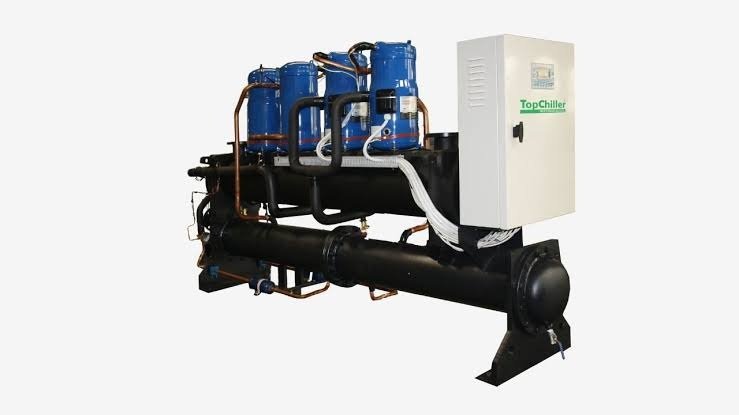
how to calculate chiller tonnage
Choosing the correct rental chiller capacity is essential for maintaining reliable cooling, controlling energy consumption, and avoiding unnecessary equipment costs. In the UAE, where outdoor temperatures can reach extreme levels during summer, chiller selection requires careful consideration of building heat gains, equipment performance, chilled-water flow rates, and local design conditions.
Understanding how to calculate chiller tonnage helps facility managers, HVAC engineers, building owners, and project contractors estimate cooling requirements before selecting a temporary or permanent chiller system.
A simple floor-area estimate can provide an initial indication of cooling demand. However, a reliable design requires a detailed heat-load calculation that considers occupancy, machinery, lighting, solar radiation, ventilation, building insulation, and the operating conditions of the cooling equipment. Carrier’s commercial HVAC design guidance describes load calculations that account for building construction, windows, people, lighting, equipment, weather conditions, and system operation.
This guide explains the main chiller sizing formulas, a preliminary cooling ton calculator for UAE applications, the factors that influence heat loads, modular chiller capacity options, and how to match chilled-water flow with air handling units (AHUs).
What Is Chiller Tonnage?
Chiller tonnage is a measure of a chiller’s cooling capacity. It describes how much heat the equipment can remove from a building or process over a given period.
One ton of refrigeration (TR) is equivalent to:
-
12,000 British thermal units per hour (BTU/hr)
-
Approximately 3.517 kilowatts (kW) of cooling capacity
For example, a 100 TR chiller provides a nominal cooling capacity of approximately 351.7 kW under its specified rating conditions. Its actual available capacity can differ depending on operating temperatures, ambient conditions, water flow, and the manufacturer’s performance data.
Chiller tonnage should not be confused with electrical power consumption. A 100 TR chiller does not necessarily consume 100 kW of electricity. Its electrical input depends on its design, efficiency, compressor type, operating conditions, and auxiliary equipment.
How to Calculate Chiller Tonnage
There are three useful approaches to estimating chiller capacity:
-
Convert a known cooling load into refrigeration tons.
-
Estimate an initial load from the building’s floor area.
-
Calculate cooling capacity from chilled-water flow and temperature difference.
Each method serves a different purpose. Floor-area estimates are useful during preliminary planning, while measured water flow and temperature differences can help determine the cooling delivered by an operating system.
Method 1: Calculate tonnage from the cooling load
If the total cooling load is already available in BTU/hr, use this formula:
The result is approximately 99.5 TR. The engineer should then select equipment using the manufacturer’s certified capacity at the project’s actual design conditions, rather than relying solely on its nominal rating.
Method 2: Estimate chiller tonnage using floor area
During the early planning stage, a commonly used preliminary estimate is:
For an initial screening estimate, you may use 1 TR per 150–200 sq. ft. as a rough rule of thumb, subject to the building type and actual cooling requirements.
This range is not a universal UAE engineering standard. It should not be treated as a guaranteed sizing formula for buildings exposed to extreme outdoor temperatures, high solar radiation, heavy machinery loads, or substantial outdoor-air requirements.
The preliminary estimate is therefore approximately 100-133 TR.
This is a planning range, not a final equipment selection. The actual requirement could be higher or lower depending on the building’s construction, operating schedule, occupancy, equipment, and local design weather.
Why UAE conditions require extra care
In Dubai and other parts of the UAE, the cooling system must be selected for the project’s actual outdoor design conditions. An ambient temperature of 48°C can be used as a scenario for preliminary assessment where appropriate, but it should not automatically be applied to every project.
High outdoor temperatures can reduce the available capacity of air-cooled chillers. The final selection must be checked against manufacturer performance tables at the specified ambient temperature, chilled-water supply temperature, and required flow rate.
Method 3: Calculate chiller tonnage using chilled-water flow rate
When chilled-water flow and the temperature difference between the return and supply water are known, you can calculate the cooling capacity being transferred by the water.
For water measured in US gallons per minute (GPM) and temperatures measured in degrees Fahrenheit:
Where:
-
GPM is the chilled-water flow rate.
-
ΔT is the difference between return-water and supply-water temperatures.
-
24 is the conversion constant for water under the stated units.
This formula is derived from the water heat-transfer relationship and the definition of one refrigeration ton.
The water is carrying approximately 100 TR of cooling under these conditions.
For a temperature difference of 12°F at the same flow rate:
The calculated capacity is 120 TR. However, increasing the temperature difference in a calculation does not guarantee that the existing chiller can deliver that capacity. The chiller, coils, pumps, and controls must all operate within their design limits.
Cooling Ton Calculator UAE:
The following reference helps estimate tonnage from a known cooling load or chilled-water flow.
| Known information | Formula | Example |
|---|---|---|
| Cooling load in BTU/hr | BTU/hr ÷ 12,000 | 600,000 BTU/hr = 50 TR |
| Cooling load in kW | kW ÷ 3.517 | 175.85 kW ≈ 50 TR |
| Chilled-water flow in GPM | GPM × ΔT ÷ 24 | 120 GPM at 10°F ≈ 50 TR |
| Floor area | Area ÷ assumed sq. ft. per TR | 10,000 sq. ft. ÷ 150 ≈ 66.7 TR |
The floor-area calculation is a preliminary estimate only. Flow-based calculations assume water and consistent US customary units. Use the actual fluid properties if the circuit contains glycol.
For facilities that require temporary cooling during equipment failure, maintenance, or a seasonal increase in demand, the estimated capacity can help establish the initial equipment requirement. Explore chiller rental in Dubai for temporary cooling applications, with final capacity confirmed against the actual load and site conditions.
Key Thermal Heat Gain Factors That Affect Chiller Sizing
A correct heat-load calculation considers every significant source of heat entering the conditioned space. The main contributors vary between offices, factories, hospitals, server rooms, shopping centres, warehouses, and temporary facilities.
1. People occupancy
People release sensible heat into a room and add moisture through breathing and perspiration. The amount depends on activity level, occupancy density, and the duration of occupancy.
For example, a meeting room with many occupants can have a substantially higher cooling load than a lightly occupied office of the same floor area.
During heat-load assessment, engineers should establish:
-
The maximum expected number of occupants.
-
Whether people are seated, standing, or performing physical work.
-
The operating hours and occupancy schedule.
-
The required outdoor ventilation air.
-
The moisture-removal requirements.
Ventilation can add a significant cooling and dehumidification load, particularly when outdoor air is hot and humid. A calculation based only on the room’s internal temperature can miss this additional demand.
2. Machinery and electrical equipment wattage
Industrial facilities can generate substantial internal heat through motors, production equipment, electrical panels, pumps, compressors, servers, and other machinery.
For equipment whose electrical input ultimately becomes heat within the conditioned space, a useful
This is an illustrative calculation, not an assumption that every machine’s electrical nameplate rating becomes room heat. Some energy leaves through exhaust, process fluids, or equipment located outside the conditioned area. Engineers must determine the actual heat released into the space and account for simultaneous operation.
3. Glass surface and solar radiation
Large glass façades, skylights, and west-facing windows can increase cooling demand because sunlight passes through glazing and warms interior surfaces.
Solar heat gain depends on several factors:
-
Total window area.
-
Glass type and solar heat-gain coefficient.
-
Building orientation.
-
External shading and internal blinds.
-
Time of day and seasonal solar exposure.
-
Outdoor design weather.
For example, two office buildings with the same floor area may require different chiller capacities if one has a shaded façade and the other has extensive unshaded glass exposed to afternoon sunlight.
4. Roof, walls, and insulation
Roof and wall heat transfer can be especially important in buildings exposed to intense sunshine. Insulation quality, roof colour, construction materials, and the temperature difference between indoors and outdoors influence the load.
Industrial warehouses with metal roofs may behave differently from insulated commercial buildings, even when their floor areas are identical.
5. Outdoor air infiltration and ventilation
Outside air entering through doors, loading bays, poorly sealed openings, or mechanical ventilation systems brings additional heat and moisture into the building.
This is especially important for facilities with frequently opened doors, busy loading areas, high outdoor-air requirements, or humid operating conditions.
6. Lighting and operating schedules
Lighting adds heat to the conditioned space. Computers, office equipment, kitchen appliances, and other electrical loads also contribute.
The timing matters: a building’s maximum cooling requirement may occur when solar gain, occupancy, and equipment operation overlap. ASHRAE’s load-calculation method evaluates hourly profiles and selects the relevant peak rather than simply adding unrelated maximum values.
How to Perform a Heat Load Calculation in Dubai
A reliable heat load calculation Dubai projects can use should be based on building information and the actual design conditions of the facility.
A practical assessment follows these steps.
Step 1: Collect building information. Record the conditioned floor area, ceiling height, room layout, building orientation, construction materials, insulation, glazing, and shading.
Step 2: Establish the operating conditions. Determine the required indoor temperature and humidity, outdoor design conditions, operating hours, occupancy, and ventilation requirements.
Step 3: Calculate external heat gains. Assess heat entering through roofs, walls, windows, skylights, and outside air.
Step 4: Calculate internal heat gains. Include occupants, lighting, electrical equipment, motors, production machinery, and other heat sources.
Step 5: Calculate the peak cooling load. Combine the relevant load components using an appropriate engineering method. Account for timing, latent cooling, and system-specific effects.
Step 6: Convert the peak load into TR. Divide the calculated cooling load in BTU/hr by 12,000, or the load in kW by 3.517.
Step 7: Check the selected chiller’s performance. Confirm its available capacity at the required ambient and chilled-water temperatures, including the effects of the selected configuration.
Step 8: Verify the water circuit. Check chilled-water flow, pressure drop, pump performance, piping, AHU coil capacity, and controls.
Modular Chiller Sizing Table: 50 TR to 500+ TR
Modular chiller systems can be useful when cooling demand changes, when different building zones have different schedules, or when operators want to stage equipment according to demand.
The table below illustrates common capacity bands and potential applications. These are planning examples, not verified sizing specifications for a particular building.
| Nominal capacity | Approx. cooling capacity | Potential applications |
|---|---|---|
| 50 TR | 175.9 kW | Small commercial buildings, individual zones, temporary process cooling |
| 100 TR | 351.7 kW | Medium commercial facilities, offices, retail areas |
| 200 TR | 703.4 kW | Larger commercial buildings, industrial zones, multiple AHUs |
| 300 TR | 1,055.1 kW | Large facilities, production areas, multi-zone cooling systems |
| 500+ TR | 1,758.5+ kW | Major industrial facilities, large commercial complexes, central cooling plants |
Conversions use 1 TR = 3.517 kW. The appropriate equipment configuration depends on the calculated peak load, redundancy requirements, manufacturer ratings, and operating conditions.
How many modular chillers should a facility use?
Consider a facility with a verified cooling requirement of 200 TR. One possible arrangement is two 100 TR chillers. Another might use four 50 TR units.
These configurations provide the same nominal combined capacity, but they do not necessarily provide the same efficiency, operating flexibility, footprint, maintenance access, or resilience.
Engineers should consider:
-
Whether cooling demand varies during the day.
-
Whether one unit can be taken offline without disrupting essential operations.
-
Minimum and maximum operating flow through each chiller.
-
Pump arrangement and hydraulic balancing.
-
Available electrical supply and starting current.
-
Space, transport, noise, and heat-rejection requirements.
For critical facilities, the number of units and the standby capacity should be selected according to the required redundancy. Two units rated at 100 TR each do not provide 200 TR of cooling if one must remain available as standby and the system needs to continue operating during a unit failure.
How to Match Chilled-Water Flow Rate (GPM) with AHUs
Selecting the correct chiller tonnage is only one part of system design. The chilled-water flow rate must also be suitable for the chiller evaporator, piping, pumps, and AHU cooling coils.
For water, a common engineering relationship is:
This is the same relationship used to calculate capacity from water flow and temperature difference. Trane’s chilled-water system guidance discusses conventional and lower-flow design approaches, illustrating why the design flow must be selected for the actual system rather than assumed to be identical for every chiller.
Chilled-water flow reference table
The following table calculates approximate water flow for several nominal chiller capacities at a 10°F temperature difference.
| Chiller capacity | Approximate flow at 10°F ΔT |
|---|---|
| 50 TR | 120 GPM |
| 100 TR | 240 GPM |
| 200 TR | 480 GPM |
| 300 TR | 720 GPM |
| 500 TR | 1,200 GPM |
These figures are based on the water-flow equation, not a universal manufacturer’s requirement. Actual flow must meet the selected chiller’s allowable operating range and the AHU coil design requirements.
Example: matching a 100 TR chiller to AHUs
Suppose a facility requires 100 TR and operates with a chilled-water temperature difference of 10°F.
The total is 240 GPM across the four AHUs.
In practice, the AHUs may not have equal loads. Their individual flows should be calculated from their design coil capacities and entering/leaving water temperatures. Control valves, balancing valves, pump head, coil pressure drop, and variable-flow control must also be considered.
Why the temperature difference matters
At a fixed cooling capacity, a larger water temperature difference generally means a lower required flow rate. A smaller difference requires more flow to transfer the same amount of heat.
For example, the theoretical water flow for a 100 TR load is:
-
At 8°F ΔT: 300 GPM.
-
At 10°F ΔT: 240 GPM.
-
At 12°F ΔT: 200 GPM.
These are calculated values for water. The system must be designed to achieve the selected temperature difference without exceeding equipment limits or compromising coil performance. A mismatch between chiller flow and AHU requirements can lead to poor temperature control, inadequate cooling, or inefficient pumping.
Common Chiller Sizing Mistakes to Avoid
Even a mathematically correct calculation can produce a poor equipment selection if the underlying assumptions are inaccurate.
Relying only on floor area: The 150-200 sq. ft. per TR estimate does not account for all building-specific conditions.
Adding an arbitrary UAE heat allowance: Do not automatically add a fixed percentage because the project is in Dubai. Use the actual design weather and the manufacturer’s performance data.
Ignoring internal heat gains: Machinery, servers, lighting, and high occupancy can substantially increase the cooling requirement.
Oversizing without justification: An unnecessarily large chiller can increase capital cost and may operate inefficiently under light loads, depending on its controls and minimum capacity.
Ignoring chilled-water flow: Correct nominal tonnage does not guarantee adequate cooling if the flow rate, pump head, or AHU coil selection is unsuitable.
Confusing cooling capacity with electrical input: Refrigeration tons measure heat removal, not the electrical power the machine consumes.
Forgetting redundancy and future loads: Essential facilities may need standby capacity, while planned building expansions may affect the required plant arrangement. These needs should be evaluated explicitly rather than added as an unexplained margin.
When Should You Consider Chiller Rental in the UAE?
Temporary chiller equipment may be appropriate when a permanent chiller is undergoing repairs, when a building’s cooling demand increases seasonally, when an industrial process requires temporary cooling, or when a project needs cooling before permanent equipment is commissioned.
Before selecting a rental unit, establish the actual required TR, chilled-water supply and return temperatures, flow rate, connection sizes, available power, operating duration, and site access. For air-cooled equipment, confirm that the selected model can meet the required capacity at the expected outdoor temperature.
Explore chiller rental in Dubai for temporary cooling requirements, or review HVAC & temporary cooling solutions for broader cooling applications.
The correct rental capacity should be confirmed with the provider using the facility’s actual cooling requirements and operating conditions, not floor area alone.
Frequently Asked Questions
How do you calculate chiller tonnage from square feet?
For a preliminary estimate, divide the conditioned floor area by an assumed area-per-ton figure. For example, 20,000 sq. ft. divided by 150 sq. ft. per TR gives approximately 133 TR. This is only an initial estimate; a proper heat-load calculation is needed to determine the final capacity.
What is the formula for calculating chiller tonnage?
If the cooling load is in BTU/hr, divide it by 12,000. If it is in kW, divide it by 3.517. If water flow and the temperature difference are known, calculate TR as GPM multiplied by ΔT in °F, divided by 24.
How much cooling does a 100 TR chiller provide?
A nominal 100 TR chiller represents approximately 351.7 kW or 1,200,000 BTU/hr of cooling capacity. Its actual available capacity depends on the manufacturer’s rating conditions and the operating environment.
Does a 48°C ambient temperature change chiller tonnage?
It can affect the capacity available from an air-cooled chiller. However, it does not mean that a fixed percentage must automatically be added to the calculated building load. Calculate the building’s cooling requirement at the applicable design conditions and verify the equipment’s capacity at the specified ambient temperature.
How many GPM are required for a 100 TR chiller?
At a 10°F chilled-water temperature difference, the theoretical flow for water is 240 GPM. At 12°F, it is 200 GPM. The final design must follow the selected chiller’s operating limits and the requirements of the AHUs and piping system.
Can multiple smaller chillers replace one large chiller?
Yes, in some applications. Multiple units can provide staged operation, greater flexibility, or standby capability. The appropriate arrangement depends on peak and part-load demand, equipment efficiency, water-flow requirements, available space, and the required level of redundancy.
Is a cooling ton calculator enough to select a chiller?
No. A calculator is useful for preliminary estimates and checking calculations, but final selection requires a verified heat-load assessment, design water temperatures and flow, manufacturer performance data, and a suitable system design.
Conclusion
Calculating chiller tonnage accurately involves more than dividing floor area by a rule-of-thumb figure. The most reliable approach is to establish the building’s peak cooling load, convert it into refrigeration tons, verify the selected chiller’s capacity at the actual design conditions, and match chilled-water flow with the AHUs and the rest of the system.
For UAE facilities, particular attention should be given to outdoor design temperatures, solar radiation through glass, machinery heat, ventilation, and equipment performance under hot-weather conditions. These factors help avoid unsuitable equipment selection and support dependable cooling.
For a permanent installation or temporary cooling project, use a detailed engineering assessment to establish the required capacity before selecting a chiller.
Need Reliable Temporary Power or Cooling in the UAE?
From 20 kVA mobile silent generators up to multi-megawatt synchronized power plants and 500 TR packaged chillers. Complete turnkey delivery, cabling, and 24/7 on-site maintenance across Dubai, Abu Dhabi, and Sharjah.