Phone:
(+971) 56 921 3754
Physical address:
Office #201, Al Quoz Industrial Area
Dubai, United Arab Emirates.
air cooled vs water cooled chiller rental
Choosing between an air-cooled and a water-cooled chiller is an important decision for UAE businesses that need reliable temporary cooling. The right system depends on the cooling load, site conditions, available space, operating hours, ambient temperature and the time available for installation.
For industrial facilities, construction projects, commercial buildings and district cooling applications, understanding the differences between these two industrial chiller types helps businesses select a suitable temporary cooling solution without unnecessary installation complexity or operating costs.
In the UAE, the decision requires additional attention because summer temperatures, airborne desert sand, humidity and coastal salinity can affect chiller performance and equipment life. This guide explains how both systems work, where each performs best, and what businesses should consider before arranging temporary chiller hire UAE services.
1. What Is the Difference Between Air-Cooled and Water-Cooled Chillers?
Both systems remove heat from chilled water used for air conditioning or industrial processes. The main difference is how each chiller rejects the heat it collects.
Air-cooled chiller
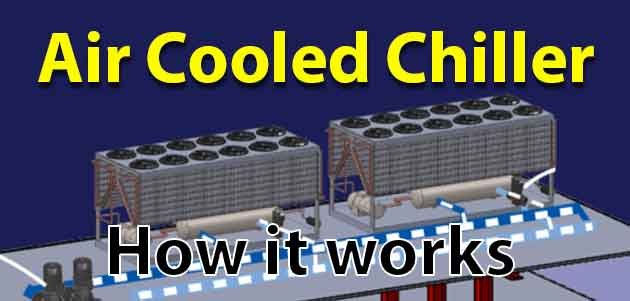
An air-cooled chiller releases heat directly into the outdoor air through condenser coils and fans. Its packaged design simplifies installation because it does not need a separate cooling tower or condenser-water circuit. It is often suitable for temporary projects, commercial buildings and industrial sites requiring relatively quick deployment.
Water-cooled chiller
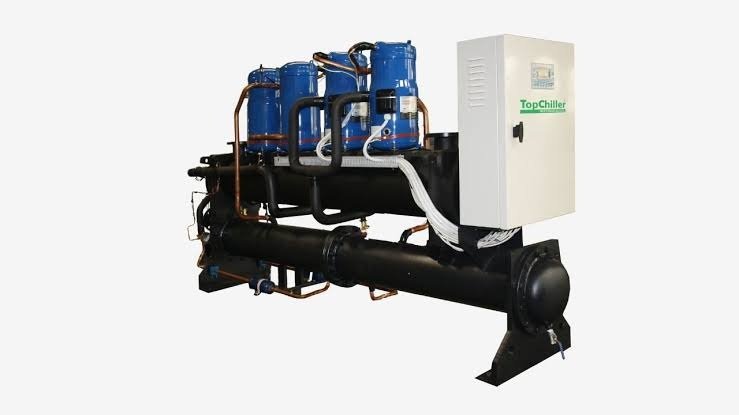
A water-cooled chiller transfers heat to a separate condenser-water circuit, which typically carries the heat to a cooling tower. The additional equipment makes the installation more involved, but the system can offer better energy efficiency for large, continuous cooling loads, including major commercial and district cooling facilities.
These differences are consistent with the technical guidance published by Daikin Middle East and Mitsubishi Heavy Industries. Both emphasize the importance of matching the equipment to the cooling demand, infrastructure and operating conditions.
2. Air-Cooled Chillers: Fast Mobilization for Temporary Cooling
Air-cooled systems are often the practical starting point when a business needs additional cooling capacity quickly. Since the main refrigeration components and air-cooled condenser are packaged together, the site generally requires fewer supporting systems than a comparable water-cooled installation.
Why air-cooled chillers suit temporary projects
Fast mobilization and installation
For an emergency cooling requirement, a production shutdown or a temporary increase in building occupancy, speed matters. An air-cooled chiller can often be delivered and connected without constructing a new cooling tower system. Actual commissioning time depends on capacity, site access, electrical connections, piping and the building’s existing chilled-water network.
Self-contained equipment
The packaged design reduces installation complexity. Depending on the rental configuration, the equipment may require electrical power, chilled-water supply and return connections, suitable drainage arrangements where applicable, and sufficient outdoor clearance for airflow.
No external condenser-water source required
Air-cooled chillers do not need a cooling tower or a separate condenser-water supply. This is particularly useful at temporary construction sites, warehouses and facilities where installing a cooling tower would be impractical.
However, the system still needs an appropriate electrical supply and a chilled-water distribution arrangement to deliver cooling to the required areas.
Simpler maintenance arrangements
Air-cooled units avoid cooling-tower water treatment, tower-basin cleaning and condenser-water pump maintenance. Their routine servicing still includes coil cleaning, fan inspection, refrigerant-circuit checks and electrical testing.
Where are air-cooled chillers most useful in the UAE?
-
Construction projects and temporary site facilities.
-
Hotels, retail spaces and offices experiencing a cooling-system failure.
-
Manufacturing facilities requiring temporary additional capacity.
-
Warehouses and logistics buildings.
-
Events, temporary buildings and planned shutdowns.
-
Industrial sites without existing cooling towers.
For projects with urgent cooling requirements, rental chiller services can be considered when evaluating temporary equipment options, installation requirements and the capacity needed for the site.
One important consideration is the UAE’s extreme summer heat. An air-cooled unit must be selected for the expected outdoor design temperature and required leaving-water temperature. Its nominal capacity at a standard rating condition should not automatically be treated as its available capacity during the hottest afternoon.
Daikin’s technical comparison explains why high ambient temperatures can reduce air-cooled chiller performance.
3. Water-Cooled Chillers: High Efficiency for Large Cooling Loads
Water-cooled chillers are commonly considered when a facility needs substantial cooling capacity over long operating periods. They are especially relevant to large central cooling plants, industrial campuses and district cooling networks.
Why water-cooled chillers are used for large facilities
Higher energy efficiency at scale
A cooling tower uses evaporation to reject heat, allowing the condenser-water temperature to be lower than the outdoor dry-bulb temperature under suitable conditions. This can reduce compressor energy consumption compared with an air-cooled system operating under the same conditions.
The actual advantage depends on chiller design, outdoor wet-bulb conditions, cooling-tower performance, pump and fan energy, part-load operation and maintenance. The comparison should therefore consider the complete cooling plant rather than the chiller compressor alone.
Suitable for continuous operation
Large industrial and district cooling facilities may operate for extended hours throughout the year. In these situations, even a relatively small difference in total plant energy consumption can have a significant effect on operating costs.
Support for very large cooling demands
Water-cooled centrifugal chillers are widely used in large central plants because they can serve substantial loads through a properly engineered system. Depending on the project, multiple chillers may be arranged to provide staged capacity, improve part-load performance and support operational redundancy.
What infrastructure does a water-cooled rental system need?
A water-cooled chiller is not simply a chiller unit delivered to the site. The rental arrangement must account for the complete heat-rejection system.
Typical requirements include:
-
A suitable cooling tower with sufficient heat-rejection capacity.
-
Condenser-water pumps and associated pipework.
-
Chilled-water pumps and distribution connections as required.
-
Water treatment and monitoring.
-
Electrical power, controls and appropriate safety provisions.
-
Sufficient installation space and access for maintenance.
For this reason, water-cooled equipment is most attractive where the necessary plant infrastructure already exists or can be provided economically.
Is a water-cooled chiller always the better option?
No. Better energy efficiency does not automatically mean lower total cost for a short rental period. Mobilization, cooling-tower installation, water consumption, treatment, commissioning and eventual removal can outweigh the energy savings of a temporary installation.
For a short emergency requirement, an air-cooled unit may be the more practical option. For a large facility requiring continuous cooling over an extended period, a water-cooled system may justify the additional infrastructure.
The Mitsubishi Heavy Industries chiller selection guide provides further technical context on these trade-offs.
4. Air-Cooled vs Water-Cooled Chillers: Comparison Table
The following table summarizes the principal differences for commercial and industrial cooling projects in the UAE.
| Factor | Air-cooled chiller | Water-cooled chiller |
|---|---|---|
| Energy efficiency | Generally lower at high ambient temperatures | Generally higher at large loads when the complete plant is optimized |
| Setup time | Usually faster; packaged equipment simplifies deployment | Usually longer if towers, pumps and piping must be installed |
| Footprint | Requires outdoor space and clear airflow around the unit | Requires space for the chiller, cooling tower, pumps and associated systems |
| Maintenance | Generally simpler; coil, fan and refrigeration-system servicing | More extensive; includes tower, water treatment, pumps and condenser maintenance |
| Water requirements | No condenser-water supply or cooling-tower makeup water | Requires condenser-water circulation and usually cooling-tower makeup water |
| Hot-weather performance | Sensitive to outdoor air temperature; high-ambient selection is essential | Often benefits from evaporative heat rejection, subject to wet-bulb conditions |
| Noise considerations | Outdoor condenser fans can be a significant noise source | Chiller can be located indoors, although cooling-tower and pump noise remain |
| Typical rental use | Emergency cooling, temporary buildings and short-term capacity | Large industrial loads and facilities with suitable existing infrastructure |
The practical conclusion is straightforward: air-cooled chillers prioritize installation simplicity, while water-cooled chillers often prioritize energy efficiency at scale. Neither system is universally superior for every rental project.
5. High-Ambient Coil Protection in the UAE: Sand, Heat and Coastal Salinity
Selecting the correct chiller type is only part of the decision. In the UAE, the equipment must also be suitable for the environment in which it will operate.
Air-cooled chillers are particularly exposed to outdoor conditions because their condenser coils exchange heat directly with the surrounding air. Dust accumulation, restricted airflow and corrosion can reduce heat-transfer performance and increase maintenance requirements.
Protecting condenser coils against desert sand
Desert dust and airborne sand can collect on condenser fins and obstruct airflow. When the coil becomes dirty, the chiller may struggle to reject heat, particularly during periods of high outdoor temperature.
Recommended precautions include:
-
Regular coil inspection and cleaning: Adjust cleaning frequency to actual dust exposure, operating conditions and manufacturer guidance.
-
Adequate airflow clearance: Avoid placing the chiller where walls, temporary barriers or other equipment restrict airflow.
-
Suitable coil protection: Consider manufacturer-approved protective coatings and construction materials for the expected environmental exposure.
-
High-ambient equipment selection: Verify that the selected unit can deliver the required cooling capacity at the project’s maximum expected outdoor temperature.
-
Preventive maintenance: Monitor operating pressures, condenser temperatures, fan performance and signs of restricted airflow.
Protective measures should be selected carefully. Any additional screen or filter must be approved for the equipment because an unsuitable installation can restrict airflow and worsen performance.
Coastal salinity protection in Jebel Ali
Industrial and logistics facilities in Jebel Ali may be exposed to salt-laden coastal air, depending on their location and proximity to the shoreline. Salt deposits can accelerate corrosion of exposed metal surfaces and condenser-coil components.
A suitable specification may include factory-applied anti-corrosion coil coatings, corrosion-resistant materials, protective treatments for exposed components and inspection procedures appropriate for coastal service.
Industrial exposure in Mussafah
Mussafah’s industrial environment can present a different combination of exposure, depending on the facility. Dust, industrial airborne contaminants, high ambient temperatures and, at some sites, corrosive substances may affect outdoor HVAC equipment.
For both Jebel Ali and Mussafah, the equipment specification should be based on the actual site conditions rather than the location name alone. Before accepting a rental unit, the facilities team should check:
-
Whether the condenser coil has an appropriate protective coating.
-
Whether the coating is suitable for the expected corrosion category.
-
Whether fins, tubing, fasteners and exposed metal surfaces show existing corrosion.
-
Whether the chiller’s rated capacity meets the required load under high-ambient conditions.
-
Whether the maintenance plan includes inspections for dust, salt deposits and corrosion.
Important: Coil coatings help resist corrosion but do not make equipment immune to it. Proper selection, cleaning and inspection remain necessary.
6. Which Industrial Chiller Types Should Businesses Consider?
The terms air-cooled and water-cooled describe how a chiller rejects heat. Other classifications describe the compressor technology, intended application or physical configuration.
Understanding these distinctions helps buyers compare equipment correctly.
Scroll chillers
Often used for smaller or modular cooling applications. Depending on the design, multiple compressors or units can provide staged capacity. They can suit commercial buildings and selected light industrial loads.
Screw chillers
Used across a range of medium-to-large commercial and industrial applications. Both air-cooled and water-cooled configurations are available, depending on the manufacturer and model.
Centrifugal chillers
Commonly considered for large central cooling plants, including major district cooling applications. Water-cooled centrifugal systems can deliver high efficiency when properly designed and operated.
These categories are not mutually exclusive. For example, a screw chiller can be air-cooled or water-cooled. The right choice depends on capacity, operating profile, site infrastructure and the available rental equipment.
7. When Is Packaged Chiller Rental in Dubai the Better Choice?
A packaged chiller rental arrangement can be useful when a business needs additional cooling without committing to a permanent plant installation.
For packaged chiller rental Dubai projects, the key is to confirm what is included in the rental package. A packaged chiller may simplify equipment delivery, but it does not necessarily include all the pumps, hoses, electrical distribution, temporary pipework and air-handling equipment required to deliver cooling throughout a building.
Common applications include:
Emergency breakdowns: Temporary chillers can help restore cooling while a failed chiller is repaired or replaced, provided the temporary system can meet the required load.
Planned maintenance: Rental equipment can support continued operation while existing chillers undergo inspection, overhaul or replacement.
Seasonal demand: Hotels, commercial buildings and industrial facilities may need extra cooling capacity during peak demand periods.
Temporary industrial processes: Production lines, manufacturing operations and specialized facilities may require process cooling during commissioning, maintenance or capacity expansion.
Construction and commissioning: Temporary chillers can provide cooling while permanent HVAC systems are incomplete or being tested.
For UAE projects, the rental provider should confirm the required cooling capacity, water temperatures, available power, delivery access and installation arrangements before mobilization.
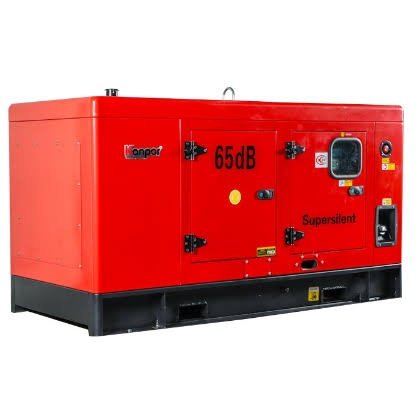
If the cooling requirement is linked to a temporary power requirement as well, review the available generator rental packages. The generator must be properly sized for the chiller’s electrical demand, including compressor starting characteristics, pumps, fans and other connected equipment. A generator’s nominal kVA rating alone is not enough to confirm compatibility.
8. How to Choose the Right Chiller Rental for Your Project
Before requesting a quotation, establish the following details.
-
Determine the cooling load. Obtain the required capacity in refrigeration tons (TR) or kilowatts (kW), preferably from a cooling-load calculation or the existing system’s operating data.
-
Confirm chilled-water temperatures. Specify the required supply and return temperatures, flow rate and acceptable temperature variation. Process cooling may require different conditions from comfort air conditioning.
-
Check the installation location. Confirm available outdoor space, access for transport and lifting, airflow clearances, pipe routes and any noise restrictions.
-
Review site utilities. Verify electrical supply, generator requirements, water availability and whether the project already has a cooling tower or condenser-water circuit.
-
Assess environmental exposure. Identify high outdoor temperatures, dust, coastal salt exposure and industrial contaminants. Specify suitable coil protection where required.
-
Compare the total rental cost. Include delivery, installation, commissioning, energy, water, maintenance, dismantling and any standby equipment needed.
-
Confirm service and contingency arrangements. Ask about response times, planned maintenance, spare parts, backup capacity and support outside normal working hours.
For larger installations, it is also worth assessing whether several smaller chillers or one larger unit would better meet the operating requirement. Multiple units may offer more flexibility and partial redundancy, but they can also introduce additional piping, controls and installation costs.
9. Frequently Asked Questions
Is an air-cooled chiller better than a water-cooled chiller for temporary rental?
An air-cooled chiller is often preferable for short-term rental because it is self-contained and does not require a cooling tower. A water-cooled chiller may be more appropriate for a large cooling load or an extended rental where the supporting infrastructure already exists.
Which chiller is more energy-efficient in the UAE?
Water-cooled chillers generally have an efficiency advantage in large installations, including under hot outdoor conditions, because evaporative heat rejection can reduce the condensing temperature. However, the final comparison should include cooling-tower fans, pumps, water treatment and the actual operating conditions.
Do air-cooled chillers require an external water supply?
They do not require a cooling-tower water supply or condenser-water circuit. However, they still require a chilled-water circuit when serving a conventional chilled-water system.
Do water-cooled chillers always require cooling towers?
Most conventional water-cooled chillers use cooling towers to reject heat. Other heat-rejection arrangements may be possible in specialized system designs, but the complete condenser-water system must be compatible with the chiller.
How can chiller coils be protected against sand and salt in the UAE?
Use suitable manufacturer-approved corrosion-resistant coil treatments, inspect and clean coils according to site conditions, maintain unrestricted airflow and select equipment rated for the expected ambient temperature. Coastal sites may require more stringent corrosion protection than less exposed inland locations.
Is packaged chiller rental suitable for emergency cooling in Dubai?
Yes, where the available equipment meets the cooling load and can be connected safely to the building or process system. Delivery time alone does not guarantee that the chiller can be commissioned immediately; electrical, piping, access and commissioning requirements must also be satisfied.
What information is needed to obtain a chiller rental quotation?
Provide the project location, required cooling capacity, supply and return water temperatures, operating hours, rental duration, power availability, installation conditions and any environmental protection requirements.
Conclusion
The choice between air-cooled vs water-cooled chiller rental comes down to the balance between deployment speed, energy efficiency, infrastructure and operating conditions.
Air-cooled chillers are generally the simpler option for temporary cooling, urgent replacement requirements and sites without cooling towers. Water-cooled chillers are often more suitable for large, continuous cooling loads where a properly maintained cooling tower and condenser-water system can support efficient operation.
For UAE projects, the decision should also account for high outdoor temperatures, desert dust and coastal corrosion risks. Correct capacity selection, suitable coil protection and a practical maintenance plan are essential for dependable cooling.
Businesses evaluating temporary cooling can review rental chiller services and discuss their required capacity, site conditions and installation schedule with a qualified provider before committing to a rental arrangement.
Need Reliable Temporary Power or Cooling in the UAE?
From 20 kVA mobile silent generators up to multi-megawatt synchronized power plants and 500 TR packaged chillers. Complete turnkey delivery, cabling, and 24/7 on-site maintenance across Dubai, Abu Dhabi, and Sharjah.