Phone:
(+971) 56 921 3754
Physical address:
Office #201, Al Quoz Industrial Area
Dubai, United Arab Emirates.

emergency chiller rental dubai
When a central chiller fails in Dubai, restoring cooling quickly can be critical for hotels, hospitals, commercial towers, shopping centres, and industrial facilities. High outdoor temperatures, continuous occupancy, and demanding cooling loads can make an unexpected HVAC breakdown more than a routine maintenance issue. It can affect indoor comfort, building operations, sensitive equipment, and business continuity.
Emergency chiller rental in Dubai provides a temporary cooling solution while the permanent chiller is repaired, replaced, or restored to normal operation. Depending on the building’s system design, a rental chiller can operate as a temporary replacement, supplement existing cooling capacity, or provide a temporary district cooling bridge while the main cooling supply is unavailable.
A successful emergency response involves more than delivering a chiller to the site. It requires a rapid technical survey, suitable equipment selection, safe lifting and positioning, temporary pipe connections, adequate electrical power, and commissioning checks.
The American Society of Heating, Refrigerating and Air-Conditioning Engineers (ASHRAE) highlights the importance of HVAC reliability, backup arrangements, emergency planning, and provisions for connecting temporary equipment, particularly in healthcare facilities. Its guidance provides a useful technical foundation for planning cooling continuity.
This guide explains how emergency chiller rental works, how a temporary cooling system can be mobilised within a 24-hour response target where site conditions permit, and how businesses can reduce disruption during central HVAC failures.
What Is Emergency Chiller Rental in Dubai?
Emergency chiller rental is the temporary supply of a commercial or industrial cooling system when an existing chiller becomes unavailable, a building experiences an unexpected increase in cooling demand, or planned maintenance requires backup equipment.
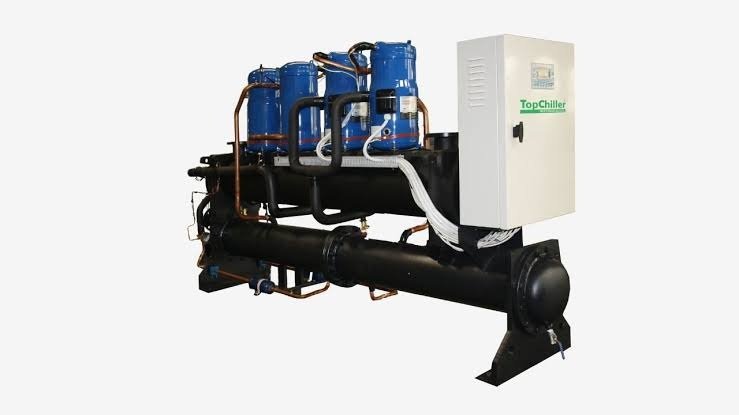
A rental chiller removes heat from circulating water and supplies chilled water to compatible building or process cooling systems. Depending on the installation, the temporary unit can support an existing chilled-water circuit, replace unavailable cooling capacity, or provide additional capacity while permanent equipment is restored.
Businesses can arrange emergency chiller rental to help maintain cooling during equipment breakdowns, planned shutdowns, seasonal demand peaks, and other unexpected events.
Typical applications include:
-
Hotels and resorts: Maintaining guest comfort and supporting cooling requirements in occupied areas.
-
Hospitals and healthcare facilities: Supporting critical cooling requirements under the facility’s emergency operating plan.
-
Commercial towers: Providing temporary chilled water while a central plant or major chiller is repaired.
-
Shopping centres: Helping maintain cooling across occupied retail and public areas.
-
Industrial facilities: Supporting temperature-sensitive processes and reducing the risk of production interruption.
-
District cooling-connected buildings: Providing an engineered temporary cooling arrangement when the normal supply or building-side cooling equipment is unavailable.
Rental chillers are not universal plug-and-play replacements. The equipment must match the required cooling capacity, water temperatures, flow rates, pressure limits, electrical supply, and building connection arrangements.
Rental Generator’s published rental chiller service information describes emergency applications, temporary pipe connections, rapid mobilisation, and optional generator support.
Why Central HVAC Failures Require a Rapid Response
Dubai’s hot desert climate makes reliable cooling particularly important during summer. The Dubai Government Media Office reports average summer daytime highs of approximately 41.8°C, with overnight lows around 29.7°C.
Dubai Government Media Office
Under these conditions, an extended cooling interruption can create significant challenges for heavily occupied buildings.
A central chiller failure may result from compressor faults, electrical problems, control-system failures, condenser-side issues, refrigerant-related faults, water-flow problems, or other mechanical defects. The actual cause needs to be established by qualified technicians.
The consequences depend on the building and the duration of the interruption.
In a hotel, rising indoor temperatures can affect guest comfort and room operations. In a commercial tower, tenants may experience uncomfortable working conditions, while building management may need to restrict access to certain spaces. In a hospital, cooling and ventilation requirements may be connected to patient care, infection prevention, equipment operation, and other essential services.
This is why central HVAC failure backup should be planned as an operational continuity measure, rather than treated as a last-minute equipment purchase.
Common situations that require emergency cooling
| Emergency situation | Potential temporary cooling response |
|---|---|
| Major chiller breakdown | Connect a suitably sized rental chiller to an approved chilled-water interface. |
| Compressor or component failure | Maintain some or all required cooling while permanent repairs proceed, subject to available capacity. |
| Planned central plant maintenance | Provide temporary cooling during an approved shutdown. |
| Unexpected rise in cooling demand | Add temporary capacity if the existing distribution system can accommodate it. |
| District cooling interruption | Assess a temporary independent cooling arrangement or another approved contingency. |
| Electrical supply failure | Combine suitable rental cooling equipment with an appropriately engineered temporary power solution if needed. |
Not every incident requires a full replacement chiller. A technical assessment helps establish whether the facility needs complete temporary replacement, partial-load support, or additional cooling capacity.
The 24-Hour Emergency Mobilisation Protocol
A 24-hour emergency mobilisation target can be a useful planning objective for urgent cooling projects. However, it is important to distinguish mobilisation and installation from fully operational cooling. The actual timeline depends on equipment availability, site access, lifting permissions, connection readiness, electrical capacity, and testing requirements.
A well-organised emergency response follows a defined sequence.
Stage 1: Emergency call and technical survey
The response begins with collecting details about the failed equipment, the building’s cooling demand, current chilled-water temperatures, available connection points, and the operational consequences of the breakdown.
Engineers review the chiller plant layout, pipe sizes, pumps, valves, electrical supply, access routes, and available outdoor space. Photographs, plant drawings, equipment nameplates, and recent operating data can help speed up the assessment.
Stage 2: Cooling capacity and equipment selection
The engineering team estimates the required cooling load and checks whether the rental chiller can meet it under the expected outdoor conditions. The assessment also covers water flow, supply and return temperatures, system pressure, pumps, electrical demand, and any condenser-water requirements.
The aim is to avoid supplying equipment that appears adequate on paper but cannot deliver the required cooling under actual operating conditions.
Stage 3: Transport, positioning, and crane lift
Once equipment and access arrangements are confirmed, the chiller is transported to the site and positioned in an approved location. Where direct vehicle access is unavailable or the installation point is elevated, a crane or other suitable lifting equipment may be required.
The lift plan should account for equipment weight, lifting points, ground-bearing capacity, overhead obstructions, exclusion zones, and nearby services. Site approvals and qualified lifting personnel are essential.
Stage 4: Flexible hose tie-ins and system integration
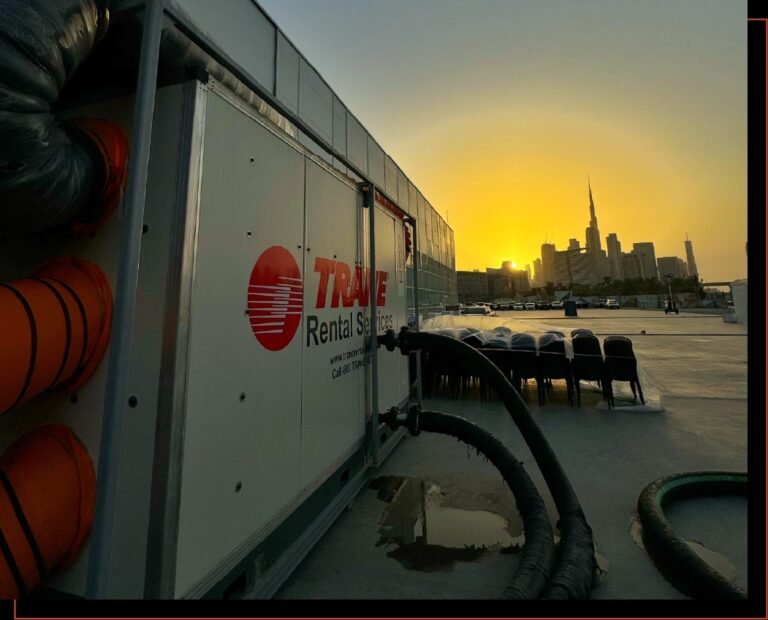
Technicians connect the temporary chiller to the designated chilled-water supply and return points using appropriately rated hoses or temporary pipework, together with compatible fittings, valves, and other required components.
The connections must be suitable for the operating pressure and temperature. Engineers also check isolation arrangements, air removal, flushing requirements, water quality, and the correct flow direction before starting the system.
Stage 5: Electrical connection and commissioning
The rental chiller is connected to an approved electrical supply or an appropriately sized temporary generator package. The team checks electrical protection, earthing, controls, pumps, operating parameters, and any required interlocks.
Commissioning then verifies water flow, temperatures, pressure, alarms, and the response of the connected building system. Cooling should be considered restored only after the installation has passed the necessary checks and is delivering the required performance.
Stage 6: Monitoring and handover
Once the temporary plant is running, operators monitor chilled-water temperatures, flow, system pressure, electrical loading, alarms, and the building’s cooling response. The temporary system remains in service for the agreed period, with operating checks and maintenance arranged as required.
Important: A supplier may be able to mobilise equipment within a stated response window, but that does not guarantee that every site can be fully cooled within 24 hours. Complex crane lifts, unavailable connections, restricted access, authority approvals, and major electrical modifications can extend the installation period.
Temporary District Cooling Bridge: How It Works
A temporary district cooling bridge is an interim arrangement that helps a building maintain cooling while its normal district cooling supply, energy transfer station, or building-side chiller system is unavailable or undergoing work.
Dubai’s Building Code includes specific requirements for district cooling interfaces. These include cooling capacity, pipe connection size, chilled-water supply and return temperatures, maximum allowable system pressure, and design water velocities or pressure drop. The code also calls for coordination with the relevant district cooling provider.
These parameters matter when considering a rental chiller because a temporary unit must work within the building’s hydraulic and operational constraints.
How a temporary cooling bridge is established
1. Identify the failed section. The facilities team determines whether the problem lies in the central chiller plant, the building’s secondary chilled-water circuit, pumps, controls, or the district cooling interface.
2. Confirm the approved connection point. Engineers identify where temporary equipment can connect without compromising the existing plant or other connected buildings. If district cooling infrastructure is involved, the relevant provider and building management must be consulted where required.
3. Select the temporary configuration. Depending on the system, a rental chiller may connect to an isolated building circuit, support a secondary loop, or supply a dedicated load. Some installations may require temporary pumps, heat exchangers, valves, or other equipment.
4. Verify performance. The commissioning team confirms the required water flow, temperatures, pressure, and cooling response before placing the temporary arrangement into service.
5. Restore normal operation safely. Once the permanent system is repaired, the temporary equipment is removed or disconnected according to an approved changeover procedure.
District cooling is not the same as a rental chiller
District cooling is a wider system involving a central plant and a distribution network that delivers chilled water to connected buildings. A rental chiller is an individual temporary cooling asset.
A rental chiller does not automatically replace an entire district cooling network. The appropriate emergency configuration depends on the point of failure, the building’s system design, and the approvals needed for the proposed connection.
For facilities managers, this distinction is essential when planning temporary cooling for a district-cooled tower or multi-building development.
Turnkey Power + Chiller Packages:
An emergency chiller is only useful if the site can supply the electrical power it needs. If the central plant has failed because of an electrical fault, an outage, or a problem affecting the main distribution system, temporary cooling may require an independent power source as well.
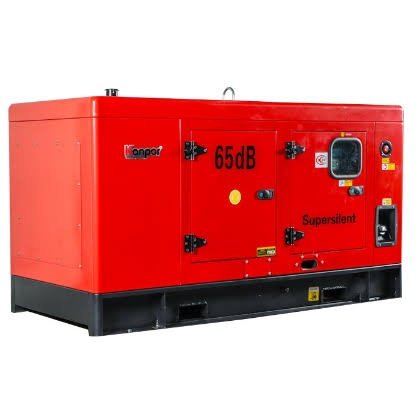
A turnkey power and chiller package combines rental cooling equipment with a suitably engineered temporary generator, electrical distribution equipment, and the supporting accessories required for operation.
Rental Generator describes autonomous power options alongside its emergency chiller services, including mobile diesel generators that can operate with temporary cooling equipment. See its rental chiller solutions for the service overview.
What does a turnkey package include?
| Component | Purpose |
|---|---|
| Rental chiller | Produces chilled water for the temporary cooling requirement. |
| Diesel generator, where required | Supplies power when the existing electrical source is unavailable or unsuitable. |
| Temporary power distribution | Provides the required electrical connections and protective equipment. |
| Pumps and hydraulic accessories | Maintain the necessary chilled-water circulation where these are not already available. |
| Hoses, valves, and fittings | Connect the temporary equipment to the approved water circuit. |
| Monitoring and controls | Allow operators to observe performance and respond to abnormal conditions. |
| Fuel arrangements | Support continued generator operation for the agreed rental duration. |
The exact package depends on the equipment and site. Some chillers can use an available building supply, while others require a different electrical arrangement. Pumps, controls, ventilation, and ancillary equipment must also be considered when calculating the total electrical load.
How temporary diesel generator power supports a rental chiller
A diesel generator converts the energy in fuel into electrical power. That electricity drives the chiller’s compressor and other electrical components, along with the pumps and accessories included in the temporary system.
However, selecting a generator is not simply a matter of matching its advertised rating to the chiller’s nominal power consumption.
The engineering assessment must consider:
-
Chiller running load and compressor starting characteristics.
-
Starting current and the generator’s ability to handle transient loads.
-
Voltage and frequency stability.
-
Power requirements of pumps, fans, and control systems.
-
Ambient temperature, site conditions, and generator derating where applicable.
-
Cable capacity, earthing, protective devices, and distribution arrangements.
-
Fuel consumption, refuelling access, exhaust discharge, and noise restrictions.
Large compressors can impose substantial starting loads. Depending on the chiller design, a suitable starting method, load sequencing, or additional generator capacity may be necessary. The final arrangement should be designed and checked by qualified electrical and HVAC professionals.
For facilities where cooling and electricity must both be restored quickly, the advantage of a turnkey arrangement is coordination: the cooling unit, power supply, temporary connections, and commissioning can be planned together rather than treated as separate emergency jobs.
When should businesses consider a combined package?
A combined package may be useful when the existing chiller has failed alongside its normal electrical supply, the site lacks sufficient spare power capacity, or temporary cooling is needed at a location without suitable permanent infrastructure.
It can also be considered for temporary facilities, construction projects, industrial sites, and selected commercial buildings where an independent cooling and power arrangement is technically appropriate.
Not every central HVAC failure requires a generator. If the building has an adequate, approved electrical supply, using it may be the simpler option.
Preventing Operational Shutdowns in Hotels, Hospitals, and Commercial Towers
The purpose of emergency chiller rental is not simply to introduce another cooling machine. It is to help maintain essential building operations while the permanent system is unavailable.
The level of protection required differs by facility, and a temporary chiller must be integrated into the wider operating plan.
Emergency cooling for hotels and resorts
Hotels depend on reliable air conditioning to maintain guest comfort across bedrooms, reception areas, restaurants, meeting rooms, and other occupied spaces. During periods of high outdoor temperatures, a major cooling failure can lead to complaints, reduced usable space, and pressure on hotel operations.
An emergency response should begin by identifying the areas with the greatest cooling need. Facilities teams can assess whether the temporary system should support the full building load or prioritise selected areas through an approved configuration.
A correctly sized rental chiller can help restore chilled-water production while technicians investigate or repair the failed equipment. The team should also verify that the existing pumps, air-handling units, fan-coil units, and controls can distribute the temporary cooling effectively.
The result depends on the actual fault and the capacity available. A temporary chiller cannot restore rooms or zones that remain isolated by a separate distribution, controls, or air-side problem.
Emergency cooling for hospitals
Hospitals require more careful planning because different areas have different environmental, ventilation, filtration, and operational requirements.
In practice, hospital facilities teams should identify critical cooling loads before an emergency occurs. These may include selected clinical areas, medical equipment rooms, laboratories, pharmacies, and other spaces whose environmental conditions must be maintained.
A temporary chiller can form part of a hospital’s contingency plan, but it must not be treated as a universal substitute for the hospital’s complete HVAC system. Cooling capacity alone does not ensure correct ventilation, air changes, filtration, humidity, pressure relationships, or infection-control conditions.
Before a temporary unit is connected, the hospital’s authorised engineering and clinical teams should confirm the required operating conditions, system boundaries, changeover procedures, and applicable approvals. Essential electrical loads and any required emergency power arrangements must be addressed separately.
Emergency cooling for commercial towers
Commercial towers may have large central plants serving multiple floors, tenants, and shared spaces. A single chiller failure can reduce the available cooling capacity even when the remaining chillers continue to operate.
The first step is to establish the remaining plant capacity and compare it with the actual building load. If the remaining equipment can serve critical areas, a rental chiller may be used to replace lost capacity or supplement the system during repairs.
Temporary connections require particular care in high-rise buildings. Engineers must assess available plant-room access, lifting restrictions, pipe routes, pressure requirements, pumps, controls, and the ability of the existing system to distribute the added cooling.
For a tower connected to district cooling, the proposed arrangement must also respect the relevant interface design and provider requirements.
Emergency cooling during heat waves
Heat waves can increase cooling demand at the same time that equipment is under sustained operating stress. This can make failures more disruptive and place additional pressure on available rental equipment and installation resources.
Businesses can reduce risk by identifying the equipment that would cause the greatest disruption if it failed, documenting the chilled-water connections, and establishing a realistic emergency response plan before peak summer demand.
Where appropriate, pre-planned rental arrangements, known connection points, agreed access procedures, and verified electrical requirements can reduce the time needed to implement temporary cooling.
The objective is to minimise disruption, not to promise that every breakdown can be resolved without downtime.
Choosing the Right Emergency Chiller Capacity
Choosing the correct chiller is one of the most important parts of emergency planning. An undersized unit may run continuously without maintaining the required temperatures, while an oversized or incompatible unit can introduce unnecessary cost and operating complexity.
The selection process should consider the following factors.
Existing chiller capacity: Record the failed unit’s rated capacity, operating conditions, and actual load before the incident, if that information is available.
Current cooling demand: Determine the building’s present load rather than relying exclusively on the installed chiller’s nameplate rating.
Required chilled-water temperatures: Establish the required supply and return temperatures and verify that the temporary chiller can meet them under expected operating conditions.
Water flow and pressure: Confirm the required flow rate, available pump head, pipe dimensions, and pressure limitations.
Condenser requirements: Check whether the selected unit is air-cooled or water-cooled and identify the space, ventilation, water supply, and heat-rejection requirements associated with the chosen design.
Ambient conditions: Equipment performance may vary with outdoor temperature and operating conditions. The selection must reflect the conditions expected at the Dubai site.
Electrical supply: Verify the available power supply or determine the requirements for a temporary generator.
Connection and access arrangements: Consider equipment positioning, hose routes, crane access, pipe connections, noise, drainage, and maintenance access.
Where the full building load cannot be supported immediately, the engineering team may consider staged restoration or prioritised cooling for selected zones. Such decisions should be approved by the facility’s responsible operators and should never compromise critical environmental or safety requirements.
Emergency Chiller Rental vs. Chiller Maintenance and Repair
Emergency rental and permanent repair solve different problems. Rental equipment can provide temporary cooling while the original plant is being diagnosed and repaired, whereas maintenance and repair aim to restore the permanent system’s reliability.
In many cases, using both services together is a practical way to manage an unexpected breakdown.
| Consideration | Emergency chiller rental | Chiller maintenance and repair |
|---|---|---|
| Main purpose | Provide temporary cooling capacity | Restore or maintain permanent equipment |
| Typical timing | During an outage, breakdown, or temporary capacity shortage | During planned servicing or after a fault |
| Equipment | Temporary rental chiller and supporting equipment | Existing chiller and its components |
| Duration | Usually for an agreed temporary period | Depends on diagnosis, parts, and repair complexity |
| Best use | Reduce disruption while normal cooling is unavailable | Address the underlying equipment problem |
For businesses that need both temporary cooling and permanent equipment restoration, chiller maintenance and repair can complement an emergency rental arrangement.
A sensible sequence is to assess the failure, establish the temporary cooling requirement, carry out the necessary repair work, test the permanent equipment, and then plan the changeover from rental cooling.
The changeover should be controlled to avoid interrupting chilled-water flow, creating pressure problems, or introducing unstable operating conditions.
How to Prepare for a Central HVAC Failure Before It Happens
A pre-agreed emergency plan can save valuable time when a chiller fails. Facilities teams should prepare the technical information that a rental provider and installation engineers will need.
Emergency cooling readiness checklist
Use this checklist when preparing a building’s temporary cooling plan.
Preparing this information in advance helps the response team assess the installation more efficiently. It also helps identify limitations that could delay equipment mobilisation or prevent a rental chiller from delivering the expected performance.
What Affects the Cost of Emergency Chiller Rental in Dubai?
Emergency rental costs vary by project. There is no reliable single price for every building because cooling demand, equipment availability, installation complexity, and rental duration differ.
The main cost factors include:
-
Cooling capacity and equipment type: Larger or more specialised chillers may require different rental rates and transport arrangements.
-
Rental duration: A short emergency deployment and a multi-week rental have different commercial requirements.
-
Mobilisation and transport: Delivery distance, urgency, site access, and equipment handling can affect costs.
-
Crane lifting and installation: Elevated or restricted installations may need additional lifting equipment and specialist personnel.
-
Temporary pipework: Hose lengths, fittings, pumps, valves, and other connection requirements depend on the site.
-
Generator requirements: A separate generator, distribution equipment, and fuel arrangements can add to the overall cost.
-
Operating support: Commissioning, monitoring, maintenance, and out-of-hours attendance may be included or charged separately.
-
Site-specific approvals: Access restrictions, permits, and coordination with building management or a district cooling provider can affect the programme.
When comparing quotations, businesses should ask whether the quoted amount includes transport, installation, commissioning, power equipment, fuel, operating support, and eventual removal. A lower equipment-only rate may not represent the lowest total project cost.
Frequently Asked Questions
1. How quickly can an emergency chiller be installed in Dubai?
The timeline depends on equipment availability, required cooling capacity, site access, electrical readiness, and the complexity of the temporary connections. A 24-hour mobilisation target may be feasible for some projects, but it should be confirmed with the supplier after reviewing the site requirements. It does not guarantee fully operational cooling within that period.
2. Can a rental chiller replace a failed central HVAC system?
A rental chiller can replace unavailable chilled-water production or supplement remaining cooling capacity. However, it does not automatically replace the entire HVAC system. Pumps, air-handling equipment, controls, ventilation, and distribution circuits must also be functional and compatible with the temporary arrangement.
3. Can emergency chiller rental provide a temporary district cooling bridge?
Yes, a suitably designed temporary system may provide a bridge while normal cooling is unavailable. The proposed connection must be compatible with the building’s hydraulic design and approved operating arrangements. Coordination with the district cooling provider and relevant building authorities may be necessary.
4. Can a diesel generator power a rental chiller?
Yes, where the selected chiller is compatible with the proposed electrical supply and the generator is correctly sized. The assessment must account for compressor starting loads, running power, pumps, controls, electrical protection, and site conditions. Generator sizing should be completed by qualified engineers.
5. Is emergency chiller rental suitable for hospitals?
It can support an appropriately engineered hospital contingency plan. However, hospitals must verify that the temporary system meets the requirements of the areas it serves, including any applicable ventilation, filtration, temperature, humidity, and pressure-control requirements. The hospital’s authorised engineering and clinical teams should approve the installation and operating plan.
6. Can a rental chiller support a hotel during peak summer demand?
Yes. A rental chiller can provide additional capacity or replace unavailable cooling equipment when the existing chilled-water system and temporary installation are suitable. The required capacity should be calculated using the hotel’s actual cooling demand and the operating conditions expected during the rental period.
7. What information should I provide when requesting an emergency chiller quotation?
Provide the site location, required cooling capacity if known, chiller make and model, current chilled-water temperatures, available connection details, electrical supply information, site access restrictions, and the expected rental duration. Photos and plant drawings can help the supplier make an initial assessment.
8. Should a business rent a chiller or repair its existing equipment?
The decision depends on the fault, expected repair time, operational risk, and available cooling capacity. Rental can help maintain operations while repairs proceed, while permanent maintenance and repair address the underlying problem. In high-risk facilities, both may be required.
9. Does emergency chiller rental include installation and commissioning?
The scope varies by supplier and quotation. Confirm whether the package includes transport, lifting, flexible hoses, fittings, electrical connections, commissioning, monitoring, and removal. For complex installations, clarify who is responsible for each engineering task and approval.
10. How can a business reduce the risk of future cooling interruptions?
Preventive maintenance, condition monitoring, reliable spare parts, documented emergency procedures, and a pre-assessed temporary connection arrangement can reduce response delays. Facilities should also identify critical cooling loads and establish realistic backup plans before the hottest part of the year.
Arrange Emergency Chiller Rental in Dubai
A central chiller breakdown can create significant operational pressure, especially when a building must remain occupied during periods of high outdoor temperatures. The right response starts with a technical assessment, followed by suitable equipment selection, safe installation, adequate power provision, and verified commissioning.
For hotels, hospitals, commercial towers, and industrial facilities, emergency chiller rental can form part of a wider continuity strategy. When necessary, a combined chiller and generator package can also help address cooling and power requirements together.
Rental Generator provides information about its emergency chiller rental services and chiller maintenance and repair services.
Need temporary cooling for a central HVAC failure? Contact the service provider with your cooling capacity, location, connection details, and required response time to request an assessment and quotation.
Need Reliable Temporary Power or Cooling in the UAE?
From 20 kVA mobile silent generators up to multi-megawatt synchronized power plants and 500 TR packaged chillers. Complete turnkey delivery, cabling, and 24/7 on-site maintenance across Dubai, Abu Dhabi, and Sharjah.