Phone:
(+971) 56 921 3754
Physical address:
Office #201, Al Quoz Industrial Area
Dubai, United Arab Emirates.

dubai municipality generator noise limits
Operating a diesel generator on a construction site, commercial property, industrial facility, or temporary power project in the UAE involves more than selecting the correct generator capacity. Contractors must also consider environmental noise, fuel-storage safety, site approvals, electrical protection, and the requirements of the relevant local authorities.
Understanding Dubai Municipality generator noise limits, Civil Defence fuel storage requirements in the UAE, and construction generator permit requirements in Dubai can help project teams plan installations properly, reduce complaints, and avoid preventable compliance issues.
These requirements can vary according to the location, land use, project type, equipment configuration, and applicable permit conditions. A generator operating beside a residential building may face different practical restrictions from one installed within an industrial facility. HVAC similarly, a temporary generator supplying construction equipment is not automatically subject to the same approval process as a generator designed to operate in parallel with the public electricity network.
This guide explains the main compliance considerations, identifies official references, and outlines what contractors should verify before commissioning temporary or standby power equipment.
What Are Dubai Municipality Generator Noise Limits?
Generator noise is an important environmental consideration in Dubai, particularly on construction sites and commercial projects close to residential buildings, offices, hotels, hospitals, and other noise-sensitive locations.
The applicable noise criteria depend on the relevant environmental requirements, construction guidance, location, time of operation, and any project-specific approval conditions.
Dubai Municipality issued Circular No. 12-2-1 of 2021 on noise control. The circular instructs engineering consultancy offices and contracting companies to comply with applicable local and administrative orders and technical guidelines governing noise control. It specifically refers to the permitted daytime and nighttime noise levels in the Construction Works Safety Practice Guide.
Understanding the 65 dBA, 55 dBA and 45 dBA figures
The following figures are sometimes used as planning targets when discussing generator noise. However, they should not be treated as universally applicable Dubai Municipality limits without checking the relevant official standard and site conditions.
- 65 dBA at the site boundary: A proposed planning benchmark that may be relevant to certain projects, depending on the applicable criteria.
- 55 dBA during daytime: A proposed daytime planning target that must be checked against the relevant land-use category and official requirements.
- 45 dBA at night: A proposed nighttime planning target that requires confirmation against the applicable noise-control criteria and project conditions.
The distinction matters because a generator’s sound-pressure level at a specified distance is not necessarily equivalent to the noise level measured at a property boundary. Measurements also depend on background noise, equipment loading, the measurement position, and the relevant assessment procedure.
Before publishing or using these figures as mandatory legal limits, project teams should obtain the applicable table from the current Construction Works Safety Practice Guide or written confirmation from the competent authority.
Why generator noise must be assessed at the correct location
A generator may have a published noise rating measured at a specified distance under defined test conditions. That rating does not automatically demonstrate compliance at a construction site’s boundary.
The actual noise reaching nearby properties depends on several factors:
Generator enclosure: A properly designed acoustic enclosure can reduce engine and exhaust noise. Its effectiveness depends on the enclosure design, ventilation openings, exhaust treatment, and maintenance condition.
Distance from neighbouring properties: Increasing the distance between the generator and noise-sensitive receptors can reduce the sound level reaching them.
Operating load: Noise can change with operating conditions, cooling fan speed, engine condition, and the type of generator.
Surrounding structures: Walls and buildings may block or reflect sound. Their effect depends on their position, height, and construction.
Operating hours: A generator that operates overnight may require additional planning because nighttime criteria and site restrictions can be more stringent.
For this reason, contractors should assess the generator in its actual installation environment rather than relying exclusively on the manufacturer’s brochure.
How to reduce generator noise on Dubai construction sites
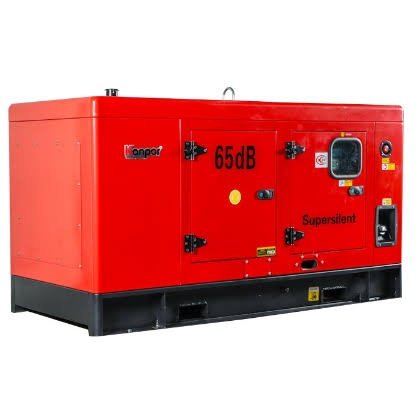
Start by selecting equipment with a documented acoustic rating suitable for the project. Where noise-sensitive properties are nearby, a sound-attenuated or enclosed generator may be more appropriate than a conventional open-set unit.
The installation should also provide adequate clearance for cooling air, exhaust discharge, refuelling, maintenance, and emergency access. Placing a generator inside an unsuitable enclosure can create overheating, ventilation, and safety problems.
Where practical, locate the generator away from residential boundaries and sensitive occupied areas. Avoid positioning exhaust outlets towards neighbouring buildings or installing equipment where surrounding surfaces may amplify reflected noise.
If complaints occur or compliance is uncertain, arrange noise measurements at the locations and times specified by the applicable assessment procedure. Record the generator’s operating condition, measurement position, time, and relevant background conditions so that the findings can be evaluated properly.
For projects requiring quieter temporary power, contractors can consider super silent generator rental. The selected unit should still be checked against the project’s actual noise criteria; a product described as “super silent” is not, by itself, proof of regulatory compliance.
Abu Dhabi EAD Noise Mapping and Inspection Protocols
Projects in Abu Dhabi should not automatically apply Dubai’s environmental procedures. The Environment Agency – Abu Dhabi (EAD) has its own environmental regulatory framework, monitoring guidance, and requirements for projects operating within the emirate.
EAD announced Decree No. 2 of 2024 concerning Abu Dhabi’s air quality system. According to the agency, the system aims to control air pollutants and noise within permissible limits, and its provisions apply to projects and establishments operating in Abu Dhabi. The agency also stated that environmental licensing is required for applicable activities under the system.
What does environmental noise monitoring involve?
Noise monitoring is used to assess whether project activities are creating unacceptable environmental impacts. Depending on the project and applicable approval conditions, an assessment may involve monitoring at site boundaries, identifying sensitive receptors, reviewing operating periods, and documenting results.
EAD’s Technical Guidance Document for Environmental Self-Monitoring and Reporting includes specific guidance for the construction sector. It states that noise levels must be monitored monthly during construction at project boundaries to identify unacceptable noise impacts and support timely corrective action.
Contractors should review the guidance alongside their environmental licence, environmental management plan, and any project-specific conditions to determine the monitoring frequency and reporting requirements applicable to their work.
How generator noise mapping helps contractors
For larger construction projects or installations near sensitive properties, noise mapping can help identify areas where generator operation may create the greatest impact.
A practical assessment may consider:
- The generator’s location, acoustic rating, and operating schedule.
- The position of residential buildings, offices, hospitals, and other sensitive receptors.
- Site boundaries and the distance between equipment and surrounding properties.
- The expected contribution of multiple operating generators.
- Existing background noise and the conditions under which measurements are required.
A noise map is a planning and assessment tool, not a substitute for an applicable permit or formal compliance measurement.
Preparing for an EAD inspection or environmental review
Project managers should maintain relevant environmental approvals, noise-monitoring reports, equipment information, operating schedules, and records of corrective actions. If a monitoring result identifies an issue, the team should document the action taken and arrange follow-up assessment where required.
For generators operating in Abu Dhabi, confirm the applicable monitoring and reporting arrangements with EAD or the competent project authority before the equipment enters service.
Civil Defence Fuel Storage Requirements in the UAE
Fuel storage is a major safety consideration when diesel generators operate for extended periods or rely on on-site fuel tanks. Improper storage can create fire hazards, spill risks, and environmental contamination.
The applicable requirements may depend on the amount of fuel stored, the tank type, the location, the installation design, and the relevant fire and safety approvals.
Dubai’s legal framework assigns Civil Defence responsibilities that include approving preventive safety requirements and overseeing applicable fuel-storage and petroleum-product activities. Dubai Law No. 4 of 2025 establishing the Dubai Civil Defence General Command identifies responsibilities relating to fire prevention, safety requirements, and the authorisation of relevant fuel-storage activities.
Is 120% bunded containment mandatory for every generator tank?
A frequently quoted fuel-safety specification is 120% secondary containment, meaning the containment system is designed to hold 1.2 times the nominal capacity of the relevant tank.
This can be a useful design benchmark, but the reviewed official references do not establish it as a universal requirement for every generator installation throughout the UAE. Contractors should not assume that a 120% bund is either sufficient for every site or mandatory in precisely that form for every tank.
The required containment capacity and arrangement should be confirmed against the applicable Civil Defence approval, fire code, environmental conditions, tank specification, and project requirements.
What is double-wall fuel containment?
A double-wall tank incorporates an inner fuel container and an outer protective wall. The space between the walls provides secondary protection if the inner tank develops a leak.
A bunded arrangement uses a separate containment area or enclosure designed to capture escaped fuel. Depending on the design, the containment may be integrated into the tank assembly or provided separately.
These systems are not automatically interchangeable for compliance purposes. The accepted arrangement must match the applicable approval and design requirements.
Important considerations for generator fuel tanks
Tank capacity and location: Confirm the permitted storage quantity and approved installation location before delivery. Large fuel tanks or installations near occupied buildings may require additional review.
Spill containment: Verify the specified containment capacity, construction, compatibility with diesel, and ability to retain leakage. The design should not rely on an uncontrolled drain that allows fuel to escape into the surrounding environment.
Fire safety and access: Provide the required separation, access, emergency provisions, and fire-protection measures under the approved design.
Fuel transfer: Refuelling arrangements should control spills and avoid ignition sources. Transfer operations should follow approved procedures and use suitable equipment.
Inspection and maintenance: Check tanks, connections, hoses, valves, and containment areas regularly. Document defects and corrective actions.
Environmental protection: Fuel should not be allowed to enter stormwater drains, soil, or other drainage systems. Any spill must be managed according to the applicable site emergency and environmental procedures.
For projects using remote fuel tanks, day tanks, or extended-runtime generator packages, the complete arrangement should be assessed rather than treating the generator and fuel tank as separate compliance questions.
Construction Generator Permit Dubai:
A construction generator permit in Dubai is not necessarily one universal permit issued through a single process for every type of generator. The required approvals depend on the project location, generator installation, fuel-storage arrangements, electrical configuration, and work being carried out.
A temporary generator used to supply construction equipment can have different approval needs from a generator installation that forms part of a permanent building system or connects in parallel with the public electricity network.
1. Confirm the project’s permitting authority
Dubai contains areas governed by different development and licensing authorities. Contractors should establish which authority is responsible for the project and whether the proposed installation requires a permit, a no-objection certificate, or an amendment to an existing approval.
For example, the Dubai Development Authority provides a Temporary Construction Permit service. Its published requirements include consultant-stamped drawings and no-objection certificates from relevant local authorities where applicable.
This is an example of a construction permitting process, not proof that every temporary generator requires that specific permit.
2. Check electrical supply and connection arrangements
Where a project requires a temporary electricity connection from DEWA, contractors should follow the relevant utility process instead of assuming that installing a diesel generator satisfies the electrical approval requirements.
DEWA’s official Getting Electricity Permits & Connections service explains the process for obtaining electricity connections for construction and other projects.
The appropriate route depends on the project’s licensing authority and whether the request concerns temporary supply, permanent supply, additional load, or another connection scenario.
3. Review fuel and fire-safety approvals
Before installing a bulk fuel tank, confirm the accepted tank design, storage capacity, containment arrangement, access, and fire-safety provisions with the competent authority.
Where an installation requires Civil Defence approval or a separate environmental or site approval, obtain it before operation. A contractor should not assume that approval of the construction project automatically covers every subsequent change to its temporary power arrangements.
4. Keep the approval and inspection records together
A useful compliance file includes the applicable permits and NOCs, approved equipment layout, generator and tank specifications, electrical drawings, earthing and protection test records, noise measurements where required, and maintenance documentation.
Keeping these records together makes it easier for the project manager to respond to inspections and demonstrate that the installation matches its approved design.
DEWA and ADDC Electrical Compliance:
Electrical compliance is another important consideration for temporary and standby generator installations. The required design depends on whether the generator operates independently, supplies an isolated load, transfers loads through a changeover arrangement, or operates in parallel with a utility network.
The distinction is essential because the protective measures needed for a grid-connected generating system are not necessarily identical to those for a stand-alone generator.
Why proper earthing matters
An effective earthing and bonding arrangement helps reduce the risk of electric shock and supports the operation of protective devices under fault conditions.
The installation design should address the generator frame, distribution equipment, exposed conductive parts, protective conductors, neutral arrangement, and the earthing system serving the installation.
A properly designed earth pit may form part of a site’s earthing arrangement, but simply installing an earth electrode does not establish compliance. The complete system must meet the applicable design, continuity, testing, and protection requirements.
DEWA’s published inspection and testing guidance for distributed renewable-resource generation includes checks of earthing and bonding connections, earth resistance testing, connections to the site’s earthing system, and equipment bonding.
Official reference: DEWA – Distributed Renewable Resources Generators: Inspection and Testing Guidelines (PDF).
These guidelines concern distributed renewable-resource generation, so their detailed provisions should not automatically be applied to every diesel generator. They nevertheless illustrate why utility-connected generation requires documented engineering checks.
What is anti-islanding protection?
Anti-islanding protection is intended to prevent a grid-connected generating system from continuing to energise an isolated section of the utility network when the normal grid supply has been interrupted.
This is particularly relevant to generating systems that operate in parallel with the distribution network. It helps protect utility personnel and equipment and supports the safe operation of the electrical system.
However, anti-islanding protection is not a universal standalone requirement for every portable diesel generator. Its applicability depends on the generator’s electrical configuration, operating mode, and the requirements of the relevant utility.
A generator that supplies isolated loads through an appropriately designed changeover system presents a different technical arrangement from a generator synchronised with the public network. Contractors must use the correct switching and protection design for their installation.
DEWA requirements in Dubai
DEWA publishes technical standards, connection conditions, and inspection guidance for distributed generation. Its official publications page provides access to the applicable documents and their available versions.
Where a generator is intended to operate in parallel with DEWA’s network, the project team should confirm the applicable connection approval, protection, metering, testing, and commissioning requirements before energisation.
ADDC and electricity distribution in Abu Dhabi
For Abu Dhabi projects, the relevant distribution utility and applicable technical requirements must be identified for the project location and installation. Contractors should not assume that DEWA procedures automatically apply to a project in Abu Dhabi.
Before connecting a generator to a utility network, obtain confirmation of the required protection settings, synchronisation arrangements where relevant, earthing design, inspection procedures, and permission to operate.
For stand-alone installations, the electrical design must still provide suitable isolation, overcurrent and fault protection, earthing and bonding, and safe transfer arrangements. Utility interconnection approval and general electrical installation safety are related but distinct issues.
A Practical Generator Compliance Checklist for UAE Projects
Before commissioning a temporary or standby generator, the project team should review the following items with the responsible engineer and relevant authorities.
Environmental noise
- Confirm the applicable daytime and nighttime criteria for the site.
- Verify whether boundary monitoring or periodic reporting is required.
- Select equipment with a suitable documented acoustic rating.
- Record required noise measurements and corrective actions.
Fuel storage and fire safety
- Confirm the permitted fuel-storage capacity and approved tank location.
- Verify the required secondary-containment design and capacity.
- Check applicable fire-safety provisions, access, and emergency arrangements.
- Maintain fuel-system inspection and spill-response records.
Construction and site approvals
- Identify the correct project permitting authority.
- Obtain applicable permits, NOCs, and approval amendments.
- Ensure the installation matches the approved drawings and site conditions.
Electrical installation
- Confirm the generator’s operating mode and electrical connection arrangement.
- Verify earthing, bonding, switching, and fault-protection design.
- Determine whether utility interconnection approval and anti-islanding protection apply.
- Complete the required inspections, testing, and commissioning documentation.
Operations and maintenance
- Keep equipment and approval records accessible.
- Inspect acoustic enclosures, fuel systems, electrical connections, and protective equipment.
- Review the installation whenever the generator location, fuel capacity, operating mode, or connected load changes.
How a Compliant Generator Rental Arrangement Can Help
Choosing a generator for a construction site or commercial facility involves more than matching kilovolt-ampere capacity to the connected load. The selected equipment must also suit the available space, operating hours, fuel arrangements, acoustic conditions, and electrical configuration.
For sites with nearby noise-sensitive properties, a suitable sound-attenuated generator can help reduce noise emissions. Fuel storage, ventilation, access, earthing, and switching arrangements must then be assessed for the actual site.
A rental provider can assist with equipment selection and technical documentation, but project-specific regulatory compliance still depends on the applicable authority requirements, approved design, installation, and operating conditions.
If you are planning temporary power for a construction site, industrial facility, or commercial project, contact our power engineers to discuss the generator capacity, acoustic requirements, operating schedule, and installation conditions that need to be considered.
Frequently Asked Questions
What are Dubai Municipality generator noise limits?
Dubai Municipality’s Circular No. 12-2-1 of 2021 directs contractors to follow applicable noise-control orders and the permitted daytime and nighttime levels referenced in the Construction Works Safety Practice Guide. The 65 dBA boundary, 55 dBA daytime, and 45 dBA nighttime figures should be verified against the applicable official criteria before being treated as mandatory limits.
Is 65 dBA the maximum permitted generator noise at every Dubai site?
Not necessarily. The applicable criterion depends on the governing requirements, site location, land-use category, measurement position, and project conditions. A generator’s published noise rating also does not automatically establish compliance at a site boundary.
What are the Civil Defence fuel storage requirements in the UAE?
Requirements depend on the location, tank design, fuel quantity, and applicable fire-safety and environmental approvals. Contractors should confirm the approved tank arrangement, secondary containment, fire-safety measures, and operating procedures with the competent authority.
Is 120% bunded containment compulsory for all diesel generators?
The reviewed official sources do not establish a universal 120% containment rule for every generator tank across the UAE. The required containment capacity must be verified against the applicable regulations, approval conditions, and installation design.
Does every construction generator require a permit in Dubai?
Not necessarily the same permit. Approval requirements depend on the project authority, installation type, fuel storage, electrical arrangement, and applicable site conditions. Contractors should confirm the specific permits and NOCs required before installation and operation.
Do all diesel generators require anti-islanding protection?
No. Anti-islanding is particularly relevant to generating systems that operate in parallel with the utility network. The appropriate protection and switching arrangement depends on the generator’s configuration and the requirements of the relevant utility.
Why is earthing important for temporary generator installations?
Proper earthing and bonding help protect people and equipment during electrical faults and support the correct operation of protective devices. The complete installation must be designed and tested according to the applicable electrical requirements; an earth pit alone does not prove compliance.
What should contractors prepare before a generator inspection?
Prepare applicable permits and NOCs, approved layouts, generator and fuel-tank specifications, electrical and earthing records, required noise-monitoring reports, inspection records, and maintenance documentation. Additional documents may be required by the relevant authority or project approval.
Conclusion
Managing generator compliance in the UAE requires a coordinated approach to environmental noise, fuel safety, construction approvals, and electrical protection. Dubai Municipality’s noise-control guidance and EAD’s environmental monitoring framework provide important starting points, while Civil Defence and utility requirements address other aspects of safe installation and operation.
The key is to verify the applicable requirements for the specific project rather than applying a single set of noise limits, fuel-containment figures, or electrical rules to every generator installation. Proper planning, documented approvals, suitable equipment, and engineering checks can help contractors reduce compliance risks and maintain reliable temporary power.
Need Reliable Temporary Power or Cooling in the UAE?
From 20 kVA mobile silent generators up to multi-megawatt synchronized power plants and 500 TR packaged chillers. Complete turnkey delivery, cabling, and 24/7 on-site maintenance across Dubai, Abu Dhabi, and Sharjah.