Phone:
(+971) 56 921 3754
Physical address:
Office #201, Al Quoz Industrial Area
Dubai, United Arab Emirates.
DEWA Power Outages & Maintenance
Unexpected power interruptions can disrupt business operations, interrupt production, affect cooling systems, and create risks for essential equipment. For commercial buildings, warehouses, retail premises, construction projects, and industrial facilities, having a reliable temporary power arrangement can help reduce downtime while the normal electricity supply is restored.
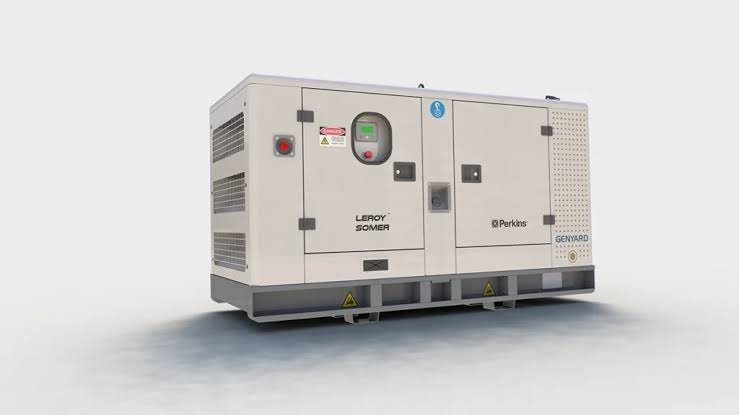
Emergency generator rental Dubai businesses require is not simply about delivering a generator to a site. It involves identifying critical electrical loads, selecting the right generator capacity, arranging safe delivery, preparing temporary power connections, and coordinating the changeover with qualified electrical personnel.
In Dubai, temporary power may be needed during scheduled DEWA maintenance, emergency electrical faults, transformer or switchgear repairs, or unexpected failure of an existing standby generator.
Rental Generator’s published rapid-response generator rental guide discusses these situations and the preparation needed to reduce deployment delays.
This guide explains how emergency generator hire works, what businesses should prepare before dispatch, how an Automatic Transfer Switch (ATS) can support faster power restoration, and which safety considerations matter when deploying temporary generators in Dubai.
When Do Businesses Need Emergency Generator Rental in Dubai?
A temporary generator can provide an alternative source of electricity when the normal supply is unavailable or when additional power is required for a limited period. The equipment and connection method depend on the facility’s electrical demand, the duration of the outage, and the systems that must remain operational.
Common reasons for arranging emergency generator hire include the following.
Scheduled DEWA substation shutdowns and electrical maintenance
Commercial buildings and industrial facilities sometimes require planned electrical shutdowns for maintenance, equipment replacement, inspection, or upgrades to their electrical infrastructure.
For businesses that cannot suspend all operations during a planned shutdown, a rental generator can supply designated loads while the affected electrical equipment is isolated.
This is particularly relevant to:
-
Office buildings that need essential lighting, security, and IT equipment.
-
Hotels and retail facilities that want to limit operational disruption.
-
Warehouses that rely on electrical handling equipment and ventilation.
-
Industrial facilities that need selected production or control systems to remain available.
-
Commercial properties undergoing switchgear, transformer, or distribution-panel maintenance.
The best approach is to arrange temporary power before the shutdown date. Early planning gives the electrical team time to verify the load, assess the connection point, organize cables, and coordinate the changeover.
A rental generator does not replace DEWA’s outage approval process or the need for authorized electrical isolation.
Unexpected power cuts and electrical faults
An unplanned interruption requires a different response. The priority is to establish whether the problem is related to the utility supply, the building’s internal electrical installation, or a failure of its existing backup equipment.
DEWA’s Smart Response electricity service allows customers to report electricity issues and distinguishes between utility-side problems and internal faults. DEWA directs customers toward a maintenance provider or specialist when an issue originates within their installation.
Electricity (Smart Response)+1
Where temporary generation is appropriate, a rental provider can assess the site’s requirements and arrange the equipment, cabling, distribution arrangements, and technical support.
For critical facilities, the immediate objective should be to restore only the loads that can be supplied safely by the available generator. Attempting to energize every building system without a load assessment can overload the generator or create electrical hazards.
Failure of an existing standby generator
A permanent backup generator can become unavailable because of a starting problem, battery failure, fuel-system issue, cooling fault, or another mechanical or electrical defect.
If the building cannot tolerate a prolonged interruption, a temporary rental generator may provide interim power while the permanent equipment is repaired.
The temporary system must be sized for the actual loads being supported, and the connection must be compatible with the facility’s electrical arrangement. Critical life-safety systems require particular care because their standby power arrangements must comply with the applicable building and fire-safety requirements.
How an Automatic Transfer Switch Helps Restore Power Quickly
An Automatic Transfer Switch (ATS) is an important component of an automatic standby power arrangement. It monitors the normal power supply and transfers the connected load to an available generator source when the normal supply fails, provided the system is designed and configured for automatic operation.
DEWA’s published guidance on uninterrupted power supply identifies automatic changeover facilities as part of standby arrangements for essential loads in specified commercial, cultural, and tourism-related premises.
Can an ATS change over in under 10 seconds?
A changeover within 10 seconds can be a design target, but it is not guaranteed for every rental generator installation. The actual interruption depends on the ATS settings, generator starting time, load acceptance, control configuration, and the condition of the equipment.
For a suitably engineered system, the sequence may work as follows:
-
The ATS detects that the normal power supply has failed or fallen outside its acceptable limits.
-
The generator receives a start command and begins running.
-
The system checks that generator voltage and frequency are acceptable.
-
The ATS transfers the designated load to the generator source.
-
When the normal supply returns and is confirmed stable, the system transfers back according to its configured sequence.
The complete process must be tested under the actual site conditions if a specific transfer time is required.
Some equipment can tolerate a brief interruption, while servers, sensitive electronics, and other critical systems may require an uninterruptible power supply (UPS) to bridge the gap during generator starting and transfer.
ATS installation for temporary generator rental
When arranging emergency generator rental Dubai businesses should confirm whether the existing facility already has a suitable ATS or whether a temporary transfer panel is required.
The installation team should review:
-
The normal supply and generator connection points.
-
The rated current and fault protection of the switchgear.
-
The number of phases and neutral arrangement.
-
The essential loads to be transferred.
-
Generator starting and load-acceptance characteristics.
-
Electrical interlocking and the prevention of unintended paralleling with the DEWA supply.
The Dubai Building Code states that standby generators connected to a consumer’s installation require prior DEWA approval and that the installation must prevent the generator supply from being paralleled with DEWA’s supply.
Part G: Incoming utilities+1
These checks should be completed by competent electrical professionals before the temporary system is energized.
Rapid Power Deployment From Al Quoz Across Dubai
In an emergency, the time needed to restore power depends on more than the generator’s availability. Dispatch coordination, site access, equipment selection, cable requirements, electrical approvals, and safe commissioning all affect the overall response.
Rental Generator lists its Dubai office in Al Quoz Industrial Area and advertises 24/7 emergency support. Its published service information covers generator capacities from small commercial units to large industrial equipment.
Downtown Dubai
Commercial buildings, hospitality facilities, retail premises, and property operations may need temporary power for essential lighting, security, refrigeration, and selected building services.
Offices and mixed-use buildings can use temporary generators during planned electrical maintenance, switchgear replacement, or a failure of existing standby equipment.
Industrial and logistics facilities may require higher-capacity generators for selected warehouse systems, pumps, production equipment, and operational support loads.
Dubai South
Construction, warehousing, and logistics operations may need temporary power to support equipment and essential services while permanent electrical infrastructure is unavailable.
What happens after an emergency call?
A well-organized rapid power deployment process should follow several practical stages.
1. Confirm the emergency. The customer shares the exact location, the reason for the outage, the duration of expected downtime, and the systems that must remain powered.
2. Establish the load requirement. The technical team reviews available electrical information and determines the required generator capacity. Motor starting currents, HVAC loads, power factor, and simultaneous demand may affect the final selection.
3. Confirm equipment and access. The dispatch team checks the available generator, required cables and distribution panels, delivery vehicle access, unloading space, and safe positioning.
4. Transport and position the generator. The unit is delivered to the agreed location and positioned with suitable clearances, ventilation, exhaust routing, and access for refuelling and maintenance.
5. Complete electrical connections. Qualified personnel connect the generator using a suitable temporary distribution arrangement, protection devices, earthing, and an approved changeover method.
6. Test and hand over. The team verifies operating parameters, confirms the intended loads, checks the transfer arrangement where fitted, and explains monitoring and refuelling requirements.
These stages provide a framework for rapid deployment, but the actual response time depends on equipment availability, distance, traffic, site restrictions, and the complexity of the installation. A same-day delivery claim should not be treated as a guaranteed arrival time for every emergency.
For businesses seeking 24/7 generator hire Dubai, sharing accurate site and load information at the first contact can help reduce avoidable delays.
Dubai Civil Defence and Temporary Generator Safety
Emergency power installations must be planned around fire prevention, electrical safety, fuel handling, and the protection of people moving through the site.
Dubai’s legal framework assigns responsibilities for preventive safety to relevant establishments and facilities. The Dubai Civil Defence General Command has authority to inspect facilities and verify fire-protection and prevention arrangements. Applicable requirements depend on the building, installation, and approved site arrangements.
Dubai Land Department+1
For a temporary generator installation, the following precautions deserve particular attention.
1. Bunded fuel trays and spill containment
Diesel storage and refuelling arrangements should be designed to prevent fuel spills from spreading into drains, walkways, or surrounding work areas.
Where required by the applicable design and site rules, bunded fuel trays or secondary containment should be installed beneath suitable equipment and fuel-storage points. Their capacity, material compatibility, and arrangement should match the fuel system and applicable environmental and fire-safety requirements.
Operators should also inspect hoses, couplings, tanks, and connections for leaks. Refuelling procedures must account for ignition sources, hot surfaces, and the manufacturer’s operating instructions.
2. Fire extinguishers and safe access
Suitable fire extinguishers should be available at the locations specified by the approved fire-safety arrangement and risk assessment. Equipment selection and positioning should take account of the hazards, accessibility, and the applicable fire code.
Extinguishers must remain accessible, clearly identifiable, and maintained. They should not be obstructed by generator enclosures, stored materials, or temporary cables.
Generator placement must also preserve safe access for operators and emergency responders. Exhaust gases must be directed away from occupied spaces and air intakes, with adequate ventilation around the equipment.
3. Cable ramps and pedestrian protection
Temporary power cables can create trip hazards and may be damaged by vehicles, material-handling equipment, or repeated foot traffic.
Where cables cross pedestrian routes or vehicle-access areas, use appropriately rated cable ramps or another approved cable-protection arrangement. The selected protection must suit the cable dimensions and expected traffic load.
Cables should also be routed to reduce exposure to sharp edges, standing water, excessive heat, and mechanical damage. Electrical connections must remain protected from unauthorized access and environmental hazards.
4. Earthing, electrical protection, and commissioning
A temporary generator must have an appropriate earthing and protection arrangement for the installation. Cable sizing, overcurrent protection, phase sequence, neutral arrangements, and changeover equipment should be verified before energization.
The generator should not be connected in a way that permits unsafe backfeeding or unintended paralleling with the utility supply.
For larger commercial buildings, the installation may also need coordination with the building’s electrical consultant, facilities manager, approved contractor, and relevant authorities.
Important: A rental supplier’s safety checklist does not replace the project’s approved method statement, risk assessment, electrical design, permits, or any required Civil Defence and DEWA approvals.
Selecting the Right Generator Capacity for an Emergency
Choosing a generator based only on the building’s total connected load can lead to an unsuitable rental. The correct size depends on the equipment that must operate simultaneously and how that equipment behaves when starting.
A generator that is too small may experience voltage dips, frequency instability, or overload trips. An unnecessarily large unit can increase rental and operating costs.
The following table provides a preliminary guide to common applications. These are illustrative ranges, not engineering recommendations for a particular building.
| Generator capacity | Illustrative application |
|---|---|
| 30–100 kVA | Small commercial facilities, selected office loads, and limited site operations |
| 100–250 kVA | Medium commercial premises, small warehouses, and selected HVAC or equipment loads |
| 250–500 kVA | Larger commercial facilities and industrial support systems |
| 500–1,000 kVA | High-demand industrial operations and larger temporary power arrangements |
| 1,000–2,000 kVA | Major industrial facilities and large temporary power projects, subject to detailed load assessment |
The actual requirement may fall outside these ranges. HVAC compressors, pumps, lifts, and other motor-driven equipment can have high starting demands, so a qualified engineer should verify the generator selection.
For facilities with variable demand, multiple generators operating through an appropriately designed synchronization system may be worth evaluating. This approach requires compatible equipment, suitable controls, and an engineered protection and load-sharing arrangement.
Rental Generator publishes a range of generator rental options on its generator rental in Dubai service page.
How DEWA Maintenance Temporary Generator Planning Reduces Downtime
Businesses searching for DEWA maintenance temporary generator services should arrange the temporary power requirement as early as possible when a shutdown is planned.
A planned shutdown gives the facilities team time to determine which systems need backup, identify the required connection points, and coordinate the installation with the relevant electrical professionals.
A practical preparation plan includes:
-
Confirming the shutdown date, duration, and responsible site contacts.
-
Identifying essential loads and the equipment that can remain switched off.
-
Reviewing the building’s single-line diagram and available generator connection points.
-
Checking the required generator capacity, distribution panels, cable lengths, and transfer equipment.
-
Confirming the necessary DEWA procedures, approvals, and electrical isolation arrangements.
-
Agreeing on testing, commissioning, monitoring, and the procedure for returning to normal utility power.
DEWA’s published guidance identifies essential services such as lifts, security systems, alarms, building management systems, control rooms, and specified lighting among the loads considered in standby power arrangements for relevant premises.
For a temporary rental, the site team should still confirm which loads must actually be supported during the planned work. The generator’s available capacity may not be sufficient to run every building system simultaneously.
What Affects Emergency Generator Rental Costs in Dubai?
The cost of emergency generator rental Dubai businesses arrange depends on the equipment and services required. An urgent delivery involving a complex electrical changeover is different from renting a generator for a straightforward, pre-planned shutdown.
The main cost factors include:
Generator size and type: Larger-capacity equipment and specialized configurations may have different rental rates from smaller units.
Rental duration: A short emergency hire, a week-long maintenance shutdown, and a longer temporary power project may be priced differently.
Delivery and site access: Distance, vehicle access, lifting requirements, restricted delivery windows, and site positioning can affect deployment costs.
Cabling and distribution: The installation may require power cables, temporary distribution boards, ATS panels, or additional switching equipment.
Fuel and maintenance: Confirm whether fuel, refuelling visits, routine servicing, and emergency technical support are included or charged separately.
Electrical installation and testing: Complex installations may require additional engineering, approved electrical personnel, testing, and commissioning.
Ask for an itemized quotation that separates equipment rental, transportation, installation, accessories, fuel arrangements, and any applicable call-out charges. This makes it easier to compare providers and understand the full cost of keeping the facility operational.
How to Arrange 24/7 Generator Hire in Dubai
When an outage occurs, accurate information helps the rental provider assess the requirement and determine the next steps.
Before contacting the supplier, prepare the following details where possible:
-
Exact site address and a contact person who can authorize access.
-
The cause of the outage, if known, and the expected duration.
-
Generator capacity or an estimate of the required load.
-
The essential equipment that needs to remain powered.
-
Whether an ATS or temporary generator connection panel is already available.
-
Required delivery time, site restrictions, and any special safety requirements.
If the capacity is unknown, share the equipment list, electrical drawings, or available load information rather than guessing.
Rental Generator lists a 24/7 emergency line and its Dubai office in Al Quoz Industrial Area. Businesses can contact the company through its emergency power dispatch line to discuss equipment availability, delivery arrangements, and technical requirements.
Frequently Asked Questions
How quickly can an emergency generator be delivered in Dubai?
Delivery depends on equipment availability, the site location, traffic, access restrictions, and the installation’s complexity. A local dispatch point can help with coordination, but confirm the estimated arrival and commissioning times directly with the supplier.
Can a rental generator support a building during a DEWA shutdown?
Yes, a suitably sized generator can support designated loads during an approved shutdown, provided the temporary installation is compatible with the building’s electrical system and the necessary approvals and safety arrangements are in place.
Does an ATS guarantee power restoration within 10 seconds?
No. A transfer time under 10 seconds may be achievable with a suitably engineered and tested system, but actual performance depends on generator starting, voltage and frequency stabilization, ATS settings, and load acceptance. A UPS may be needed for equipment that cannot tolerate the interruption.
Is emergency generator rental available 24/7?
Rental Generator advertises 24/7 emergency support. Actual equipment availability, dispatch timing, and commissioning arrangements should be confirmed when requesting a quotation.
What safety equipment is needed for temporary generator installation?
Depending on the installation, requirements may include suitable fuel containment, accessible fire extinguishers, protected cable routes, appropriate earthing and electrical protection, safe exhaust routing, and the approved method statement and risk assessment.
Can a temporary generator run the entire building?
It may be possible if the generator and electrical infrastructure are appropriately sized, but many emergency installations prioritize essential loads. A load assessment should establish which systems can safely operate together.
Conclusion: Arrange Emergency Generator Rental Before Downtime Escalates
A reliable emergency power arrangement depends on preparation, suitable generator capacity, fast coordination, safe electrical connections, and effective commissioning. Whether a business is preparing for a DEWA maintenance shutdown or responding to an unexpected outage, temporary generation can help maintain essential operations while normal power is restored.
For faster rapid power deployment, identify critical loads, prepare electrical drawings, confirm access and connection points, and establish a clear emergency contact process before an outage occurs. Where an ATS is needed, verify the transfer-time requirement and ensure the complete system is tested by competent personnel.
For commercial buildings, warehouses, construction sites, and industrial facilities, Rental Generator offers emergency and temporary power rental options across Dubai and the wider UAE.
Explore generator rental in Dubai or contact the team through its emergency power dispatch line to discuss generator capacity, deployment requirements, and technical support.
Need Reliable Temporary Power or Cooling in the UAE?
From 20 kVA mobile silent generators up to multi-megawatt synchronized power plants and 500 TR packaged chillers. Complete turnkey delivery, cabling, and 24/7 on-site maintenance across Dubai, Abu Dhabi, and Sharjah.