Phone:
(+971) 56 921 3754
Physical address:
Office #201, Al Quoz Industrial Area
Dubai, United Arab Emirates.
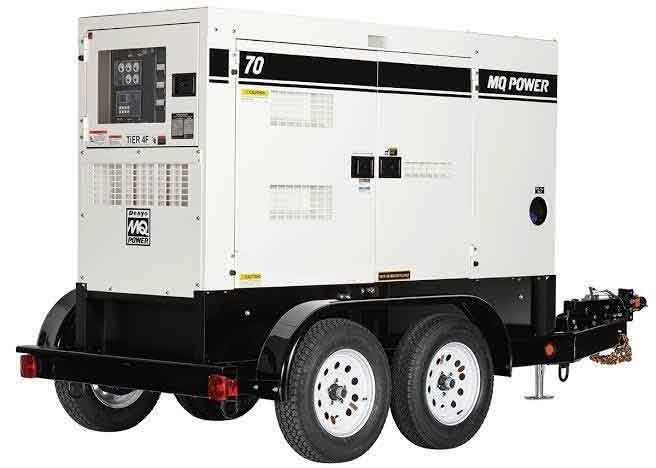
Portable Generator Hire UAE
When a construction site, outdoor event, temporary facility, shop, exhibition stand, or remote work area needs electricity, connecting to the permanent power supply is not always practical. This is where a portable generator can provide a temporary power solution.
Portable generators are designed to produce electricity independently from the utility grid. They use an engine to create mechanical energy, which is converted into electrical energy through an alternator. Depending on the model, portable generators can supply power for lighting, tools, small equipment, temporary facilities, events, and other electrical loads.
In the UAE, businesses and contractors can also choose Portable Generator Hire UAE services instead of purchasing equipment. Hiring can be useful when electricity is required for a limited project period, an emergency, an event, or a temporary work location.
This guide explains how portable generators rental work, the main components involved, how generator hire works in the UAE, how to select the right capacity, and what should be considered before putting a portable generator into operation.
What Is a Portable Generator?
A portable generator is a movable electricity-generating machine that normally combines an engine, alternator, fuel system, control system, outlets, and protective components in a compact frame or enclosure.
Unlike a permanent standby generator that is installed as part of a building’s electrical system, a portable generator can be transported to different locations when temporary electricity is required.
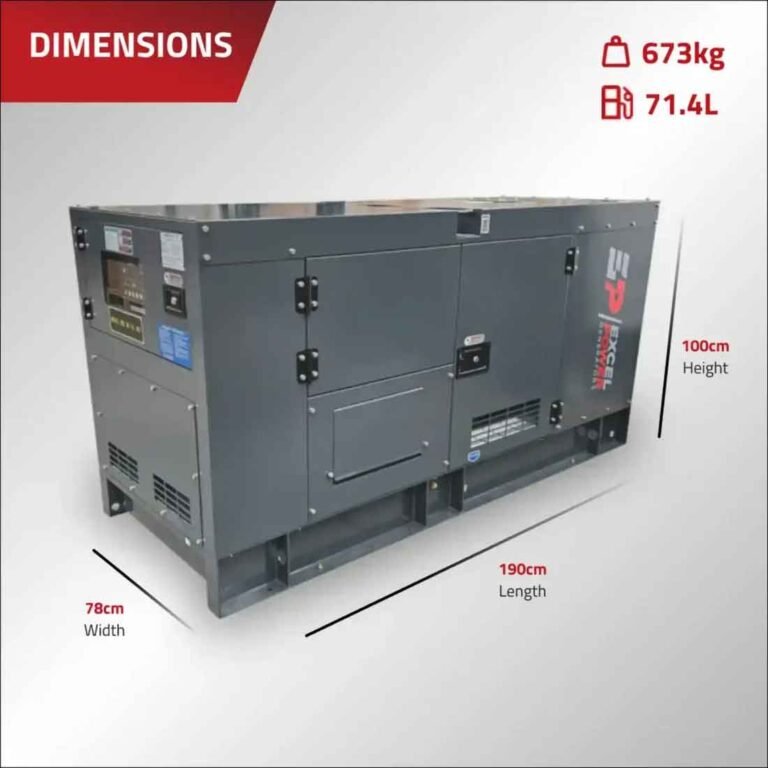
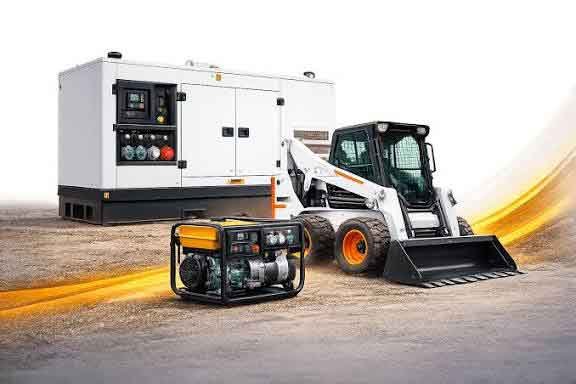
Portable generators are available in different sizes and configurations. Smaller units may be suitable for lighting, tools, small equipment, outdoor activities, or limited backup requirements, while larger portable diesel units can provide considerably more power for commercial and construction applications.
UAE rental providers offer portable generators in different capacities. For example, one UAE rental provider currently lists portable units from approximately 10 to 60 kVA, while another lists smaller portable equipment as well as larger generator sets for heavier applications.
The important point is that “portable” does not necessarily mean one particular generator size. The appropriate unit depends on the electrical load, voltage, phase requirements, operating conditions, location, and duration of use.
How Does a Portable Generator Work?
The basic working principle of a portable generator is relatively straightforward.
A fuel-powered engine produces mechanical energy. The engine turns the generator’s alternator. The alternator then converts the mechanical energy into electrical energy through electromagnetic induction.
In simple terms, the process is:
Fuel → Engine → Mechanical Rotation → Alternator → Electrical Energy → Connected Loads
This is why a generator does not create electricity from nothing. It converts energy stored in fuel into mechanical energy and then into electrical energy.
Industry explanations of portable generators describe the engine and alternator as the central components responsible for this conversion process.
Main Parts of a Portable Generator
Although the exact design varies by manufacturer and model, most portable generators contain several important components.
Engine
The engine is the prime mover of the generator. It converts the chemical energy contained in fuel into mechanical energy.
Portable generators can use different fuel types, but petrol and diesel are common depending on the generator’s size and application. Smaller portable generators are often petrol-powered, while diesel is widely used for equipment intended for longer or heavier-duty operation.
The engine must operate at the appropriate speed so that the alternator can produce electricity at the required frequency.
Alternator
The alternator is responsible for converting the engine’s mechanical rotation into electrical power.
As the engine turns the alternator, electromagnetic induction produces an electrical current. The generated electricity is then supplied through the generator’s output system to the connected electrical equipment.
Fuel Tank
The fuel tank stores the fuel required by the engine.
Runtime depends on several factors, including generator size, fuel-tank capacity, engine efficiency, and electrical load. A generator operating under a heavier load will generally consume more fuel than the same generator operating at a lighter load.
Therefore, it is not accurate to state one universal number of operating hours for every portable generator.
For example, one UAE portable-generator supplier describes runtimes of up to around eight hours for certain units, but actual runtime depends on the particular generator and operating load.
Control Panel
The control panel allows the operator to start, stop, monitor, and control the generator.
Depending on the model, the panel may display information such as voltage, frequency, operating hours, engine parameters, alarms, and other operating conditions.
More advanced rental generators can include digital controllers and monitoring systems. Some UAE rental providers advertise generator control systems capable of monitoring operating conditions and supporting remote access.
Cooling System
An engine produces heat while running. The generator therefore requires a cooling system to keep engine temperatures within the manufacturer’s operating range.
Cooling arrangements vary by generator design, but may include radiators, fans, coolant systems, and other components.
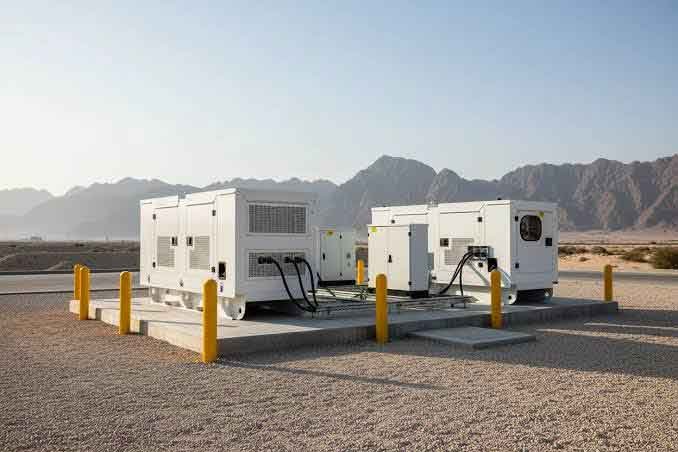
This is particularly important in the UAE because generators can operate in high ambient temperatures. A rental provider should select equipment appropriate for the actual site conditions rather than simply choosing a generator based on kVA.
Exhaust System
The combustion process produces exhaust gases that must be directed safely away from people and occupied areas.
Portable generators should therefore be positioned in suitable outdoor locations with adequate ventilation. A generator should never be operated inside an enclosed room, garage, basement, or other enclosed area because exhaust can create dangerous carbon-monoxide exposure.
OSHA specifically warns that portable generators should be operated outdoors and kept away from doors, windows, and ventilation openings.
Output Connections
The generator’s output connections supply electricity to the connected equipment or distribution system.
The type and number of outlets depend on the generator. Smaller portable generators may provide single-phase power, while larger equipment can be configured for three-phase applications.
Before hiring a generator, the required voltage, phase, frequency, and connection arrangement should be confirmed.
How Is Electricity Produced Step by Step?
Understanding the process becomes easier when it is broken into individual stages.
First, fuel is supplied to the engine. The engine burns the fuel and produces mechanical energy.
Second, the engine rotates the alternator.
Third, the alternator uses electromagnetic induction to generate electrical power.
Fourth, the generator’s control and protection systems regulate and monitor the output.
Finally, electricity travels through the generator’s outlets, cables, distribution equipment, or other approved connection arrangements to the equipment that needs power.
The basic conversion from fuel energy to mechanical energy and then electrical energy is the same fundamental principle used by many engine-driven generator sets.
What Is Portable Generator Hire in the UAE?
Portable Generator Hire UAE means renting a portable generator for a specific period instead of purchasing the generator outright.
The rental period may be short or extended depending on the supplier and project. UAE rental providers advertise daily, weekly, and monthly rental arrangements, although available terms vary by company and equipment.
The customer generally provides information about the project, including:
- Required power capacity
- Type of equipment being powered
- Location
- Required rental duration
- Voltage and phase requirements
- Expected operating hours
- Access conditions
- Whether fuel management is required
- Whether delivery and installation are needed
The rental company then recommends an appropriate generator and prepares a quotation.
How Does Portable Generator Hire Work?
The hiring process is normally straightforward, but proper load assessment is important.
Step 1: Explain Your Power Requirement
The first step is to tell the rental provider what you need to power.
For example, a construction project may require electricity for power tools, lighting, pumps, temporary offices, or other equipment.
An event may have different requirements, such as lighting, sound equipment, catering equipment, screens, refrigeration, or temporary facilities.
The rental company needs this information before recommending a generator.
Step 2: Calculate the Required Capacity
The generator should be selected according to the expected electrical load.
Generator capacity is commonly expressed in kVA, while electrical equipment may be rated in watts or kilowatts.
It is not enough to simply add the nameplate wattages and select the generator with exactly the same output. Certain equipment, particularly motors and other inductive loads, can require additional starting power.
Generator sizing should therefore account for both running requirements and starting requirements.
Portable-generator guidance also emphasizes estimating the electrical energy required and considering starting watts when equipment has motors or multiple loads start at the same time.
Step 3: Choose the Generator Type
The rental provider may recommend a petrol or diesel generator depending on the application.
Petrol portable generators are often associated with smaller, lighter applications. Diesel generators can be suitable for longer-running or heavier-duty applications.
Noise can also influence the selection. Some portable generators are designed with noise-reduction features, while silent or sound-attenuated generator sets are available for applications where sound levels are important.
Step 4: Confirm the Site
The supplier may need information about the site before delivery.
Important considerations include access for the delivery vehicle, generator placement, cable routes, ventilation, electrical connection arrangements, fuel management, and separation from occupied areas.
For construction sites in Dubai, DEWA’s electrical-installation regulations include specific requirements for temporary construction power, electrical distribution, cables, earthing, isolation, and weather protection.
Step 5: Delivery and Setup
Once the rental is confirmed, the generator is transported to the site.
Depending on the rental agreement and equipment, the supplier may provide delivery, installation, cables, distribution boards, changeover equipment, fuel tanks, or other accessories.
Some UAE rental companies advertise complete delivery and setup services rather than supplying only the generator itself.
Step 6: Testing and Operation
Before the generator is placed into normal operation, the installation should be checked and the equipment operated according to the manufacturer’s instructions.
The generator should be inspected for obvious damage, loose connections, fuel-system problems, and other issues before use.
The electrical connection should also be appropriate for the generator and connected load.
Step 7: Support During the Rental
For longer projects, ongoing maintenance and technical support can be important.
Some UAE rental providers offer technical assistance, maintenance, emergency support, and replacement equipment as part of their rental services. The exact support included depends on the rental contract.
Step 8: Collection
When the project finishes, the rental company normally arranges collection of the generator.
This is one of the advantages of hiring equipment rather than purchasing it. The customer does not have to store the generator permanently after the temporary power requirement has ended.
Where Are Portable Generators Used in the UAE?
Portable generators can be useful in many situations where temporary electricity is needed.
Construction Sites
Construction projects frequently require temporary power before permanent electrical infrastructure is available or when additional temporary capacity is needed.
Generators may supply tools, lighting, temporary offices, pumps, security systems, and other equipment.
DEWA’s regulations specifically address temporary power and electrical installations for construction sites in Dubai.
Outdoor Events
Events, exhibitions, temporary venues, festivals, and outdoor functions may require power away from a permanent electrical supply.
For these applications, noise, placement, fuel management, and electrical distribution are particularly important.
UAE generator rental companies advertise portable and silent generator options for events and exhibitions.
Emergency Backup
A portable generator can provide temporary electricity when a normal power source becomes unavailable.
The appropriate solution depends on what equipment must remain operational and how much power is required.
Dubai’s DEWA documentation also discusses mobile generators as part of emergency backup arrangements for certain projects and emphasizes provisions for generator access, cabling, and connections.
Temporary Commercial Facilities
Shops, offices, warehouses, temporary buildings, and other commercial locations may need temporary power during maintenance, fit-outs, upgrades, or unexpected interruptions.
A portable generator can provide an alternative power source when the required load is within the generator’s capacity.
Remote Locations
Some projects operate in locations where permanent utility power is not readily available.
Portable generators can provide electricity at remote work areas, temporary facilities, outdoor production locations, and similar sites.
What Size Portable Generator Do You Need?
There is no single generator size that is suitable for every project.
The correct capacity depends on the equipment being powered.
For example, a small generator may be sufficient for basic lighting and a few tools, while a construction site with several high-power tools and motor-driven equipment may require a considerably larger generator.
UAE rental suppliers offer portable equipment across different capacity ranges. One provider currently advertises portable units from 10 to 60 kVA, while other UAE equipment-rental businesses list smaller portable models and larger diesel generator sets.
A simple sizing process is:
1. List every electrical load.
2. Find the rated running power of each item.
3. Identify equipment with high starting requirements.
4. Determine whether the system needs single-phase or three-phase power.
5. Consider the expected operating load rather than only the maximum possible load.
6. Allow an appropriate margin rather than operating continuously at the generator’s absolute limit.
Because generator sizing can affect both reliability and operating cost, a qualified rental provider or electrical professional should confirm the final selection for a commercial installation.
What Is the Difference Between kW and kVA?
Generator specifications often use kVA, while many electrical appliances and machines are rated in kW.
kW means kilowatt and represents real electrical power.
kVA means kilovolt-ampere and represents apparent power.
The relationship between them depends on power factor:
kW = kVA × Power Factor
This is one reason why selecting a generator only by adding appliance wattages can sometimes produce an incorrect result.
For commercial and industrial projects, the rental company should understand the actual load characteristics, including motors and other equipment that may have different starting and running requirements.
How Long Can a Portable Generator Run?
A portable generator’s runtime depends on the generator model, fuel-tank size, engine, fuel type, and load.
A generator operating at a light load may consume less fuel than the same generator operating close to its rated capacity.
Therefore, statements such as “all portable generators run for eight hours” are misleading.
For example, one UAE portable-generator listing states that certain units can operate for up to approximately eight hours per tank, but this is dependent on the particular model and load conditions.
For longer projects, the rental provider can plan refuelling requirements and determine whether an additional fuel tank or other fuel-management arrangement is appropriate.
How Does UAE Heat Affect Portable Generators?
The UAE’s environmental conditions should be considered when selecting and operating generator equipment.
High ambient temperatures can affect engine cooling, equipment performance, and operating conditions. Dust can also accumulate around equipment and cooling components if maintenance is neglected.
This does not mean that portable generators cannot operate in UAE conditions. It means the equipment should be correctly selected, maintained, positioned, and operated according to the manufacturer’s requirements.
For a long-term rental, it is useful to ask the rental provider how the generator will be maintained during the rental period and whether the selected unit is appropriate for the site’s environmental conditions.
Does Dust Affect Generator Performance?
Dust and sand are practical considerations for equipment operating in the UAE.
A generator should be kept reasonably clean, and filters and cooling systems should be maintained according to the manufacturer’s maintenance schedule.
Blocked filters or restricted airflow can affect engine operation and cooling.
For construction sites, the situation can be particularly demanding because generators may be exposed to dust from excavation, concrete work, vehicle movement, and other activities.
Routine inspection and maintenance are therefore important for reliable generator operation.
Are Portable Generators Noisy?
All engine-driven generators produce some level of sound and vibration.
However, noise levels vary considerably between models.
Some small petrol inverter generators are designed to operate relatively quietly. Larger diesel generators can produce more mechanical and exhaust noise, although sound-attenuated or silent generator enclosures can reduce noise.
One UAE portable-generator provider lists quiet petrol units at approximately 58–65 dB, while other UAE rental listings provide different noise ratings depending on generator size and design.
For hotels, residential areas, events, offices, and other noise-sensitive locations, discuss the required noise level with the rental company before selecting the generator.
Portable Generator Safety in the UAE
Generator safety should never be treated as an optional part of the rental process.
Portable generators produce electricity and exhaust gases, and they can present electrical, fire, carbon-monoxide, fuel, heat, noise, and mechanical hazards when improperly installed or operated.
OSHA identifies electric shock, carbon monoxide, fire, noise, and vibration among the hazards associated with portable generators.
Keep the Generator Outdoors
Never operate a fuel-powered portable generator inside an enclosed building or confined space.
Exhaust can contain carbon monoxide, which is a colorless and odorless toxic gas.
OSHA recommends operating portable generators outdoors and keeping them away from doors, windows, and ventilation openings.
Keep the Generator Dry
The generator and electrical connections should be protected from water and unsuitable wet conditions.
OSHA recommends keeping portable generators dry and following the manufacturer’s instructions for grounding and operation.
Use Suitable Electrical Protection
Electrical connections should be properly designed and protected.
For construction-site installations in Dubai, DEWA’s regulations address earthing, cable protection, isolation, distribution equipment, and weatherproof electrical assemblies.
Avoid Improper Backfeeding
A portable generator should not simply be connected to a building’s electrical system through an improvised connection.
Where a generator is connected to a building or other electrical installation, the correct transfer and isolation arrangement must be used to prevent dangerous interconnection between supplies.
DEWA documentation for major projects discusses arrangements such as automatic changeover facilities and provisions for connecting mobile generators during emergencies.
Refuel Carefully
Fuel handling should be carried out according to the generator manufacturer’s instructions and applicable site safety procedures.
The generator should not be treated like ordinary electrical equipment because it contains fuel, hot engine components, and moving mechanical parts.
Portable Generator Hire vs Buying
For a temporary requirement, hiring can be more practical than purchasing.
If a contractor needs a generator for a short construction project, purchasing a machine means taking responsibility for the equipment after the project ends.
With rental, the customer can select equipment for the required period and return it afterward.
Hiring can also reduce the need for long-term storage and ownership-related maintenance.
On the other hand, purchasing may make more sense for an organization that needs the same equipment continuously over a long period and has the resources to maintain and manage its own generator fleet.
The right choice depends on usage frequency, project duration, capital budget, maintenance requirements, and operational needs.
What Is Included in Portable Generator Hire?
The contents of a rental package vary by provider.
A basic rental may include the generator itself, while a more complete temporary-power package can include delivery, installation, cables, distribution boards, changeover equipment, fuel tanks, maintenance, technical support, and collection.
For example, Rental Power describes generator rental packages that can include diesel tanks, distribution boards, changeover switches, synchronization panels, cables, cable ramps, and optional load-bank services.
Another UAE rental provider states that its portable-generator service includes delivery, setup, pickup, optional operators, and technical assistance.
This is why it is important to compare the complete quotation rather than looking only at the daily generator rental rate.
What Affects Portable Generator Hire Cost in the UAE?
There is no single fixed price for portable generator hire.
Rental cost can depend on:
Generator capacity: Larger generators generally require more equipment and resources.
Rental duration: Daily, weekly, and monthly rates may differ.
Generator type: Petrol, diesel, silent, inverter, and other configurations can have different pricing.
Delivery location: Transport distance and site accessibility can affect the quotation.
Installation: Cabling, distribution equipment, changeover systems, and setup can add to the overall cost.
Fuel: Some rental agreements include fuel while others charge fuel separately.
Support: Operator services, maintenance, emergency support, and replacement equipment may affect the final price.
UAE rental directories also identify capacity, rental duration, brand, delivery, installation, maintenance, fuel, location, and noise requirements as factors that can affect generator-hire pricing.
Because of these variables, it is better to request a project-specific quotation rather than relying on a generic advertised price.
Portable Generator Hire for Construction Sites
Construction is one of the most common applications for temporary generator power.
A construction site can need electricity before the permanent utility connection is available. Even after a permanent connection becomes available, temporary generators may sometimes be required for specific equipment, additional capacity, emergency situations, or isolated work areas.
Typical construction loads can include:
- Power tools
- Site lighting
- Temporary offices
- Pumps
- Welding equipment
- Small machinery
- Security systems
- Temporary facilities
However, the generator should be sized according to the actual equipment rather than simply choosing a large machine.
For Dubai construction projects, DEWA’s regulations specify requirements related to temporary power and construction-site electrical installations, including cable protection, earthing, isolation, and weatherproof distribution equipment.
Portable Generator Hire for Events
Events often require temporary electricity in locations where fixed power is limited or unavailable.
A portable generator may support lighting, audio systems, catering equipment, displays, temporary offices, refrigeration, and other event infrastructure.
For events, generator selection involves more than capacity.
Noise can be a major consideration. Physical appearance, fuel arrangements, cable management, operating hours, and safe placement can also matter.
A rental company experienced with event power can help determine whether a standard portable generator or a quieter sound-attenuated model is more appropriate.
Portable Generator Hire for Emergency Power
Emergency situations can require electricity with little preparation time.
A portable generator can provide temporary power while a permanent electrical problem is investigated or while repair work is carried out.
However, emergency generator hire should still involve correct load assessment and safe electrical connection.
Dubai’s DEWA guidance for major projects specifically addresses backup generators and mobile-generator access as part of emergency power arrangements.
Portable Generator Hire UAE: What Should You Tell the Rental Company?
To receive a more accurate quotation, provide as much project information as possible.
Tell the supplier:
Location: Dubai, Abu Dhabi, Sharjah, Ajman, Ras Al Khaimah, Fujairah, or another UAE location.
Application: Construction, event, commercial backup, temporary facility, maintenance, remote site, or another use.
Equipment: List the machines, appliances, tools, lighting, or systems that need electricity.
Power requirement: Provide kW, kVA, watts, or equipment nameplate information if available.
Phase: Confirm whether you require single-phase or three-phase power.
Rental period: Explain whether you need the generator for hours, days, weeks, or months.
Operating schedule: Tell the supplier how many hours per day the generator is expected to operate.
Site access: Explain any restrictions that could affect delivery or positioning.
Special requirements: Mention noise restrictions, sensitive electronics, outdoor events, or other relevant conditions.
This information allows the rental provider to recommend equipment more accurately.
Why Hire a Portable Generator Instead of Using a Larger Generator?
A larger generator is not automatically a better generator.
Oversizing can increase rental, transportation, and fuel costs without providing a practical benefit if the actual electrical load is small.
A portable generator may be more appropriate when the project requires a relatively modest amount of movable power.
On the other hand, if the load is too large for a portable unit, a larger diesel generator or synchronized generator system may be required.
The objective should be to select a generator that matches the project’s actual electrical requirements.
Final Thoughts
Portable generators provide a practical way to obtain temporary electricity without waiting for a permanent power connection or purchasing equipment that may only be needed for a limited period.
The basic operating principle is simple: the engine converts fuel into mechanical energy, the alternator converts that mechanical energy into electrical energy, and the resulting electricity is delivered to the connected loads.
However, choosing and using the right generator involves more than understanding how the engine works.
For Portable Generator Hire UAE, businesses and contractors should consider generator capacity, kVA and kW requirements, starting loads, fuel type, runtime, noise, site conditions, delivery access, electrical connections, safety, maintenance, and the total rental package.
For construction sites, outdoor events, temporary facilities, emergency requirements, and remote applications, the right portable generator can provide useful temporary power without the cost and responsibility of permanent ownership.
The best approach is to provide the rental company with accurate information about your site and electrical loads and have the generator capacity and connection arrangements confirmed before deployment.
FAQs
What is portable generator hire in the UAE?
Portable generator hire means renting a movable generator for a specific period to provide temporary electricity. Rental periods can vary from short-term arrangements to longer contracts depending on the supplier and project.
How does a portable generator produce electricity?
A fuel-powered engine creates mechanical rotation, which drives an alternator. The alternator converts the mechanical energy into electrical energy through electromagnetic induction.
What can a portable generator power?
Depending on its capacity, a portable generator can power lighting, tools, temporary facilities, event equipment, small machinery, commercial equipment, and other electrical loads. The generator must be correctly sized for the equipment being connected.
How do I choose the right portable generator size?
Start by listing all equipment that will operate simultaneously, checking their running power and identifying loads with high starting requirements. The required voltage, phase, and operating conditions should also be considered.
Can I hire a portable diesel generator in the UAE?
Yes. UAE rental providers offer portable diesel generators as well as other generator types. Availability and capacity vary by supplier and location.
How long can a portable generator run?
Runtime depends on fuel capacity, generator model, engine efficiency, and electrical load. A generator operating at a higher load normally consumes more fuel than when operating at a lighter load.
Can portable generators be used at construction sites?
Yes. Portable generators can provide temporary power for construction activities, provided the generator and electrical installation are properly selected and installed. Dubai’s DEWA regulations contain specific requirements for construction-site electrical installations and temporary power.
Are portable generators suitable for outdoor events?
They can be, provided the generator has adequate capacity and is safely positioned. Noise is an important consideration for events, so a quiet or sound-attenuated model may be preferable depending on the location.
Can a portable generator be used indoors?
Fuel-powered portable generators should not be operated indoors or in enclosed spaces because exhaust can contain carbon monoxide. OSHA recommends using portable generators outdoors and keeping them away from openings through which exhaust could enter occupied spaces.
Does portable generator hire include delivery and installation?
It depends on the rental provider and contract. Some UAE providers offer delivery, setup, pickup, cables, distribution equipment, and technical support, while other quotations may charge some services separately.
Is portable generator hire cheaper than buying?
For temporary or occasional requirements, hiring can avoid the upfront purchase cost, storage, and long-term ownership responsibilities. For continuous, long-term use, purchasing may sometimes be more appropriate. The better option depends on the project duration and total cost of ownership.
What information should I provide when requesting a generator rental quotation?
Provide the site location, equipment to be powered, estimated load, voltage and phase requirements, rental duration, expected operating hours, delivery access, and any noise or installation requirements. This allows the supplier to recommend a more suitable generator.
Need Reliable Temporary Power or Cooling in the UAE?
From 20 kVA mobile silent generators up to multi-megawatt synchronized power plants and 500 TR packaged chillers. Complete turnkey delivery, cabling, and 24/7 on-site maintenance across Dubai, Abu Dhabi, and Sharjah.