Phone:
(+971) 56 921 3754
Physical address:
Office #201, Al Quoz Industrial Area
Dubai, United Arab Emirates.
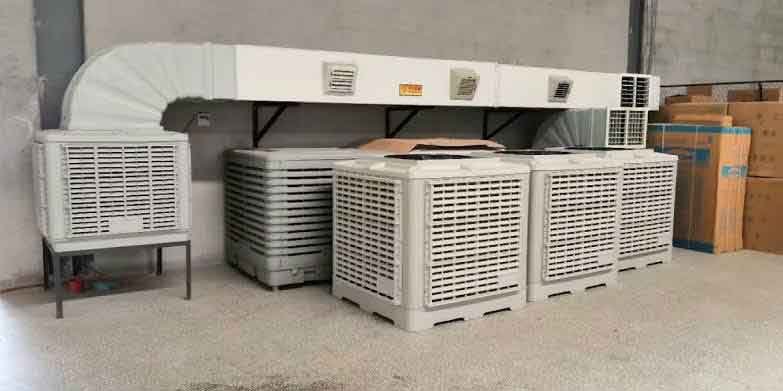
warehouse cooling rental uae
Warehouses and industrial facilities across the UAE face a common challenge during summer: maintaining a suitable working environment without allowing electricity and operating costs to rise unnecessarily. High outdoor temperatures, metal roofing, heat-producing machinery, forklifts, and frequently opened loading doors can make indoor conditions difficult to manage. For businesses operating in Dubai, Abu Dhabi, Sharjah, and other Emirates, an effective cooling strategy needs to address both worker comfort and operational efficiency.
Warehouse cooling rental UAE services provide a flexible way to manage these challenges without committing to permanent cooling equipment for every part of a facility. Depending on the building layout, rental solutions may include portable air conditioners, industrial packaged AC units, evaporative coolers, and mechanical ventilation equipment. The right combination can help businesses improve working conditions, support productivity, and manage cooling demand during peak summer periods.
Rather than cooling every cubic metre of a warehouse to the same temperature, businesses can identify high-heat areas, improve air movement, remove accumulated hot air, and deliver conditioned air where it is most useful.
Understanding Warehouse Cooling Requirements in the UAE
Warehouse cooling requires a different approach from cooling an office or retail shop. Large storage buildings often have high ceilings, wide open floors, limited insulation, and substantial heat entering through the roof and external walls. When loading bays remain open for frequent deliveries, outdoor heat can enter continuously.
Factories face additional challenges because production machinery, motors, ovens, compressors, and other equipment may generate substantial heat. Depending on the process, these facilities may also require local exhaust ventilation to remove fumes, dust, moisture, or airborne contaminants.
Before selecting a rental cooling system, facility managers should assess:
- Building dimensions: Floor area, ceiling height, roof insulation, and the layout of internal workstations.
- Heat sources: Machinery, lighting, direct sunlight, and hot production processes.
- Air exchange: The frequency with which loading doors open and the amount of outside air entering the facility.
- Workforce requirements: The number of employees, their physical workload, clothing, and time spent in hot areas.
- Equipment and products: Any temperature or humidity limits that must be maintained.
- Electrical capacity: The available supply, starting current of compressors, and total power demand.
These factors help determine whether the facility needs localised cooling, general ventilation, whole-area air conditioning, or a combination of these systems.
The American Society of Heating, Refrigerating and Air-Conditioning Engineers provides technical guidance on ventilation and building environmental requirements in its ASHRAE Handbook-HVAC Applications.
MOHRE Summer Midday Work Break and Heat-Stress Prevention
Worker safety is a critical consideration for businesses operating warehouses, factories, construction sites, and logistics facilities in the UAE. The Ministry of Human Resources and Emiratisation (MOHRE) implements the Occupational Heat Stress Prevention Policy to reduce workers’ exposure to dangerous summer heat.
Under the UAE’s annual midday work-break policy, work performed directly under the sun and in open areas is prohibited from 12:30 pm to 3:00 pm, from 15 June to 15 September. The policy applies to covered outdoor work, subject to the applicable rules and exemptions. MOHRE announced these dates for 2026 as well.
Businesses should consult the official UAE government guidance on workplace health and safety and MOHRE’s worker-rights guidance to understand the requirements.
How the midday break relates to warehouses and factories
The midday work break should not be confused with a requirement to close every indoor warehouse between 12:30 pm and 3:00 pm. Its application depends on the type and location of work and the applicable legal provisions. However, indoor environments can also become dangerously hot, particularly where ventilation is poor or production equipment generates substantial heat.
Warehouse managers should therefore assess indoor heat exposure separately and implement appropriate controls for employees who work in hot environments.
Practical measures include:
- Providing access to drinking water and suitable rest areas.
- Improving ventilation and reducing unnecessary heat accumulation.
- Providing air-conditioned or otherwise adequately cooled recovery areas.
- Training supervisors to recognise signs of heat exhaustion and heat stroke.
- Adjusting work schedules and workloads when heat exposure becomes excessive.
- Arranging prompt medical assistance when a worker develops serious heat-related symptoms.
The US Occupational Safety and Health Administration (OSHA) identifies air conditioning, increased ventilation, cooling fans, local exhaust systems, and suitable rest arrangements as potential heat-risk controls. Its heat-exposure prevention guidance also explains why engineering controls and work-practice changes should be used together.
Temporary cooling can support a broader workplace heat-management plan, but installing AC alone does not establish compliance with every applicable safety requirement.
Spot Cooling vs Whole-Warehouse AC: A Practical Way to Reduce Energy Costs
One of the most important decisions in warehouse cooling rental UAE planning is whether to cool the entire building or concentrate on the areas where people and heat-sensitive activities are located.
Whole-warehouse air conditioning may be necessary when products require controlled temperatures, the facility needs consistent environmental conditions, or a production process depends on a defined temperature range. However, it can be expensive to condition a very large space when only a small proportion of that space is occupied by workers.
Spot cooling takes a more targeted approach. Portable or industrial cooling equipment delivers conditioned air to selected workstations, packing lines, inspection tables, dispatch areas, or equipment zones. The remainder of the warehouse may use general ventilation or other appropriate cooling measures.
How spot cooling can reduce electricity consumption
Consider a warehouse with a large storage area but only a few permanently staffed packing and dispatch stations. If the entire building is air-conditioned, the system must deal with heat entering through the roof, walls, loading doors, and other openings across the whole facility.
With a targeted strategy, the business can direct cooling towards occupied work areas while using ventilation and air movement elsewhere, provided that product requirements and worker-safety needs are met.
Potential advantages include:
- Lower cooling demand: The system may need to condition a smaller area.
- Reduced unnecessary runtime: Cooling can be limited to occupied workstations and operational periods.
- Greater flexibility: Equipment can be repositioned when workflows change.
- Less permanent infrastructure: Rental units can support temporary projects, seasonal demand, or HVAC breakdowns.
- More manageable expansion: Additional units can be deployed as the business adds workstations or changes its layout.
Can businesses save 60% on electrical power bills?
A saving of up to 60% can be used as a site-specific assessment target, not a guaranteed result. There is no universal percentage that applies to every warehouse, and the sources cited here do not establish 60% as a standard saving from spot cooling alone.
Actual savings depend on the baseline system, the area being cooled, equipment efficiency, operating hours, outdoor conditions, ventilation requirements, and the amount of cooling that must still be maintained elsewhere in the building.
For example, a facility replacing unnecessary whole-building cooling with targeted cooling in a small occupied area may have greater savings potential than a warehouse that already operates an efficient, properly zoned HVAC system.
Businesses should compare actual electricity consumption before and after the change, ideally in kWh, while keeping operating hours, production levels, and required indoor conditions in mind.
For further background on energy-efficient warehouse operation, consult this warehouse energy-efficiency guide. It discusses ventilation management and the potential benefits of large, efficient circulation fans.
Factory Temporary Ventilation Dubai: Removing Heat Where It Builds Up
Cooling equipment does not always solve the underlying problem in a hot factory. In some facilities, hot air accumulates around machinery, under the roof, or near production lines. Others experience excessive humidity, fumes, dust, or process-related emissions.
Factory temporary ventilation Dubai solutions can help address these conditions by bringing in suitable replacement air and removing unwanted heat or contaminants. Depending on the application, a temporary setup may include industrial exhaust fans, supply-air fans, ductwork, and local extraction equipment.
1. Heavy-duty exhaust fans
Exhaust fans remove warm air from the building or from specific high-heat areas. They can be particularly useful in factories where machinery releases heat or where hot air collects near the roof.
However, exhaust fans need a planned route for replacement air. If a fan extracts air without adequate make-up air, the building can develop negative pressure, reducing airflow and potentially affecting doors or other ventilation equipment.
For best results, ventilation designers should consider fan capacity, intake locations, airflow paths, and the nature of any airborne contaminants.
2. Supply fans and fresh-air intake
Supply fans introduce outdoor air into the facility. When coordinated with exhaust fans, they can help establish a more predictable flow through the working area.
In the UAE, outdoor air is often extremely hot. Ventilation alone therefore may not provide a comfortable temperature, particularly during peak summer conditions. The incoming air may need to be cooled, or the ventilation system may need to be combined with localised air conditioning.
Where the process produces fumes, dust, or hazardous substances, general dilution ventilation may not be sufficient. The correct extraction method should be selected for the specific hazard.
3. Temporary ventilation for changing production requirements
Factories frequently undergo equipment installation, maintenance, refurbishment, and production expansion. Permanent ventilation systems may be unavailable during these activities, or the new layout may temporarily change how air moves through the facility.
Temporary ventilation equipment can provide additional capacity during these periods. It can also support short-term operations in workshops and production areas that do not have sufficient permanent airflow.
The system should be sized according to the actual heat load, air-quality requirements, and applicable workplace standards rather than relying on fan quantity alone.
OSHA’s engineering controls for heat exposure provide further information about general ventilation and local exhaust ventilation as workplace controls.
Combining Evaporative Cooling, Heavy Exhaust Fans, and Packaged ACs for Open Loading Bays
Loading bays are often among the most difficult warehouse areas to cool. Trucks arrive and depart throughout the day, roller shutters remain open, and hot outdoor air enters whenever the building is exposed to the outside environment.
Trying to maintain a uniform indoor temperature using air conditioning alone may create unnecessary cooling demand. A combined strategy can be more appropriate, provided each technology is used in the right conditions.
Evaporative cooling for suitable open areas
Evaporative coolers use water evaporation to lower the temperature of the air passing through them. They can be useful in large, naturally ventilated spaces where conventional air conditioning would require substantial energy and infrastructure.
Their effectiveness depends on outdoor temperature and humidity. Because evaporative cooling adds moisture to the air, its cooling performance decreases as humidity rises. It may therefore be less suitable for humid conditions or for products that require tight humidity control.
In open loading areas, evaporative cooling can provide localised relief for staff and certain work zones. It should not be treated as a substitute for refrigeration or precision cooling where specific temperature and humidity limits must be maintained.
Heavy exhaust fans for heat removal
Exhaust fans can remove hot air that builds up inside a loading area, especially when the roof and machinery contribute to heat accumulation.
The fans should be positioned to encourage airflow through the occupied area rather than simply circulating hot air. Adequate replacement-air openings are equally important.
Where loading bays handle dusty goods, chemicals, exhaust emissions, or other contaminants, the ventilation plan must account for those hazards and prevent exhaust air from being drawn back into occupied areas.
Packaged AC units for defined work zones
Packaged air-conditioning units can provide stronger temperature control in enclosed or partially enclosed areas, including dispatch offices, inspection stations, packing sections, and other work zones that require conditioned air.
Flexible ducting can help deliver cooled air to specific locations. Where a large section of the warehouse needs consistent cooling, suitably sized industrial packaged units may provide a more appropriate solution than a collection of small portable units.
However, a packaged AC system cannot efficiently maintain a tightly controlled temperature in an open loading bay if hot outside air continuously replaces the conditioned air. Door management, suitable enclosures, and the correct system design remain important.
How the three systems work together
A practical loading-bay arrangement may use exhaust fans to remove accumulated heat, evaporative coolers to provide localised relief in suitable open areas, and packaged AC units to maintain temperature-controlled workstations.
The systems need to be coordinated carefully. Exhaust fans can remove conditioned air, while poorly positioned evaporative coolers may increase humidity in areas where moisture is undesirable. Airflow direction and the location of cooling equipment should therefore be assessed together.
Businesses should also consider dock seals, shelters, and suitable door-management procedures to reduce unwanted outdoor-air infiltration. These measures can reduce the cooling load before additional equipment is installed.
For further technical context, see this warehouse cooling overview from Global Industrial and the Blue Giant loading-dock improvement guide.
Choosing Between Temporary Cooling and Industrial AC Rental
The right rental arrangement depends on how long cooling is needed, how much space must be conditioned, and whether the facility needs localised relief or consistent temperature control.
Temporary cooling may be appropriate when a warehouse needs backup capacity during HVAC repairs, additional cooling for a seasonal workload, or a short-term solution during facility upgrades. Portable units and spot coolers can be useful for specific areas, while larger temporary systems may support broader requirements.
Businesses can explore temporary cooling in UAE to review rental options for industrial, commercial, and emergency applications.
Industrial AC rental may be more suitable when a factory or warehouse requires a higher cooling capacity, more extensive air distribution, or a defined indoor temperature across a larger working area. The final configuration depends on the building, the heat load, the electrical supply, and the required operating conditions.
For more information, visit industrial AC rental to review commercial and industrial air-conditioning rental options.
Before hiring equipment, businesses should request a site assessment covering cooling capacity, power requirements, air distribution, installation arrangements, maintenance responsibilities, and the expected rental period.
How to Plan a Cost-Effective Warehouse Cooling Rental UAE Project
A well-planned rental project begins with an assessment rather than selecting equipment based on floor area alone.
First, identify the hottest locations and determine whether the main problem is high air temperature, radiant heat from the roof, poor ventilation, humidity, or a combination of these factors. Temperature measurements should be taken where employees work, not only near the ceiling or beside the cooling equipment.
Next, separate the warehouse into practical zones. Storage aisles, packing stations, loading bays, production lines, and administrative rooms may have very different requirements. Some areas may need conditioned air, while others may benefit more from improved ventilation and air movement.
The next step is to estimate the cooling and ventilation loads. A qualified HVAC professional can evaluate heat generated by people and machinery, heat entering through the building envelope, air entering through open doors, and any requirements relating to products or production processes.
Finally, compare the proposed arrangement with the existing system. Consider energy consumption, operating hours, rental charges, installation costs, maintenance, and the effect of any changes on worker comfort and product quality.
Where possible, monitor electricity consumption and indoor conditions after installation. This helps establish whether the selected system is delivering the intended benefits and whether its operation needs to be adjusted.
Frequently Asked Questions
What is warehouse cooling rental UAE?
Warehouse cooling rental UAE refers to hiring temporary or industrial cooling equipment to manage temperatures in warehouses, distribution centres, storage facilities, and related industrial spaces. Depending on the requirement, solutions can include portable AC units, spot coolers, packaged air conditioners, evaporative coolers, and supporting ventilation equipment.
Is spot cooling better than whole-warehouse air conditioning?
Spot cooling can be more economical when only selected work areas need conditioned air and the remaining warehouse can operate safely under suitable ventilation conditions. Whole-warehouse AC may be necessary when products, production processes, or working conditions require consistent temperatures across the facility. The appropriate option depends on the actual cooling load and operating requirements.
Can spot cooling reduce electricity bills by 60%?
A reduction of up to 60% should not be assumed without a site-specific calculation. Savings depend on how much cooling demand can be eliminated, the efficiency of the equipment, operating schedules, ventilation requirements, and the performance of the existing system. Businesses should compare measured electricity use before and after implementation.
What is factory temporary ventilation Dubai used for?
Temporary ventilation can help remove excess heat, improve air movement, and support local extraction during maintenance, refurbishment, equipment installation, or temporary production activities. Systems should be designed for the specific heat and air-quality hazards present at the facility.
Does the MOHRE midday work break apply to indoor warehouse employees?
The annual midday work-break policy prohibits covered outdoor work directly under the sun and in open areas during the specified summer hours. It should not automatically be interpreted as a blanket closure requirement for all indoor warehouse operations. Employers must follow the applicable legal requirements and separately assess heat-related risks inside their facilities.
Can evaporative coolers and air conditioners operate together?
Yes, where the system is designed appropriately. Evaporative coolers may help in suitable open or naturally ventilated areas, while AC units provide controlled cooling in enclosed zones. Humidity, airflow direction, product requirements, and the location of exhaust fans must be considered before combining the equipment.
Conclusion
Warehouse cooling in the UAE requires a practical balance between worker safety, reliable temperature control, and energy management. Whole-building air conditioning is not always necessary, but localised cooling is not suitable for every warehouse either. The most effective arrangement depends on heat sources, building design, loading-bay activity, ventilation needs, and the temperatures required for employees and stored products.
By combining targeted cooling with suitable exhaust ventilation and carefully selected packaged AC equipment, businesses can improve working conditions while avoiding unnecessary cooling demand. A site assessment and measured energy comparison are the best ways to identify realistic savings and choose the right equipment.
For businesses managing seasonal heat, maintenance shutdowns, or changing operational requirements, Rental Generator offers options for temporary cooling in UAE and industrial AC rental. The appropriate solution should be selected according to the facility’s cooling load, ventilation requirements, and operating conditions.
Need Reliable Temporary Power or Cooling in the UAE?
From 20 kVA mobile silent generators up to multi-megawatt synchronized power plants and 500 TR packaged chillers. Complete turnkey delivery, cabling, and 24/7 on-site maintenance across Dubai, Abu Dhabi, and Sharjah.