Phone:
(+971) 56 921 3754
Physical address:
Office #201, Al Quoz Industrial Area
Dubai, United Arab Emirates.
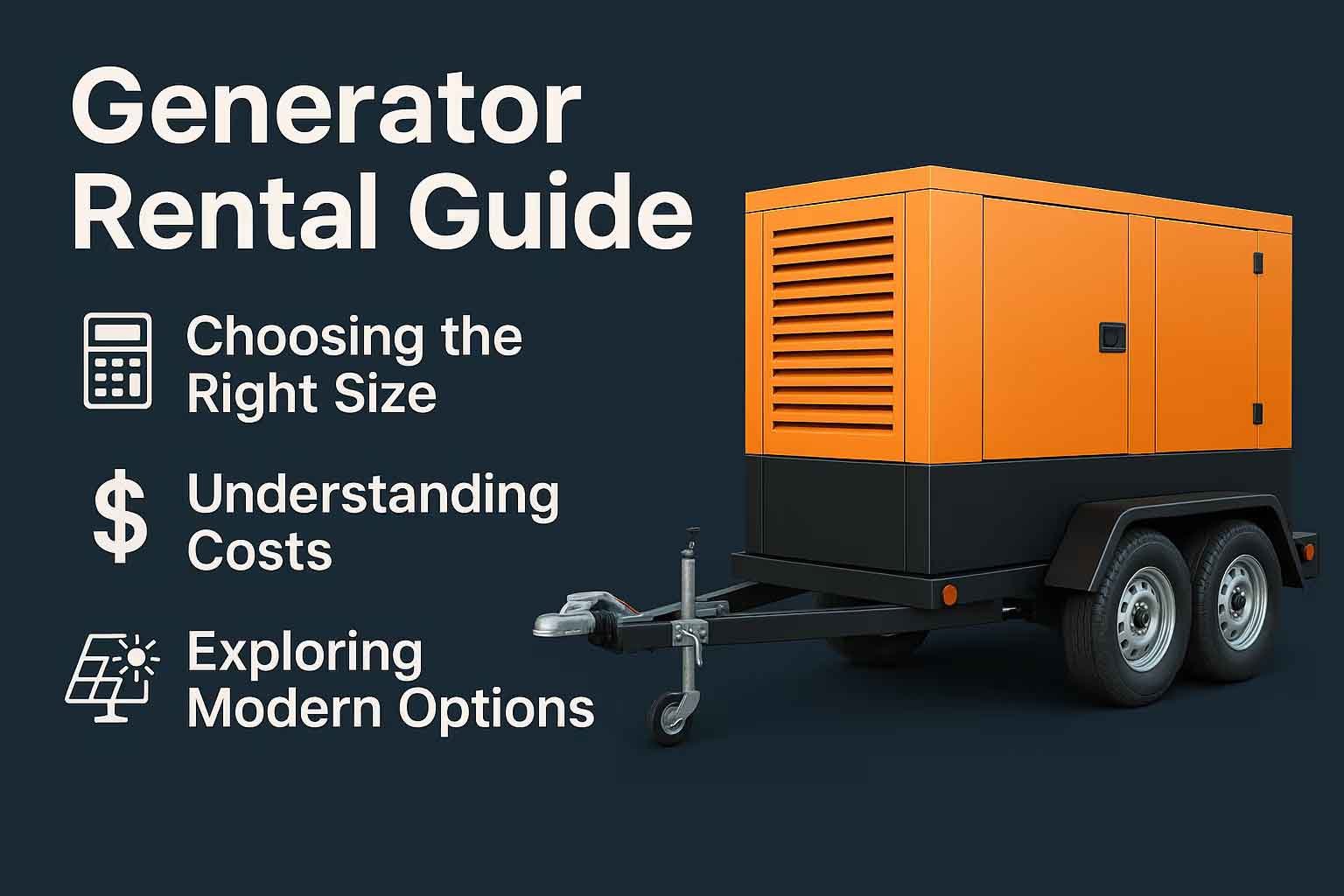
When Should You Rent a Temporary Generator?
Reliable electricity is essential for construction sites, events, industrial facilities, commercial projects and temporary operations. But not every project has access to permanent power from the beginning. In some cases, the existing electrical supply may also be too limited to handle the equipment being used.
This is where a temporary generator can provide a practical power solution. Instead of purchasing a generator that may only be needed for a limited period, businesses can rent equipment according to their actual power requirements and project schedule.
But when is the right time to rent a temporary generator? The answer depends on why you need additional power, how long you need it and what type of equipment will be connected.
When Permanent Power Is Not Yet Available
Construction projects often need electricity before the permanent electrical connection is ready. Site offices, lighting, security systems, tools, pumps and other equipment may need to operate during the early stages of development.
A temporary generator can provide power during this period, allowing work to begin while permanent electrical infrastructure is still being installed.
UAE generator rental providers specifically identify early-stage construction sites without permanent grid connections as a common application for diesel generators.
This can be particularly useful for greenfield projects or remote locations where arranging a permanent connection may take time.
When Your Existing Power Supply Is Not Enough
A project may already have access to grid electricity but still require more capacity than the available supply can provide.
Construction equipment can create substantial electrical demand, particularly when several machines operate at the same time. Depending on the project, loads may include welding equipment, pumps, compressors, power tools, lighting, air-conditioning and other machinery.
In this situation, a temporary generator can provide additional generation capacity rather than replacing the existing electrical supply.
Before renting, the total connected load and starting requirements should be reviewed. A generator should not simply be selected based on a rough kVA estimate. The equipment that will operate simultaneously, starting loads and required operating conditions all matter when determining the appropriate setup.
When You Are Working on a Construction Project
Construction is one of the most common situations where temporary generator rental makes sense.
Power may be required from the beginning of a project for site offices, lighting, security, pumps and tools. As construction progresses, the electrical demand can increase when larger equipment and additional facilities are introduced.
For this reason, generator requirements should be reviewed as the project develops rather than assuming the same power capacity will be suitable from start to finish.
Current UAE construction-rental guidance identifies applications ranging from site offices and lighting to pumps, welding equipment, air compressors, cooling systems and heavy construction machinery.
For contractors, rental also provides flexibility because the generator capacity and rental period can be matched to the project’s requirements.
When You Need Power for Only a Limited Period
Buying a generator may not be practical when electricity is required for only a few days, weeks or months.
Temporary generator rental allows businesses to use the equipment for the period they actually need it. Current UAE rental providers offer arrangements ranging from short-term hire to longer contracts for extended construction and industrial projects.
For example, short-term rental may be suitable for:
- A temporary construction phase
- Planned electrical work
- Temporary site facilities
- A short industrial shutdown
- An event or outdoor project
- Emergency power requirements
Longer rental periods can be more appropriate when a construction project requires temporary power for several months or when permanent electrical infrastructure is delayed.
When Planned Maintenance Will Interrupt Your Main Power
Temporary power is not only for sites without electricity.
Businesses with an existing electrical system may need a generator when planned maintenance, electrical upgrades or utility work requires part of the power system to be switched off.
Instead of stopping operations completely, a rental generator can provide temporary electricity for selected loads during the work.
This approach is particularly useful for facilities where even a planned shutdown could interrupt important operations.
When You Need Emergency Backup Power
Unexpected power interruptions can create problems for construction sites, warehouses, industrial facilities and commercial operations.
A temporary generator can be arranged as a backup source when the main electrical supply is unreliable or unavailable.
For critical applications, the rental package may involve more than the generator itself. Depending on the site and electrical design, equipment such as distribution boards, changeover switches, synchronisation panels, cables and fuel systems may also be required.
The exact setup should be determined by competent electrical professionals according to the site’s requirements.
When Your Power Requirements Are Changing
One of the main reasons to consider rental is that electrical requirements do not always remain constant.
A construction project may have relatively low demand during initial site preparation and require considerably more power once heavy equipment starts operating. Later, some of those loads may disappear as the project moves toward finishing work.
Renting gives contractors the opportunity to review their requirements and select equipment that matches the current phase.
If the required capacity changes, the rental arrangement can potentially be adjusted rather than leaving the company with a generator that is no longer appropriate.
When You Need Temporary Power in a Remote Location
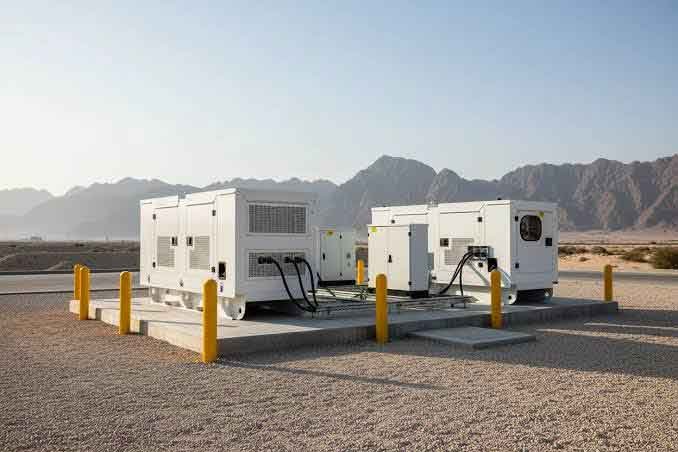
Some projects are located away from established electrical infrastructure. Infrastructure development, industrial work, remote construction and desert projects may require independent power for extended periods.
Diesel generators are commonly used in UAE construction environments for sites where grid electricity is unavailable or insufficient.
For these locations, planning should include fuel storage, refuelling arrangements, access for delivery and servicing, ventilation and the physical location of the generator.
When Site Conditions Require Special Planning
The generator itself is only one part of a temporary power system.
Before rental, the supplier should understand where the equipment will be installed and how it will be used. Site access, operating hours, ventilation, cable routing, fuel arrangements and environmental conditions can affect the required setup.
UAE suppliers also highlight the importance of selecting equipment suitable for local operating conditions, particularly where generators may operate in high ambient temperatures.
If the generator will be positioned near occupied buildings or residential areas, noise should also be considered. Sound-attenuated or silent generator options may be available for applications where lower operating noise is required.
How Long Should You Rent a Temporary Generator?
There is no single rental period that works for every project.
The rental duration should be based on how long temporary power will actually be required. A short construction activity may need a generator for days or weeks, while a major project may require temporary generation for months.
It is useful to discuss the expected project schedule with the rental company before choosing a contract. If the permanent power connection has an uncertain completion date, building some flexibility into the rental arrangement can help avoid an unexpected gap in power supply.
What Information Should You Give the Rental Company?
Before requesting a quotation, prepare as much technical information as possible.
A useful temporary-power requirement should include:
- Total connected electrical load
- Equipment that will run from the generator
- Starting or surge requirements of major equipment
- Which loads will operate simultaneously
- Required operating hours
- Expected rental duration
- Project location
- Whether the generator will provide primary or backup power
- Any future increase in electrical demand
- Site access and installation restrictions
Industry guidance recommends starting with the actual load and operating plan instead of choosing a generator based only on a nominal kVA figure. Final generator selection, cabling, protection, earthing and commissioning should be reviewed by qualified electrical professionals.
Should You Rent or Buy a Generator?
The decision depends on how the equipment will be used.
Rental can be practical when power is needed temporarily, the required capacity changes between projects or the business does not want to take responsibility for long-term equipment ownership and maintenance.
Buying may be considered when a business has a consistent long-term requirement for the same type of generator and has the resources to manage ownership, servicing, storage and replacement.
For temporary construction projects, however, rental allows the power solution to follow the project rather than requiring the contractor to maintain a generator after the project is completed.
Choose the Generator Based on the Project, Not Just the kVA
A common mistake is to choose a generator simply because it has a large kVA rating.
The correct generator depends on the actual electrical load, starting requirements, operating pattern and site conditions. An undersized generator may struggle with the connected equipment, while an unnecessarily large unit may not be the most efficient choice for the load.
Professional rental companies can review the equipment list and project requirements before recommending the appropriate generator and supporting equipment.
Final Thoughts
You should consider temporary generator rental when permanent power is unavailable, existing capacity is insufficient, a planned shutdown requires temporary electricity, or a project only needs power for a limited period.
For construction projects in particular, temporary generation can support different stages of work, from initial site setup to equipment operation and temporary facilities. The most important step is to plan the power requirement before arranging delivery.
Share your equipment list, expected load, project location, operating hours and rental duration with the supplier. This gives the rental company the information needed to recommend a suitable generator, supporting equipment and rental arrangement for the project.
For UAE businesses and contractors, Rental Power provides generator rental solutions with equipment and supporting accessories such as diesel tanks, distribution boards, changeover switches, synchronisation panels and cables.
Need Reliable Temporary Power or Cooling in the UAE?
From 20 kVA mobile silent generators up to multi-megawatt synchronized power plants and 500 TR packaged chillers. Complete turnkey delivery, cabling, and 24/7 on-site maintenance across Dubai, Abu Dhabi, and Sharjah.