Phone:
(+971) 56 921 3754
Physical address:
Office #201, Al Quoz Industrial Area
Dubai, United Arab Emirates.
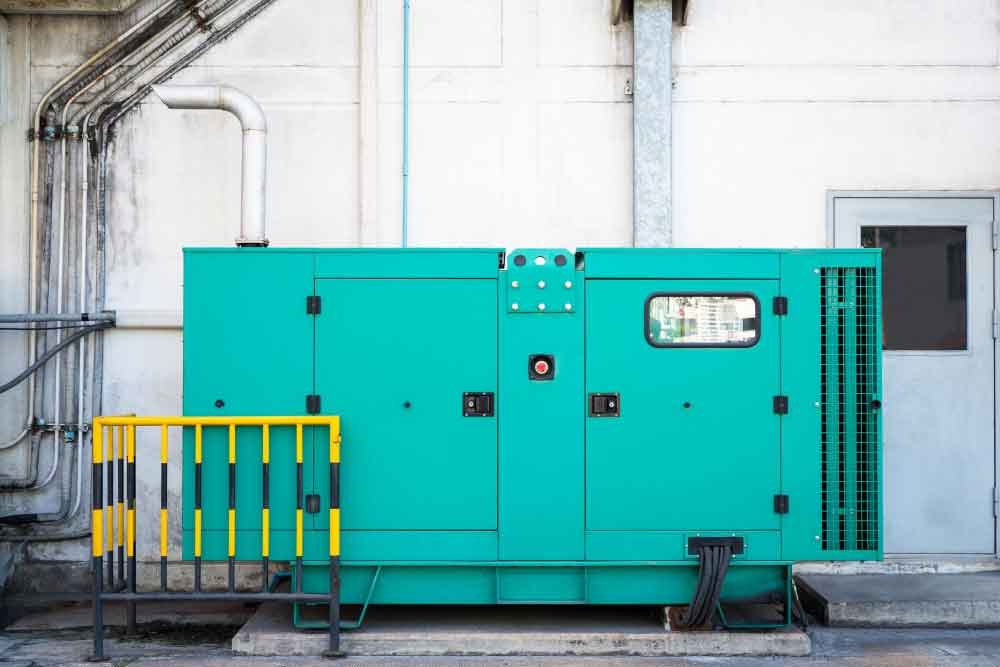
How Generator Rental Helps UAE Businesses Control Power Costs
For businesses in the UAE, reliable electricity is essential for keeping operations running. Construction companies need power for equipment and site facilities, commercial businesses need it for daily operations, and industrial facilities may depend on continuous electricity for production. When grid power is unavailable, insufficient, or temporarily unsuitable for a project, a generator can provide the required backup or primary power.
But buying a generator is not always the most practical financial decision. The purchase price is only one part of the total cost. Businesses also have to consider maintenance, servicing, storage, depreciation, fuel management, transportation, and changing power requirements.
This is where generator rental can offer a more flexible approach. By renting the right generator for the required period and capacity, businesses can manage their power costs without committing a large amount of capital to equipment that may not be needed permanently.
Rental Reduces the Need for Large Upfront Investment
Purchasing a commercial or industrial generator can require significant capital, particularly when a business needs a high-capacity unit. For a company that only needs additional power for a construction project, temporary facility, event, maintenance shutdown, or emergency situation, purchasing equipment may leave capital tied up in an asset with limited long-term use.
Generator rental changes this cost structure. Instead of making a large equipment purchase, the business pays for the generator during the period it is required.
This can be particularly useful for businesses that need temporary power rather than a permanent generation system. UAE rental providers offer generator solutions for temporary, emergency, commercial, and industrial applications, with equipment available across different capacities.
Businesses Can Choose the Generator Capacity They Actually Need
Generator size has a direct effect on operating efficiency. Using a generator that is significantly larger than the actual load can result in unnecessary fuel consumption, while an undersized generator may struggle to handle the required electrical load.
Aggreko specifically notes that choosing the correct generator size is important for controlling costs and efficiency, explaining that an oversized generator can waste fuel while an undersized unit can create operational problems.
Rental gives businesses the opportunity to select equipment according to the actual requirements of a particular project.
For example, a construction company may need one capacity during the early stage of a project and a larger capacity later when more equipment is operating. With rental, the power solution can be adjusted as the load changes instead of keeping one permanently owned generator that may not match every stage of the project.
Maintenance Costs Can Be Easier to Manage
Owning a generator means taking responsibility for its ongoing maintenance. Depending on the equipment and operating conditions, this can include inspections, oil and filter changes, coolant checks, control-system testing, repairs and replacement parts.
With a professional rental arrangement, maintenance and technical support may be included as part of the service package. For example, current UAE rental services advertise maintenance, repair, fuel management and technical support alongside generator rental.
This can make budgeting easier because businesses do not have to maintain a separate maintenance setup for equipment that may only be used for a limited period.
It is still important to check the rental agreement carefully. Businesses should confirm what is included in the quoted price and whether routine servicing, emergency repairs, technician visits and replacement equipment are covered.
Rental Helps Avoid Long-Term Equipment Depreciation
Generators are business assets, and like other mechanical equipment, they can lose value over time. A company that purchases a generator has to consider depreciation, resale value, storage and eventual replacement.
For a temporary requirement, these long-term ownership costs may not provide much business value.
Rental transfers much of the equipment ownership responsibility to the rental provider. The business uses the generator when it needs power and returns it when the requirement ends.
This can be especially relevant for project-based businesses. A construction company, for instance, may need temporary power for several months but may have little use for the same generator once the project is completed.
Fuel Management Can Improve Cost Control
Fuel is one of the most important operating costs when using diesel generators. Actual fuel consumption depends on factors such as generator size, electrical load, operating hours, engine efficiency and site conditions.
This makes fuel management an important part of controlling generator costs.
Some rental providers offer fuel delivery and monitoring services. Rental Generator, for example, states that its rental services can include refuelling and fuel monitoring to provide visibility into consumption and costs.
Modern rental equipment can also offer improved efficiency. For example, Aggreko’s UAE range includes fuel-efficient generators and monitoring technology designed to track equipment performance and fuel usage.
Businesses should therefore look beyond the daily or monthly rental rate. A slightly different generator model may have a meaningful effect on fuel consumption over a long operating period.
Rental Can Help During Temporary Power Gaps
Not every business needs a generator because it wants to replace its normal electricity supply. Sometimes the requirement is temporary.
A company may need additional power during:
- Building construction
- Facility expansion
- Electrical maintenance
- Generator replacement
- HVAC upgrades
- Events and exhibitions
- Emergency situations
- Production shutdowns
- Temporary site operations
- Grid connection delays
In these situations, purchasing a generator may create an unnecessary long-term expense.
A rental generator can bridge the gap until permanent power becomes available or the existing electrical system returns to normal operation. Temporary-power providers in the UAE specifically position generator rental for emergency backup, planned maintenance and changing energy requirements.
Businesses Can Scale Power Without Buying More Equipment
Power requirements can change as a business grows.
A warehouse may add refrigeration equipment. A construction site may introduce additional machinery. A manufacturing facility may increase production. An event may require considerably more electricity during the main programme than during setup.
Buying a new generator every time the load changes is rarely a flexible approach.
Rental allows businesses to add or replace generator capacity according to their current requirements. Modular rental fleets can also be scaled up or down as demand changes.
This flexibility can help businesses avoid paying for unused capacity.
Generator Rental Can Protect Against the Cost of Downtime
Power costs are not limited to electricity and fuel. A power failure can also create operational costs.
Depending on the business, an unexpected outage may stop production, interrupt refrigeration, affect IT systems, delay construction work or disrupt an event. The financial impact can therefore be considerably higher than the cost of running a generator.
A properly planned rental generator can provide backup power when grid electricity or another primary source is unavailable.
Remote monitoring can also help identify issues such as low fuel levels or maintenance requirements before they become major problems. Aggreko’s UAE monitoring service, for example, tracks fuel, equipment performance and maintenance requirements.
The objective is not simply to produce electricity. It is to keep the business operating with fewer avoidable interruptions.
Rental Can Make Power Costs More Predictable
A generator quotation should not be judged only by the rental rate.
Businesses should calculate the expected total cost, including:
- Generator rental
- Fuel
- Delivery and collection
- Installation
- Power distribution
- Cables and accessories
- Maintenance
- Technician support
- Operating hours
- Additional fuel tanks where required
- Removal after the rental period
Current UAE generator-rental cost guidance also identifies capacity, rental duration, fuel consumption, delivery distance, installation requirements, operating hours, maintenance and site conditions as factors that can affect the final rental cost.
Getting these details clear before signing the agreement makes it easier to compare quotations and avoid unexpected charges.
Rental Can Complement Existing Grid Power
Generator rental does not necessarily mean disconnecting a business from the electrical grid.
A rented generator can be used as backup power while the grid remains the primary source. It can also provide temporary power during electrical upgrades, planned maintenance or periods when additional capacity is required.
This gives businesses another option when they need resilience without permanently investing in a larger generation system.
For Dubai businesses, electricity costs are also influenced by the applicable tariff structure. DEWA currently applies slab tariffs to commercial and industrial electricity consumption, along with a fuel surcharge that varies with fuel prices. As of September 2026, DEWA lists commercial electricity slab rates of AED 0.23, 0.28, 0.32 and 0.38 per kWh depending on monthly consumption, plus a 0.06 AED/kWh fuel surcharge.
That does not mean a generator will automatically produce electricity more cheaply than grid power. Instead, businesses should compare the complete cost of each option for their specific situation.
When Does Generator Rental Make Financial Sense?
Generator rental can be particularly practical when the requirement is temporary, variable or uncertain.
It may make sense for a business that:
- Needs power for a fixed project period
- Requires emergency backup
- Is waiting for a permanent electrical connection
- Is carrying out electrical maintenance
- Needs additional capacity temporarily
- Has seasonal or fluctuating power demand
- Does not want to invest heavily in generation equipment
- Wants access to newer equipment without purchasing it
- Needs technical support and maintenance as part of the power solution
For a business with a permanent, predictable and high power requirement, purchasing or another long-term energy arrangement may also be worth evaluating. The right decision depends on the operating period, load profile, fuel costs, maintenance requirements and total cost of ownership.
How to Keep Generator Rental Costs Under Control
Choosing the cheapest rental quotation is not necessarily the best way to control costs.
Start by calculating the actual connected load and expected operating hours. Ask the supplier to recommend the appropriate generator capacity rather than automatically selecting the largest available unit.
Next, clarify the fuel arrangement. Find out whether fuel is supplied by the rental company, whether consumption is monitored and how refuelling charges are calculated.
It is also worth asking about maintenance and emergency support. A low rental rate can become expensive if a breakdown causes hours of lost production.
Finally, compare quotations on a total-cost basis. Look at equipment, fuel, transportation, installation, maintenance and support together.
Final Thoughts
Generator rental can help UAE businesses control power costs by replacing a large equipment purchase with a more flexible operating expense. It can also reduce the financial burden associated with ownership, maintenance, depreciation and changing power requirements.
However, the financial benefit depends on how the generator is selected and operated. Correct sizing, efficient equipment, sensible rental duration, proper fuel management and clear contract terms all play an important role.
For businesses in the UAE, the most useful question is therefore not simply “How much does a generator cost to rent?” It is “What will the complete cost of reliable power be for our project?”
By comparing the generator capacity, operating hours, fuel consumption, support services and total rental costs, businesses can choose a temporary power solution that fits both their operational needs and their budget.
Need Reliable Temporary Power or Cooling in the UAE?
From 20 kVA mobile silent generators up to multi-megawatt synchronized power plants and 500 TR packaged chillers. Complete turnkey delivery, cabling, and 24/7 on-site maintenance across Dubai, Abu Dhabi, and Sharjah.